- Home
- OAuth Cloud SSO
- OAuth SSO Documentation
- Atlassian Cloud OAuth Single Sign-On (SSO) with WSO2

Atlassian Cloud OAuth Single Sign-On (SSO) with WSO2
With Jira OAuth Single Sign-On (SSO) for Atlassian Cloud, you can securely log in to Atlassian Cloud using your WSO2 credentials. This app allows you to implement seamless Single Sign-On (SSO) for Atlassian Cloud accounts using existing WSO2 credentials.
 Try it for free
Pre-requisites
-
Atlassian Guard (Atlassian Access) Subscription:
Atlassian Guard is an additional subscription applied across the Atlassian Cloud products, like Jira Software, Jira Service Management, Jira Work Management, Confluence, and Bitbucket. It is needed for Single Sign-On (SSO) or any Cloud Service across Atlassian Cloud products. -
Domain Verification:
Atlassian Guard requires the Domain Verification process to enforce SSO on the managed user accounts. This process verifies that you own a valid domain for managing the user accounts and use the same domain name for the email addresses.
References:
https://www.atlassian.com/software/guard/guide/getting-startedhttps://www.atlassian.com/licensing/atlassian-guard
Download and Installation
- Log in to your Atlassian Admin Console and select your site.
- Now, in the left sidebar, scroll down to the Apps section. Under Apps, select Site, which will open the site settings page.
- In the Site Settings, navigate to Connected Apps → Explore apps. (Alternatively, you can go to the Atlassian Marketplace and search for the app.)
- Search for miniOrange OAuth/OpenID SSO.
- Click “Try it free” to begin a new trial of the app.
- On the top menu bar, go to Apps.
- Locate the “mO Jira OAuth/OpenID SSO” app and click to open it.
In this guide, we will demonstrate the setup in three parts:
- Configure OAuth SSO connection between miniOrange App (as OAuth Client) and WSO2 (as OAuth Provider).
- Configure SAML SSO connection between Atlassian Guard (as SP) and miniOrange App (as IDP).
- Add users to the SSO Authentication policy, and enforce the SSO.
Step 1. Configure SSO connection between miniOrange App with WSO2
- Once the plugin is installed, select the Apps section from the sidebar menu and click on mO Jira OAuth/OIDC SSO option.
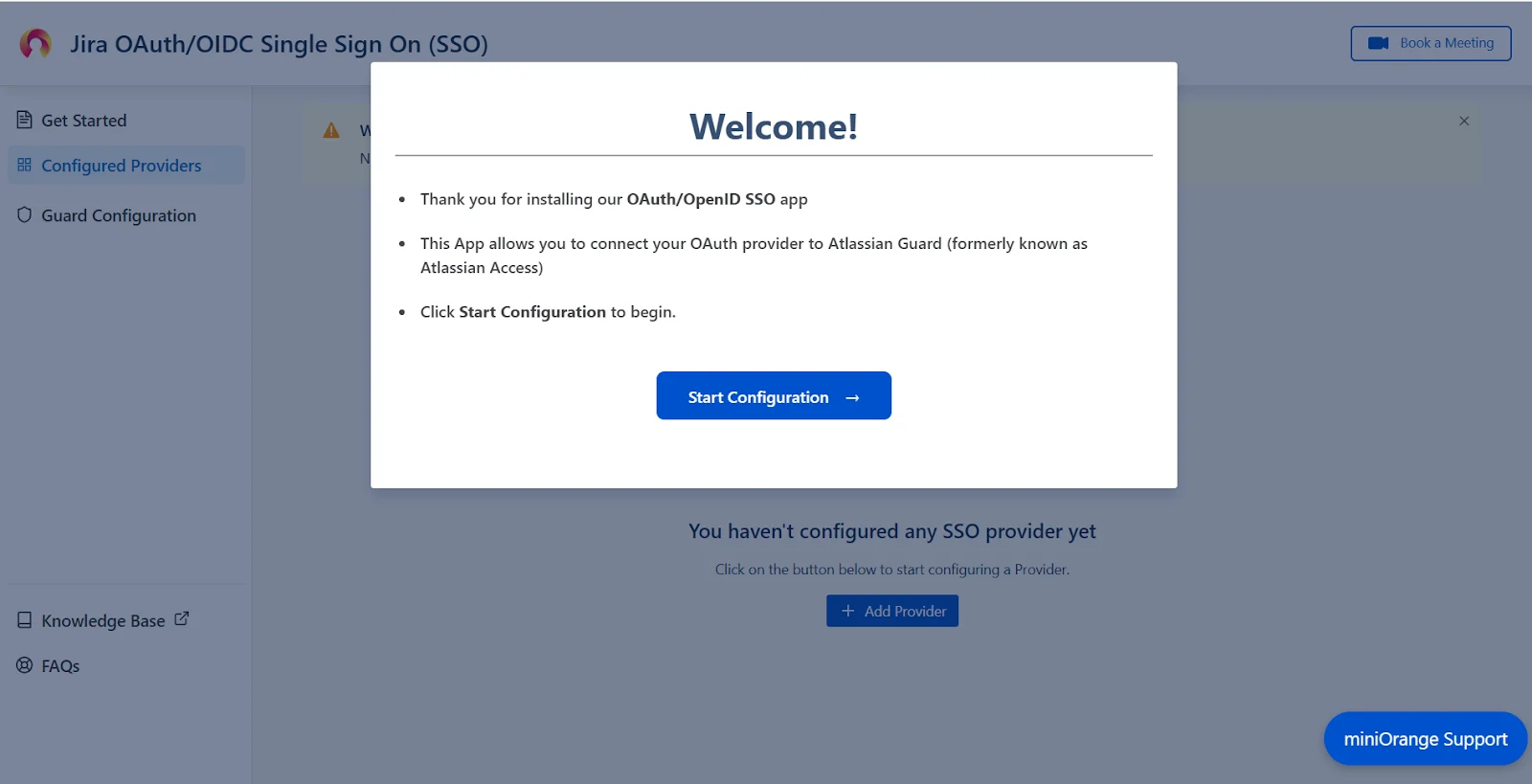
- Next, you will be prompted with a welcome pop-up window. Click Start Configuration.
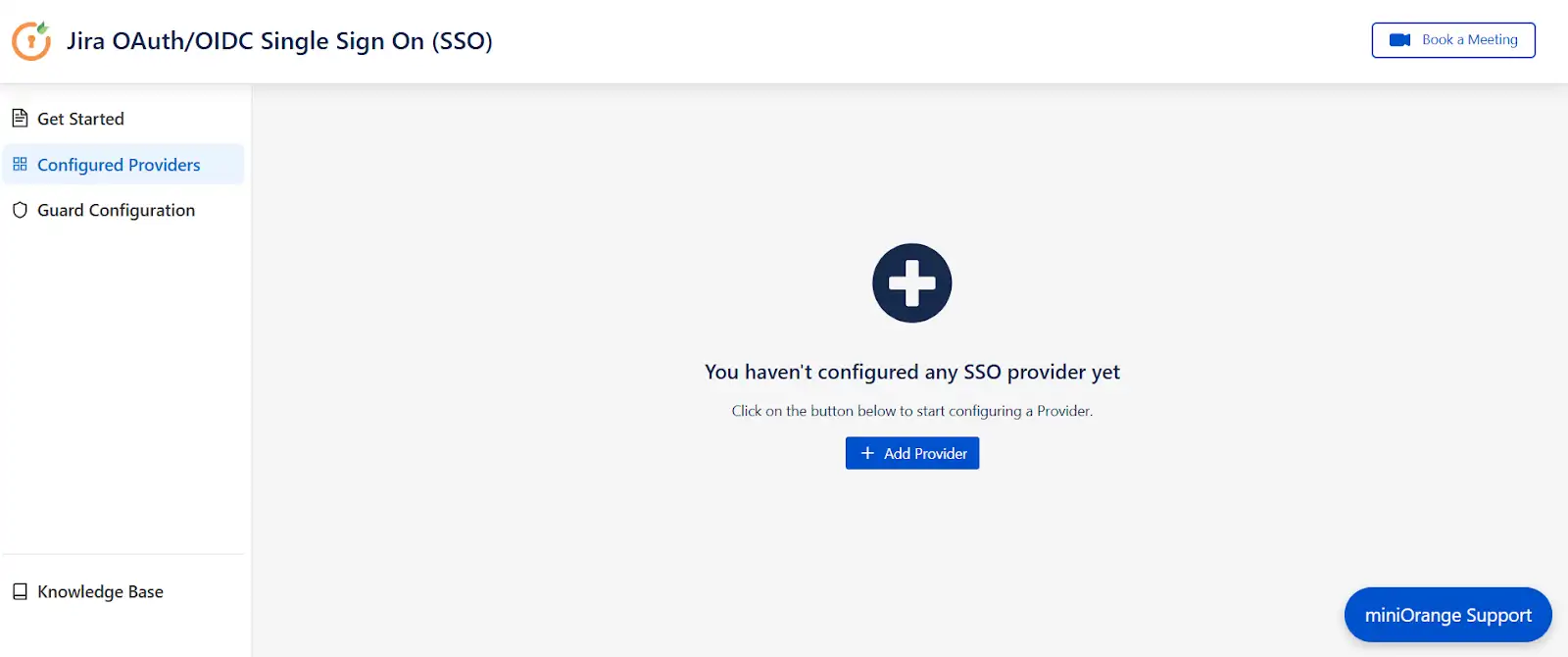
- Now, in the Configured Providers section, click the "Add Provider" button.
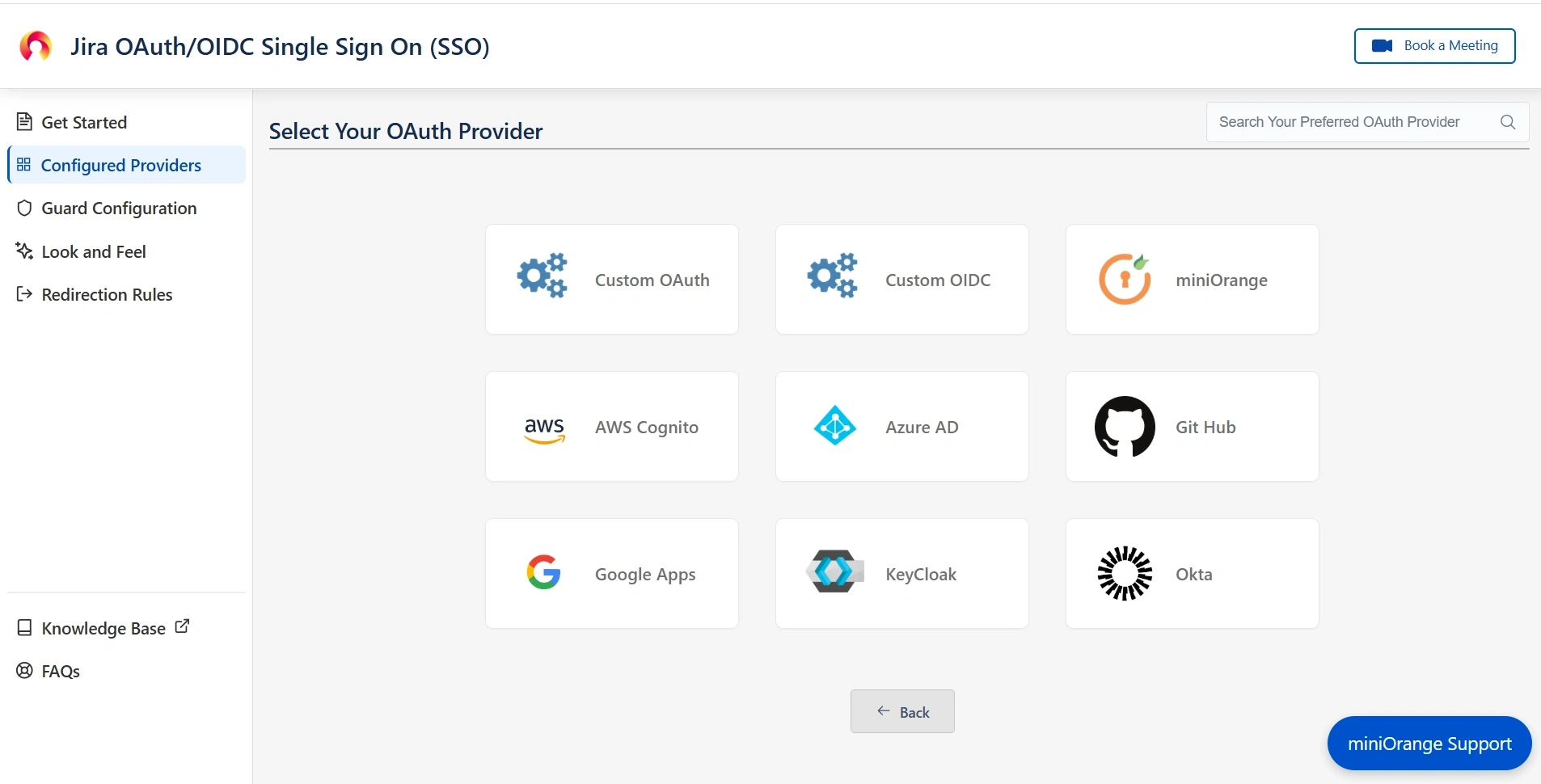
- Select WSO2 as the application.
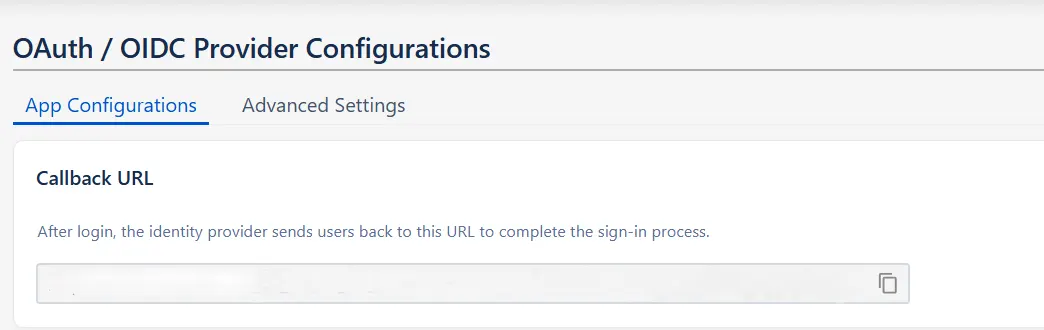
- And copy the callback URL from the OAuth / OIDC Provider Configurations page and keep it handy, as you'll need it to configure WSO2 as the OAuth provider.

Part 1. Setup WSO2 as IDP
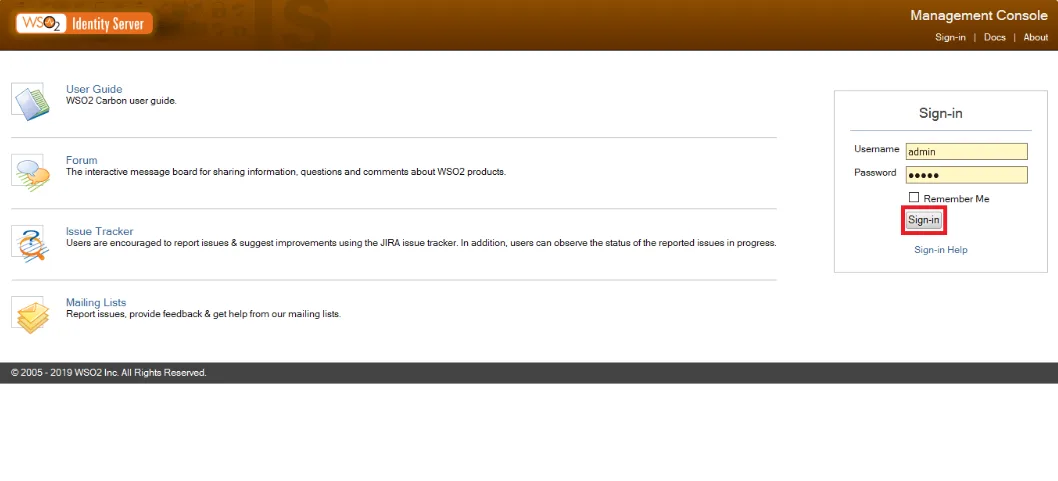
- First, let’s register this Consumer App in WSO2 IS. Download and start WSO2 IS.
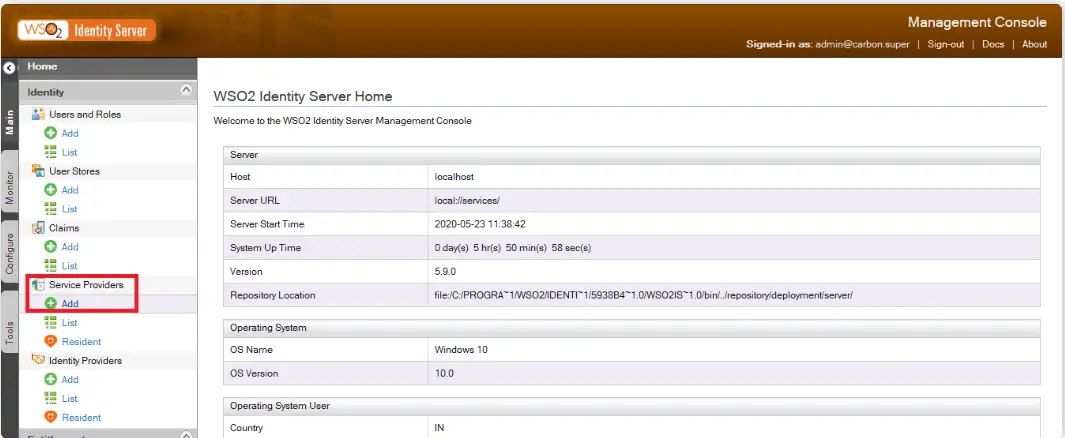
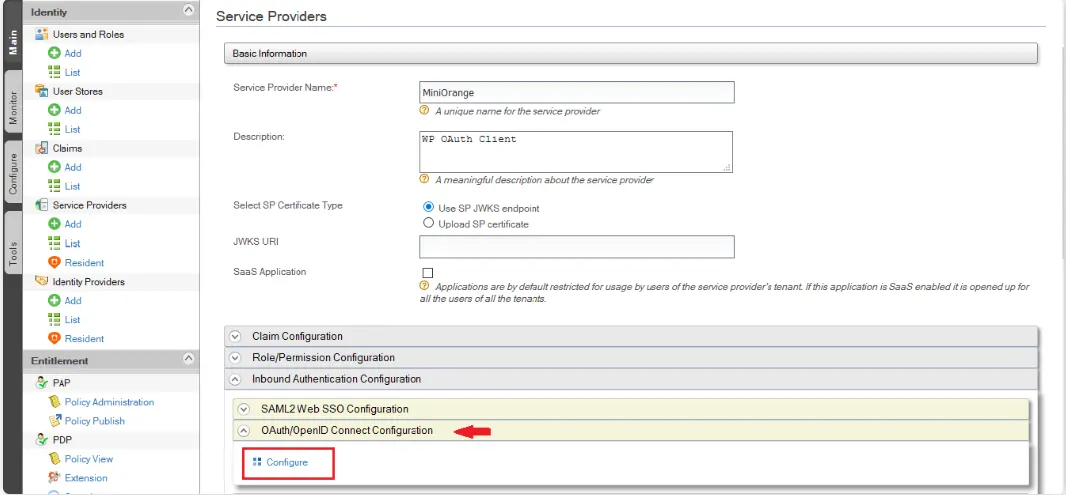
- Once logged in, go to Main -> Service Provider and click on Add.
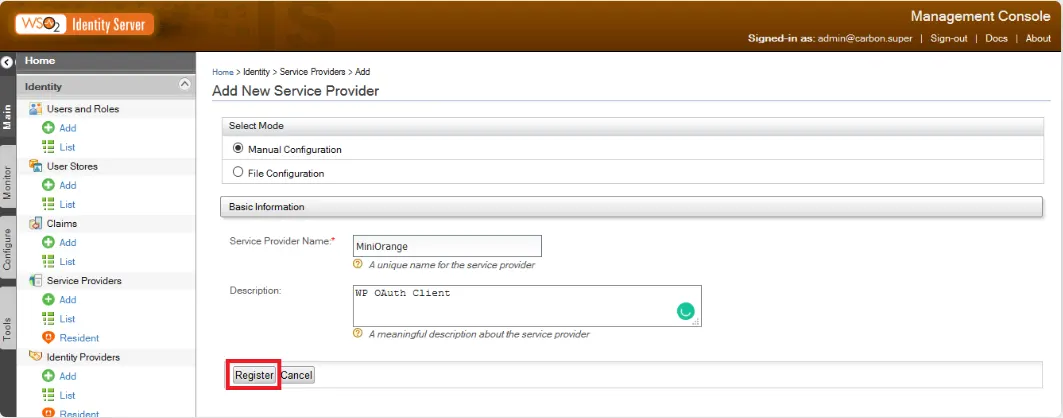
- Enter the Service Provider Name and Description and click on Register.
- Now go to the Service Provider -> List and edit the Service Provider you have created.
- Scroll down and select Inbound Authentication Configuration and then select OAuth/OpenID Connect Configuration and click on Configure.
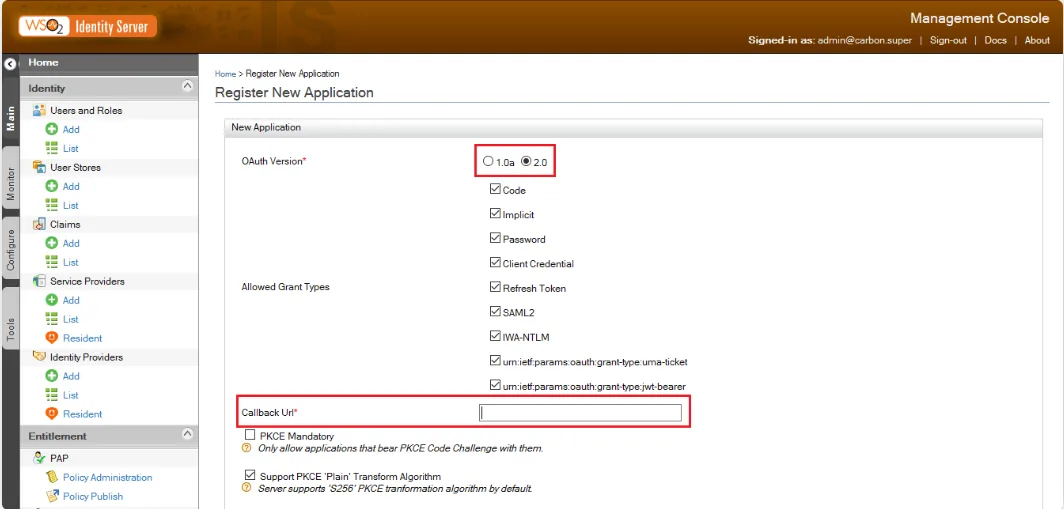
- You will get the Callback URL/Redirect URL from Step 2.
- Copy the Callback URL and paste it in the field. Click on Add.
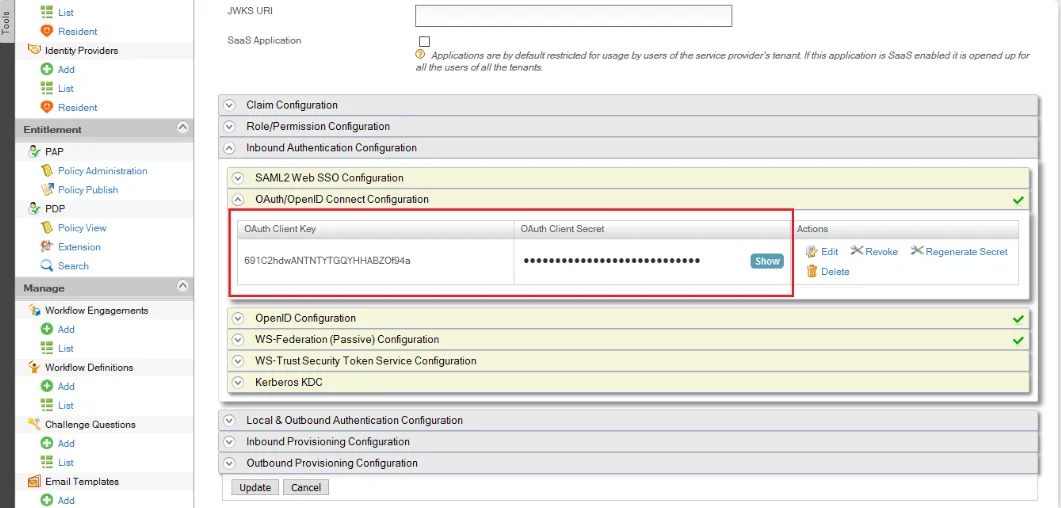
- When the app has been added, Client ID and Client Secret are generated for the application. Configure the WordPress OAuth SSO plugin with Client ID, Client Secret, Authentication and Access Token, Get User Info Endpoint of WSO2. Endpoints are provided at the bottom of this guide.
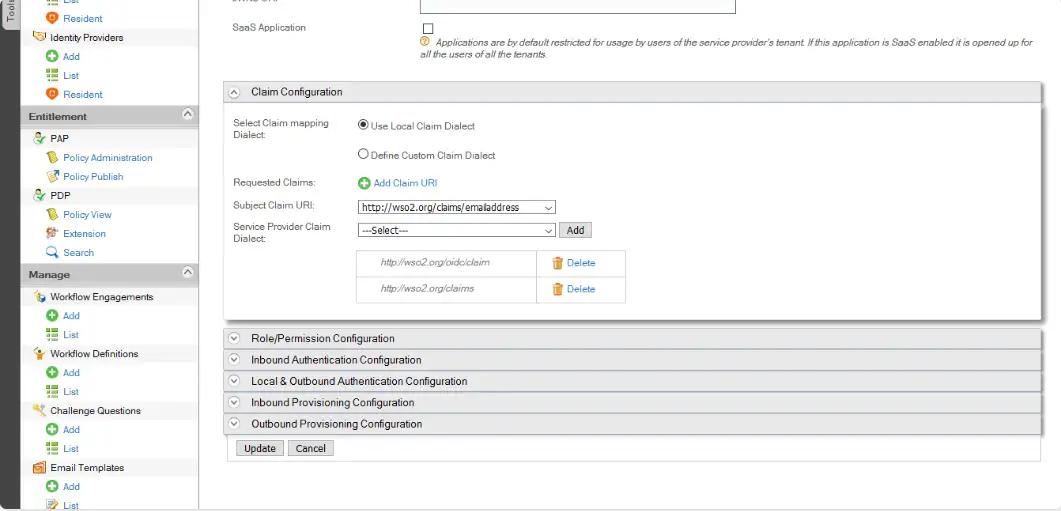
- Attribute Mapping: To get attributes from WSO2 you have to add the following Claim URIs in your WSO2 application.
- Go to Service Provider->Claim Configuration.
- Select https://wso2.org/claims/emailaddress from Subject Claim URI dropdown.
- Add following URIs in Service Provider Claim Dialect: https://wso2.org/oidc/claim & https://wso2.org/claims
- You have successfully completed your WSO2 Server side configurations.
Part 2. Setup miniOrange as Service Provider
- Go to miniOrange Admin Console.
- From the left navigation bar select Identity Provider.
- Select the OAuth tab.
- Enter the following values.
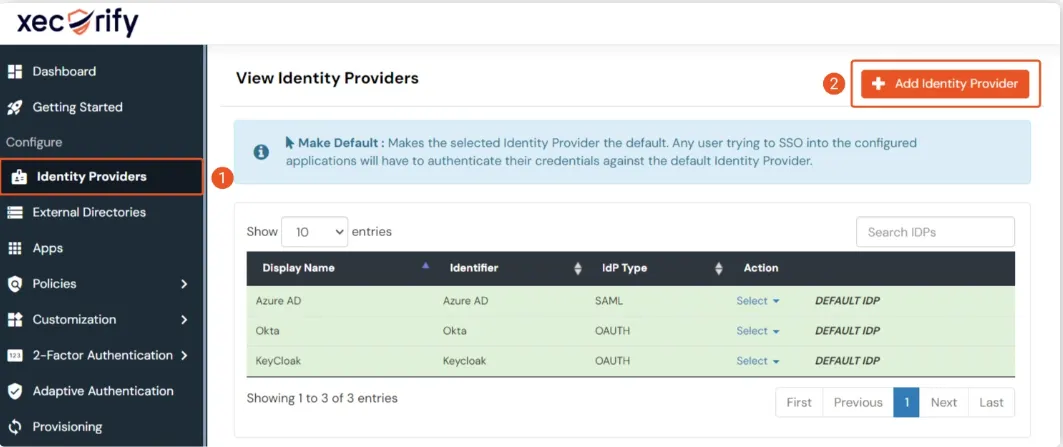
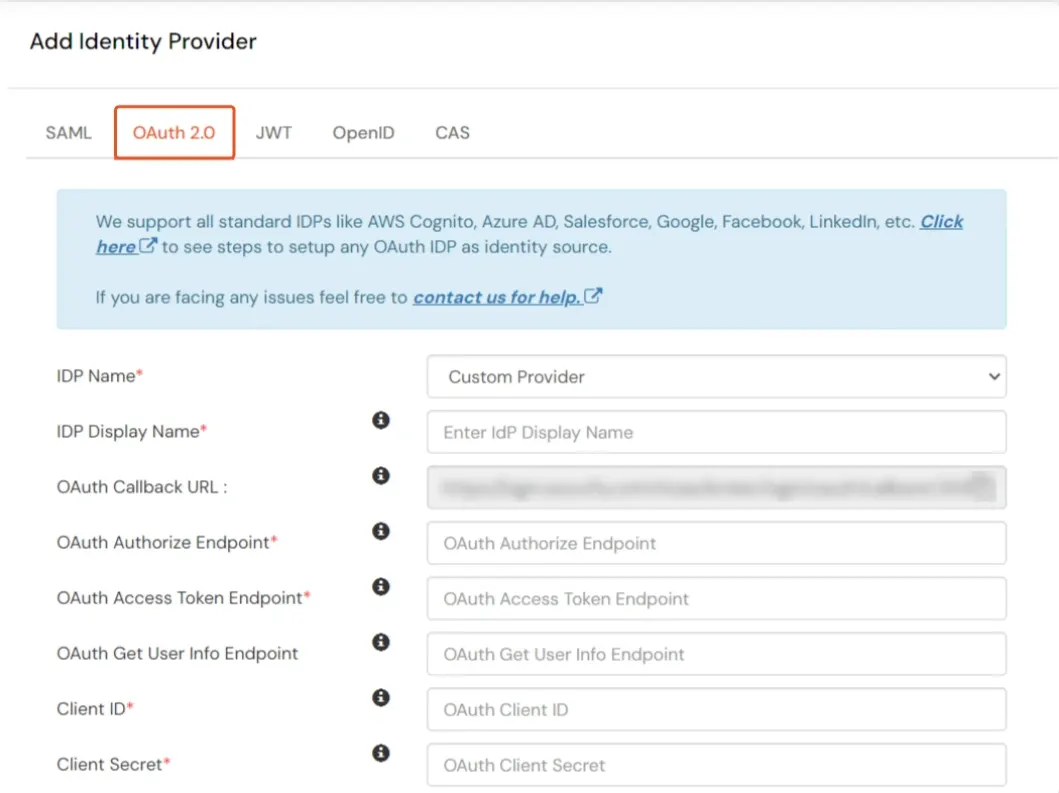
| IdP Name | Custom Provider |
| IdP Display Name | Choose appropriate Name |
| OAuth Authorize Endpoint | https://<wso2-app-domain>/oauth2/authorize |
| OAuth Access Token Endpoint | https://<wso2-app-domain>/oauth2/token |
| OAuth Get User Info Endpoint (optional) | https://<wso2-app-domain>/oauth2/userinfo |
| Client ID | From Part 1 |
| Client secret | From Part 1 |
| Scope | openid |
Part 3. Test connection between miniOrange and WSO2
- Go to the miniOrange Admin Dashboard.
- Go to Identity Providers tab. Then click on the select button under the app you just created. Then click on Test Connection.
- A new popup login window will open. Enter your credentials and login.
- Next, return to the miniOrange App configuration page. (OAuth / OIDC Provider Configurations )
- Enter Client ID, Client Secret, Scopes (such as openid, email, etc.), and other required endpoints, and click Save Configuration.
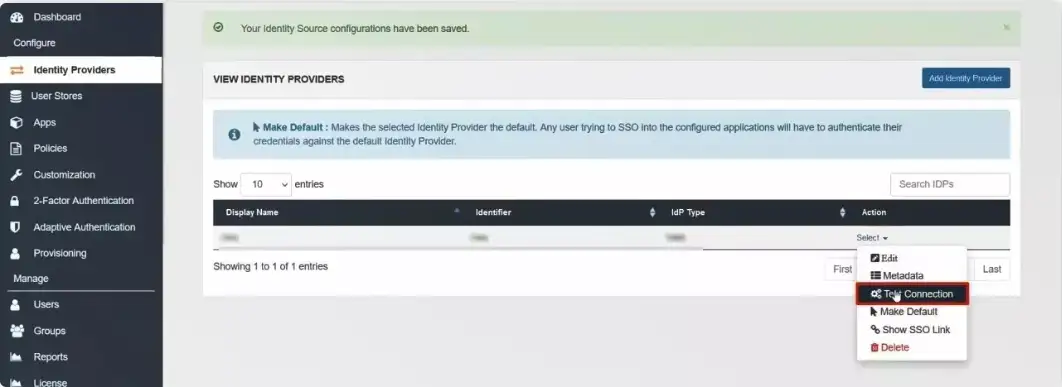
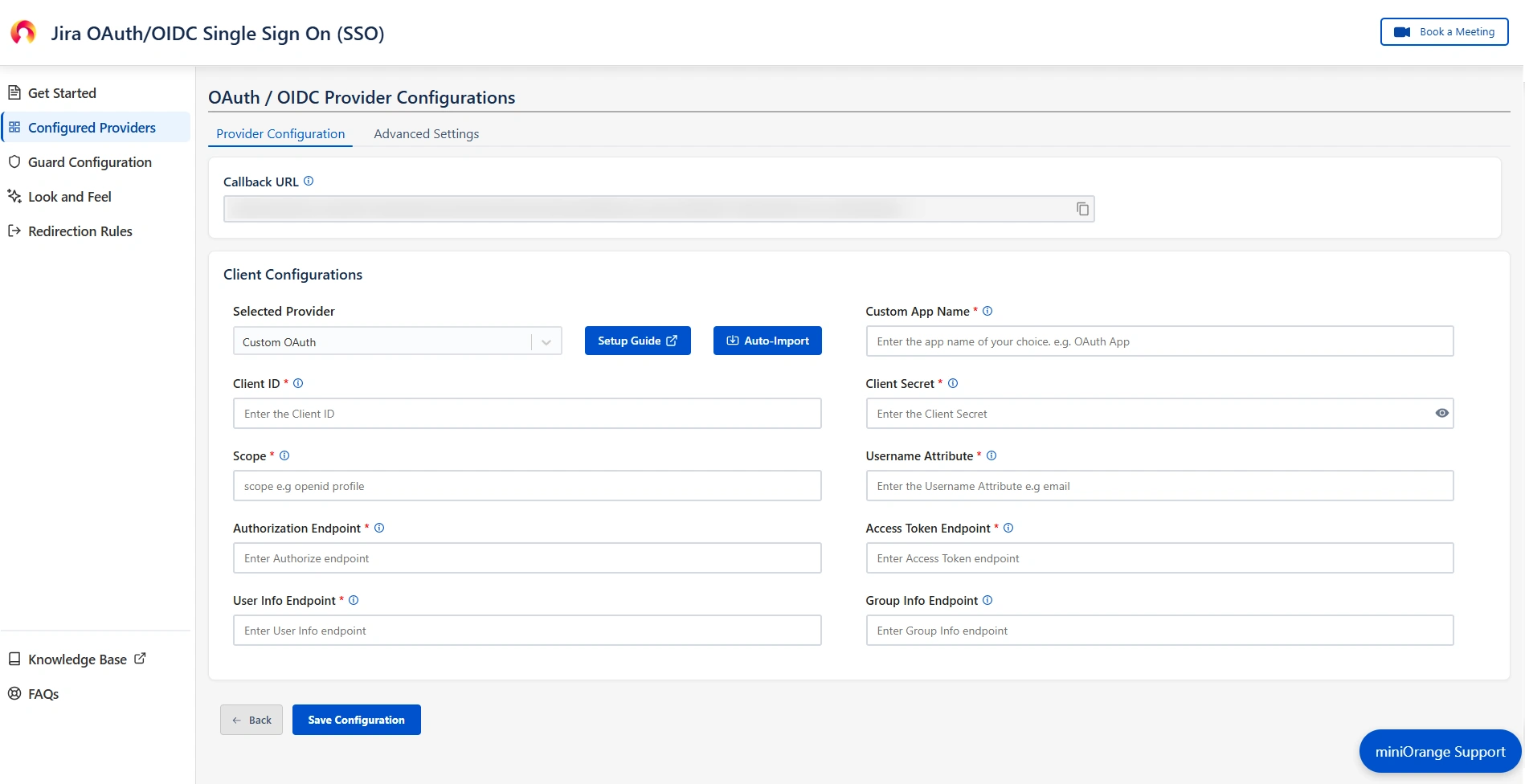
Step 2. Set up SSO between Atlassian Guard and miniOrange App
After saving the OAuth Configuration, you’ll be required to configure Atlassian Guard and the miniOrange OAuth/OIDC SSO App.
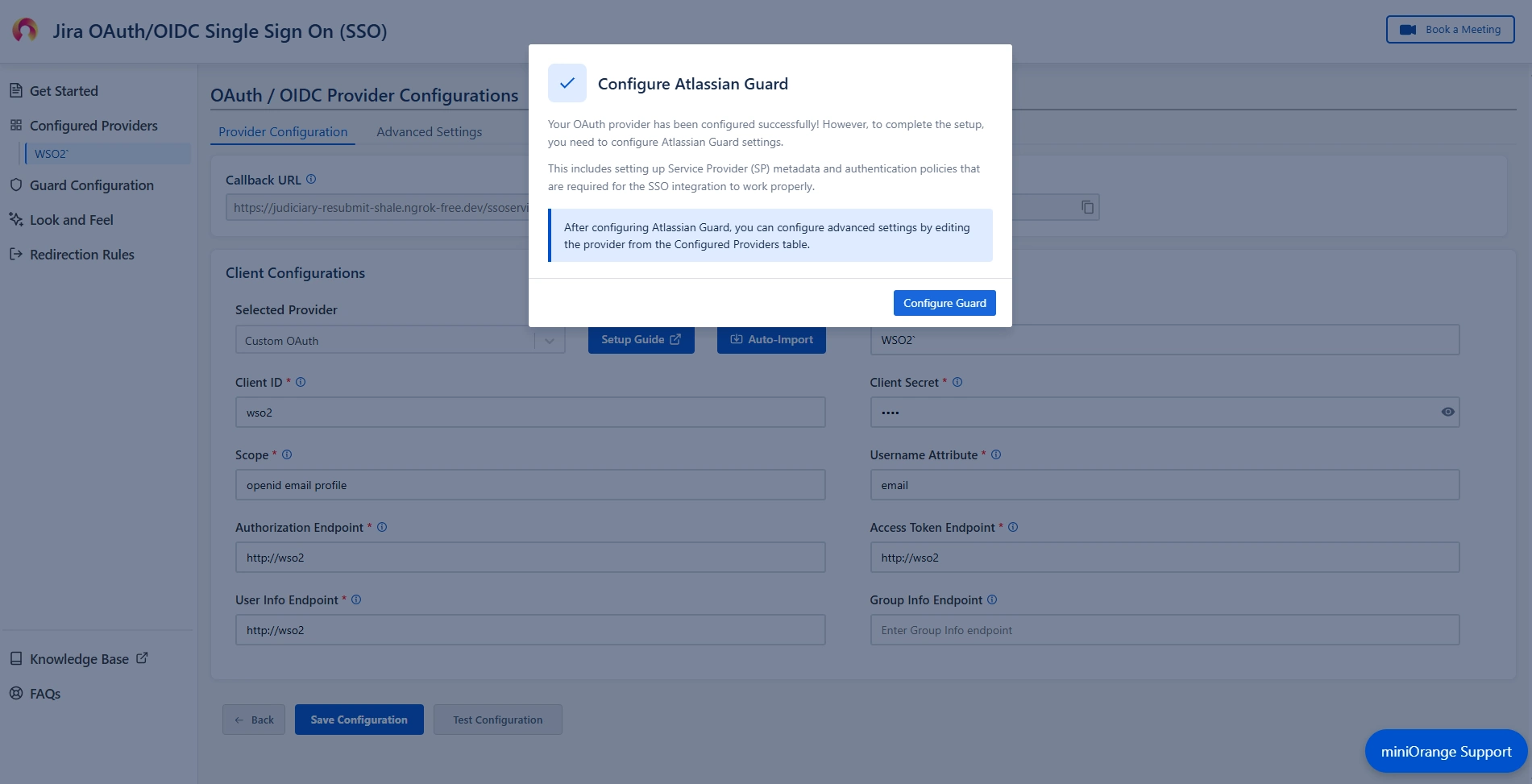
- A pop-up notification will appear, asking you to complete the Atlassian Guard configuration.
- Click on Configure Guard, and you will be navigated to the Guard Configurations section.
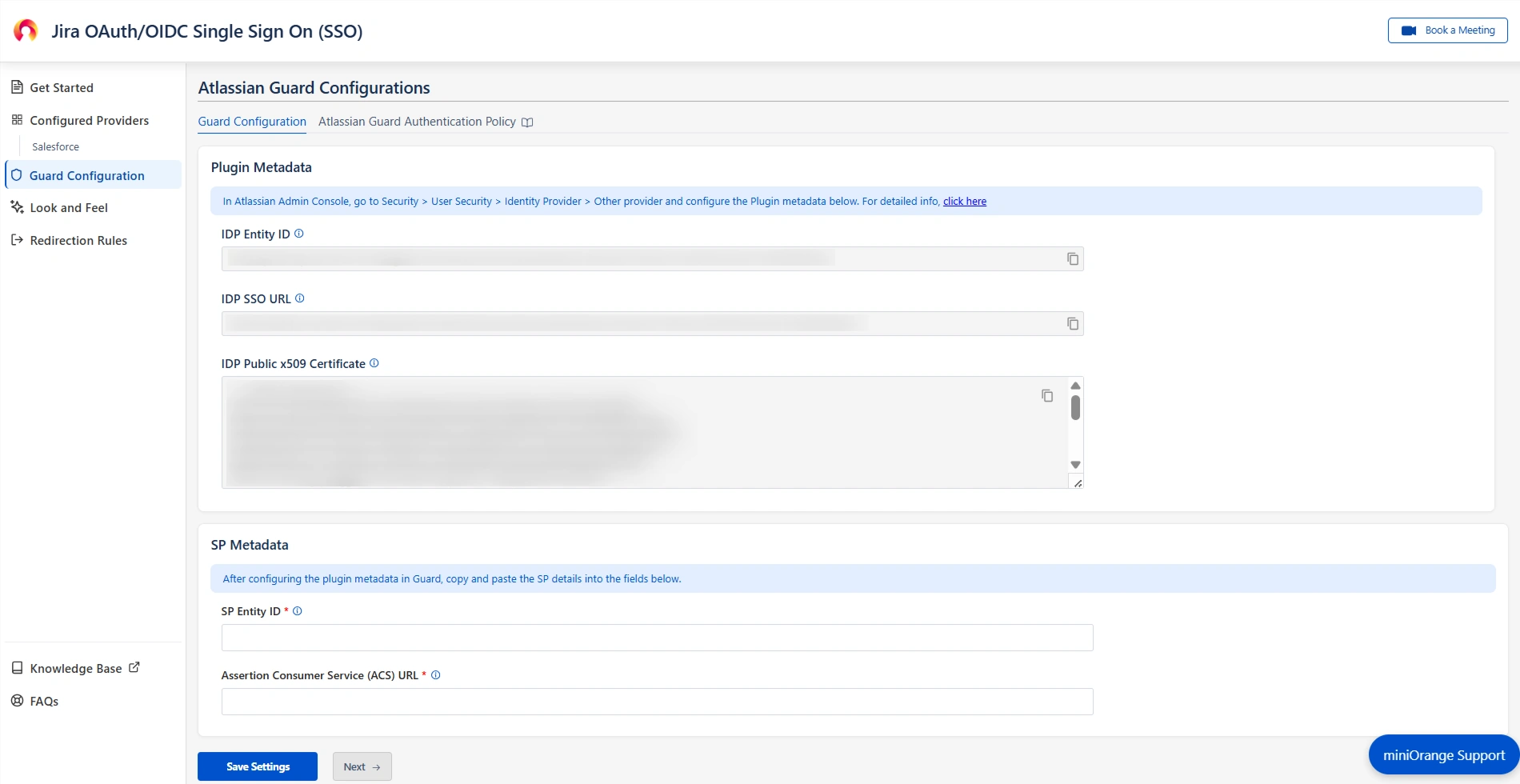
- In this section, you will find the Plugin Metadata details.
- Copy and keep the following values handy. You’ll need them while setting up your Identity Provider in Atlassian Guard:
- IDP Entity ID
- IDP SSO URL
- IDP Public X.509 Certificate
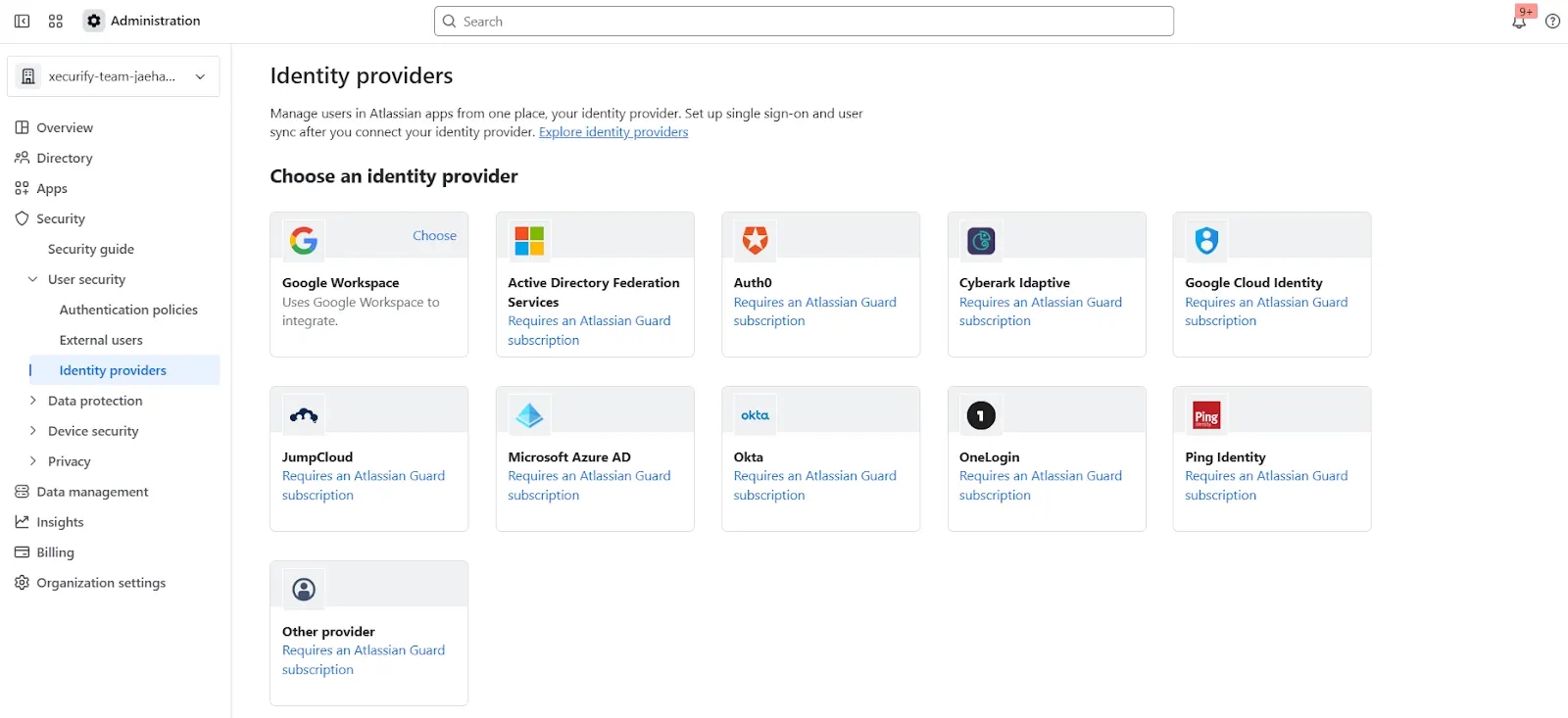
- Open the Atlassian Admin Console and navigate to the Security tab.
- Under User Security, click Identity Providers.
- Select Other to begin configuring a custom Identity Provider.
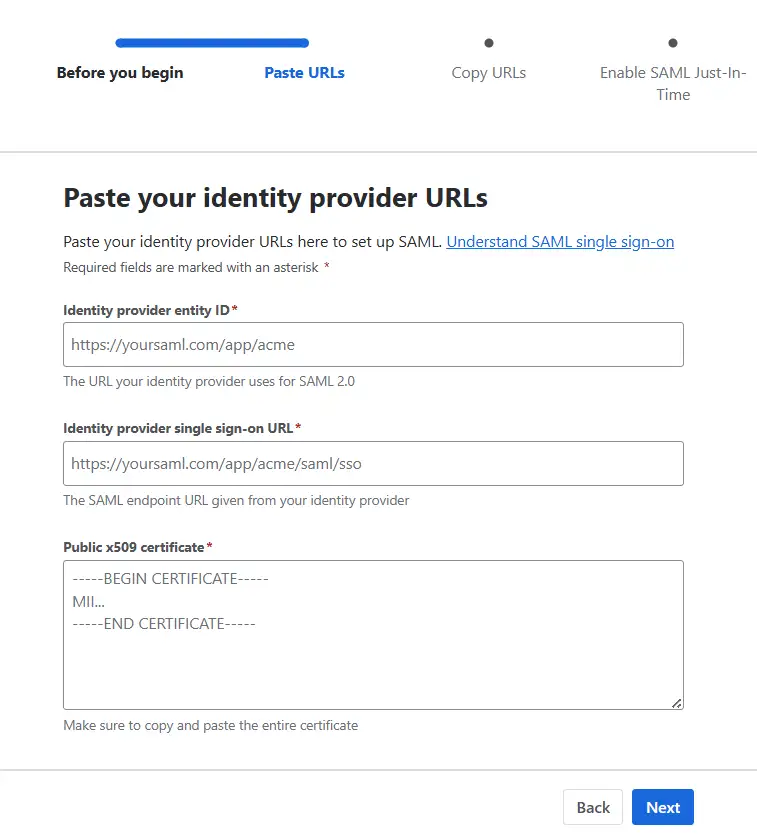
- Provide an appropriate name, select Set up SAML Single Sign-On, and click Next.
- Now, paste the IDP Entity ID, IDP SSO URL, and Public X.509 Certificate that you copied from the plugin configuration.
- Click Next and copy the Service Provider Entity ID and Service Provider Assertion Consumer Service URL. Keep these handy as they’re required to complete the plugin configuration.
- Complete the rest of the Atlassian Guard configuration.
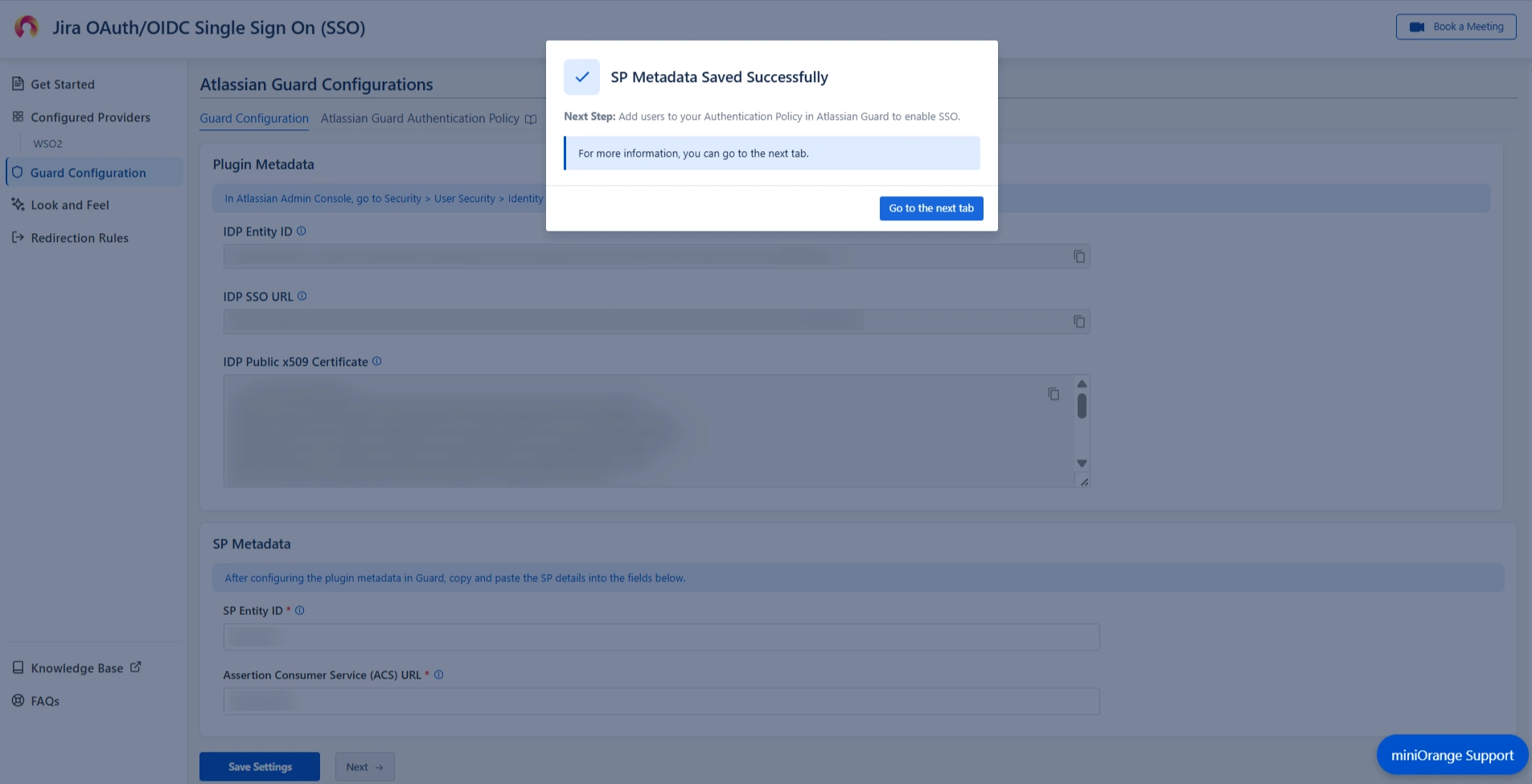
- Once you’re done, return to the plugin, go to the SP Metadata tab in the Guard Configurations section, and click Next.
- Enter the SP Entity ID and Assertion Consumer Service (ACS) URL that you copied, and click Save Settings.
Step 3. Configure SSO Authentication Policy
After completing your SSO configuration, you must assign users to the Authentication Policy and enforce Single Sign-On (SSO).
- Go to your Atlassian Cloud Admin Console.
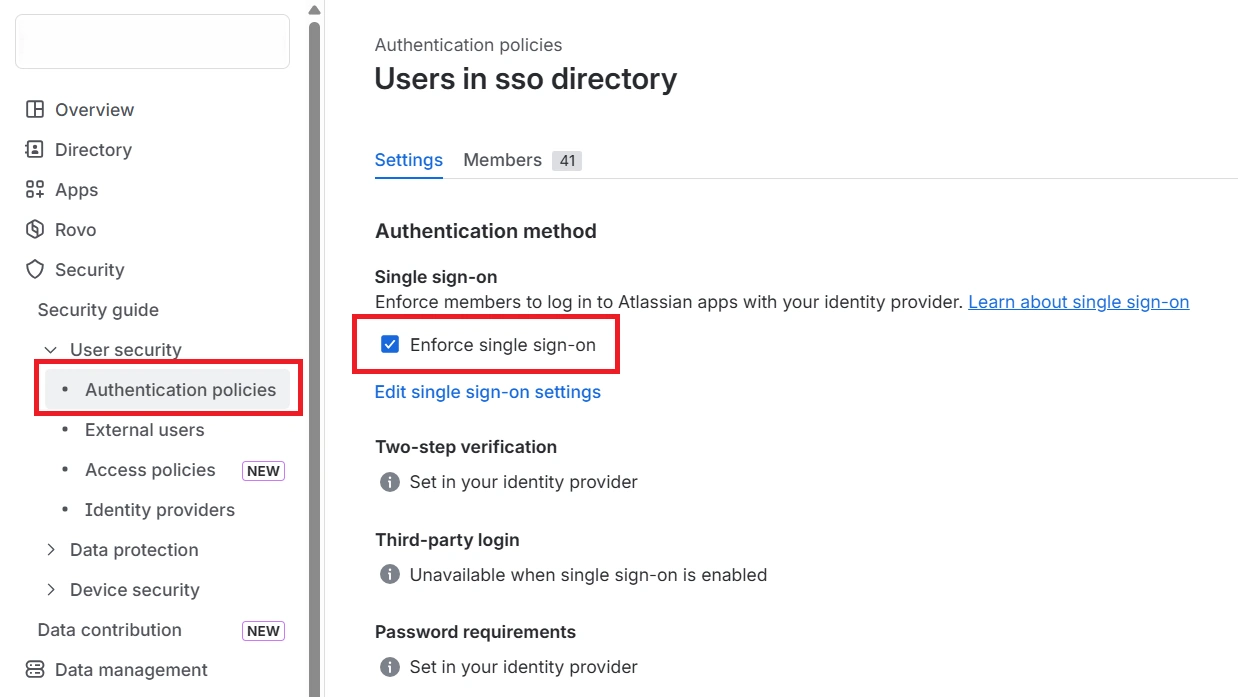
- Navigate to Security → Authentication Policies.
- Open the Authentication Policy you configured for SSO.
- Enable the Enforce Single Sign-On (SSO) option and save the changes.
- Now go to the Members section and add the users or groups who should authenticate using this policy.
- Save your changes.
Once these steps are complete, return to the app and Mark as Complete to complete the setup.

Additional Resources
Did this page help you?