Hello there!
Need Help? We are right here!

Need Help? We are right here!
Search Results:
×
Data labelling software gives organizations a single, automated way to identify and tag sensitive or classified data that matters to the
organization before it becomes a breach headline.

Confidential files live across endpoints, cloud storage, or shared drives, with no consistent tagging. This makes it hard to know what data exists, where it lives, or who can access it.

Tagging files by hand is slow, inconsistent, and error-prone at enterprise volume. Manual review can't keep pace with the terabytes of new data organizations generate daily.

Security teams can't protect what they can't see. Without automated classification, confidential information stays invisible until it's already been shared, leaked, or lost.

Data handling policies only work if systems know which files are sensitive. Without labels, DLP tools, access controls, and retention rules have nothing consistent to act on.

Regulations like GDPR, HIPAA, and India's DPDP Act demand provable, consistent data handling. Manual processes can't keep up with the audit trails and controls regulators expect.
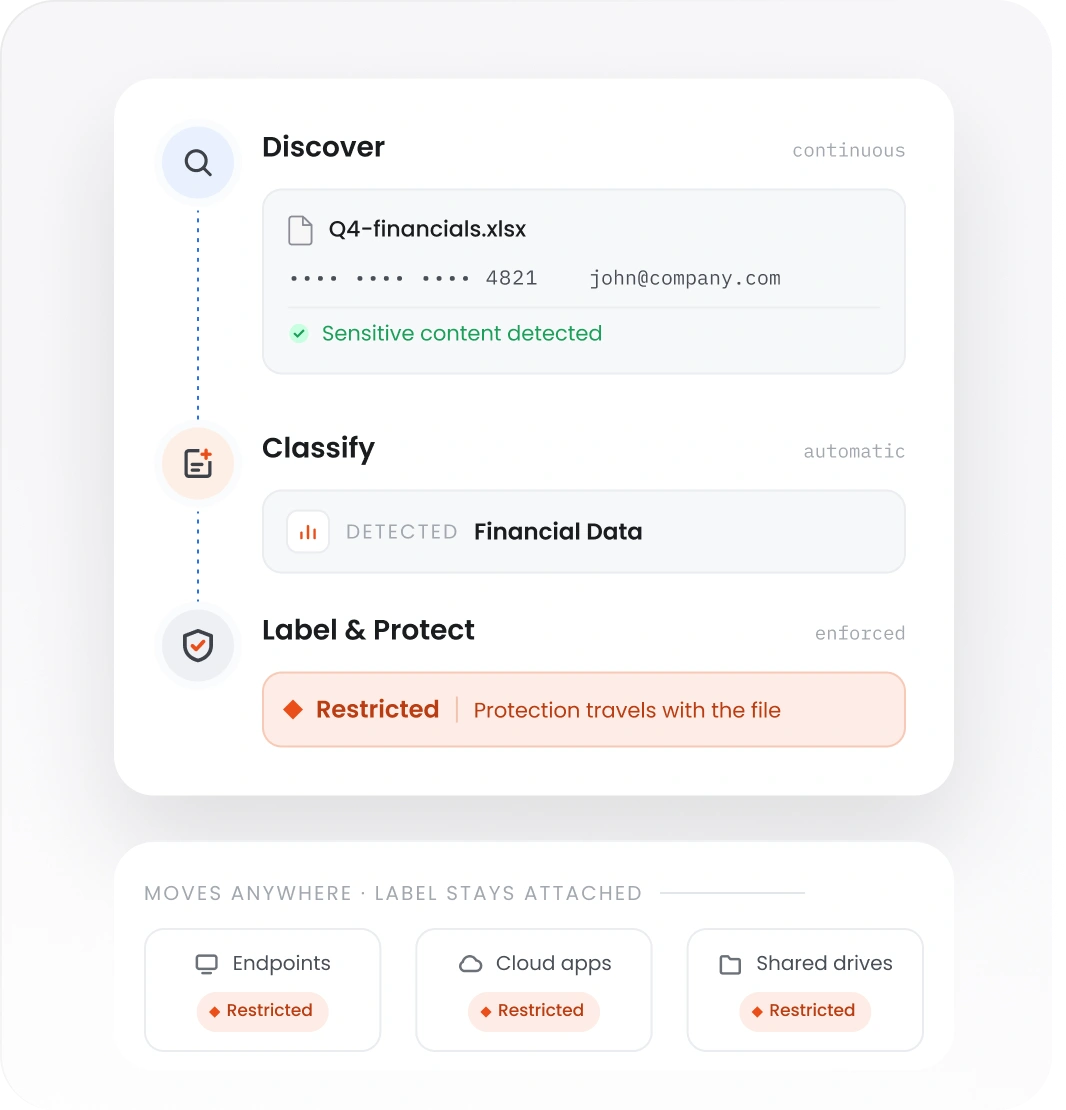
The data labelling solution combines automated intelligence with granular control, giving security teams a single system to classify, manage, and act on sensitive data across the enterprise.
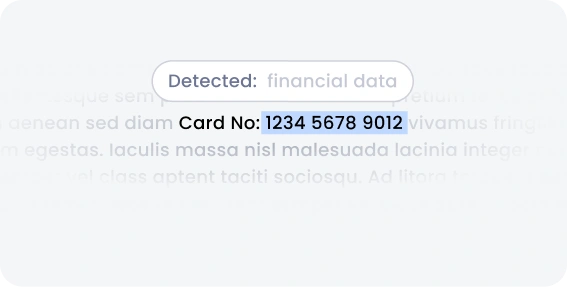
Automatically analyze data context and content to assign accurate sensitivity labels, ensuring risk-based classification independent of file location or type.
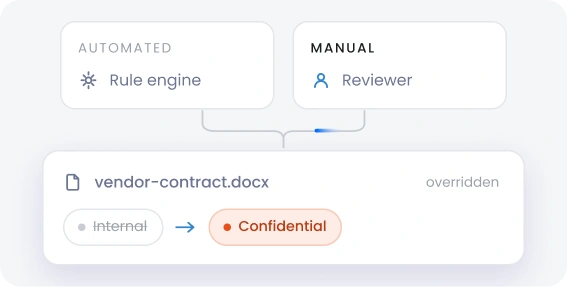
Combine automated classification rules with user-driven labeling, allowing employees to review or override labels, maintaining high accuracy without slowing workflows.
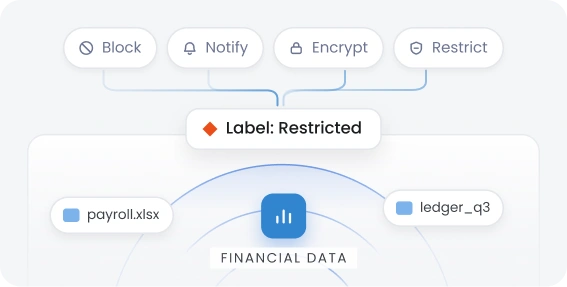
Applied sensitivity labels immediately trigger data loss prevention actions like access restriction, unifying classification and enforcement into one connected system.
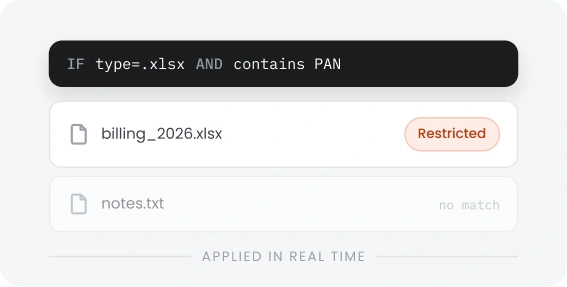
Labels apply instantly based on predefined metadata, file types, or keywords, removing delay between data creation and protection, ensuring real-time tagging without manual intervention.
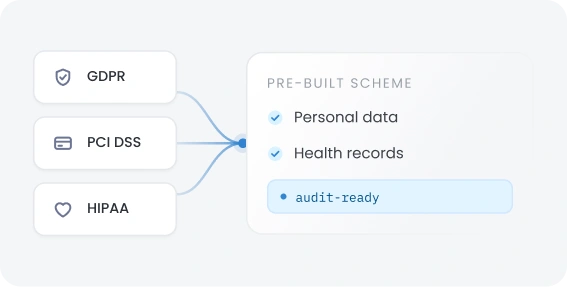
Pre-built classification schemes align with GDPR, PCI DSS, and HIPAA, providing compliance teams with audit-ready labeling.
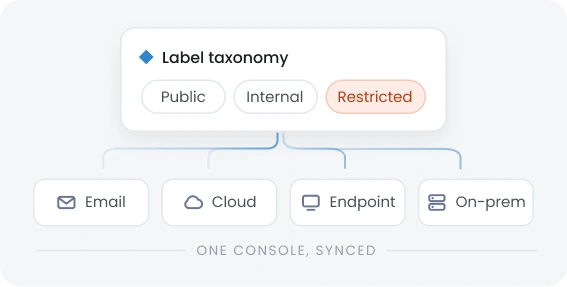
A single administrative console configures and syncs classification rules across all platforms, eliminating inconsistency from managing labels in disconnected tools.
Labels alone don't stop data loss - enforcement does. miniOrange connects every sensitivity label directly to DLP policy actions, so protection kicks in automatically the moment risk appears.

Labeled files trigger automatic restrictions on external or unapproved sharing. Sensitive data stays within approved boundaries by default.

Outbound emails with labeled content are scanned and blocked before leaving the network, this helps prevent common accidental data exposure risks.

Sensitivity labels can automatically block copying to removable media. This shuts down a longstanding blind spot in endpoint security.

Labeled files are prevented from syncing to unauthorized cloud storage or SaaS apps. Policy enforcement extends wherever data tries to travel.

Print restrictions are automatically enforced based on document sensitivity. This closes a physical-world security gap that many DLP tools overlook during daily operations.

Every labeled file's movement is tracked across endpoints, networks, and cloud environments. Security teams gain a real-time trail of where sensitive data goes.

Any attempt to bypass a label-based policy triggers an immediate alert. Teams can respond to risk in real time instead of discovering it during an audit.

DLP actions are driven by the applied label, ensuring consistent enforcement regardless of where the file lives. Protection scales automatically as new files are created and classified.
Regulators expect organizations to prove, not just claim, that sensitive data is properly classified and controlled.
miniOrange's Data Labelling Platform maps directly to major compliance frameworks, giving legal and security teams audit-ready evidence without building controls from scratch.
View Compliance Frameworks
EU Data Privacy

Healthcare PHI

Payment Card Data

Information Security

Security & Availability

India Data Protection

California Privacy
Enterprises choose miniOrange's data labeling tool because it connects classification directly to enforcement, not just visibility.

Classification, labeling, and DLP enforcement run from one unified console, eliminating gaps between separate systems.

Classification dashboards give security teams live tracking of data distribution, risk profiles, and labeling trends.

The platform integrates with Microsoft Purview and other data classification solutions, letting organizations extend investments instead of replacing them.
Common questions about data labelling software and how it strengthens DLP outcomes.