Hello there!
Need Help? We are right here!

Need Help? We are right here!
Search Results:
×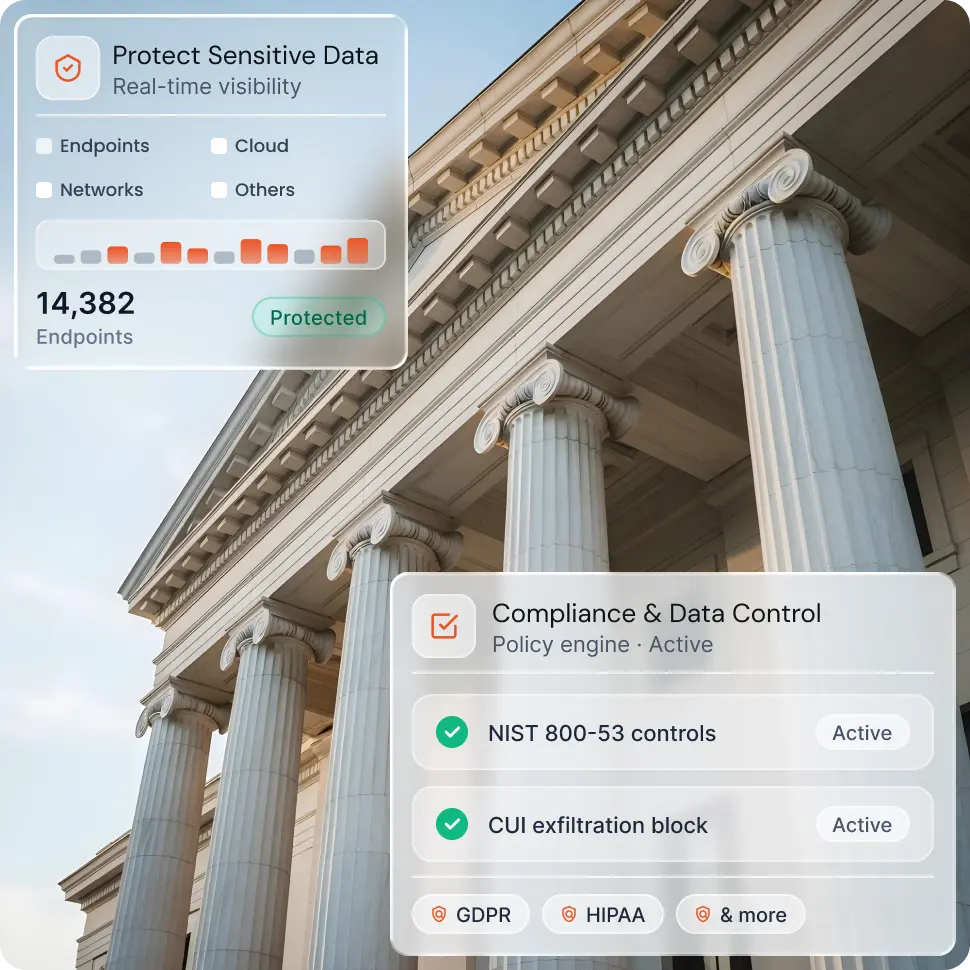
Government agencies face unique public sector data security challenges due to scale, sensitivity, and regulatory complexity.

Government systems often rely on a mix of legacy and modern technologies across departments. This creates security gaps, making it difficult to enforce consistent data protection policies.

Public sector environments handle data across multiple classification levels, including confidential and restricted information. Managing and securing such diverse data types increases the complexity of protection and compliance.

Frequent data sharing between departments and agencies increases exposure risks. Without proper controls, sensitive information can be unintentionally accessed or shared beyond intended boundaries, leading to compliance violations and potential data breaches.

Government employees often operate from remote locations or in the field. This expands the attack surface and makes it harder to secure data across distributed environments.

Authorized users with access to sensitive systems can unintentionally or intentionally expose data. Lack of visibility into user behavior increases the risk of internal data breaches.

Government agencies must comply with multiple regulatory frameworks simultaneously. Managing overlapping requirements adds complexity and increases the risk of non-compliance.
Advanced government data security capabilities help protect sensitive data across systems and environments.

Automatically identify sensitive government data across systems, endpoints, and storage locations. Gain complete visibility into where critical data resides to reduce blind spots and risk exposure.

Classify sensitive data based on predefined policies and classification levels. Ensure appropriate protection, access control, and handling based on the data’s sensitivity.

Monitor and control data on devices used by government employees and field personnel. Prevent unauthorized transfers via USB, external devices, or local applications.

Monitor data movement across networks and web channels like browsers, apps, and cloud storage. Detect and block unauthorized uploads and transfers through web forms and browser sessions.

Identify unusual user behavior and detect potential insider threats early. Apply controls to prevent data misuse and unauthorized access across systems.

Monitor and control sensitive data shared via email across government systems. Detect and block unauthorized sharing through attachments, links, and email content.
Protect critical assets with public sector data protection and data loss prevention for public sector solutions designed for sensitive environments.
Protect highly sensitive and controlled unclassified information across systems.
Secure personal data of citizens across public sector services and platforms.
Protect sensitive investigation and law enforcement records.
Secure financial data, budgets, and funding information.
Protect data related to national infrastructure and public services.
Secure communication between government departments and agencies.
miniOrange delivers a secure and scalable DLP in government solution built to protect sensitive data across complex public sector environments.
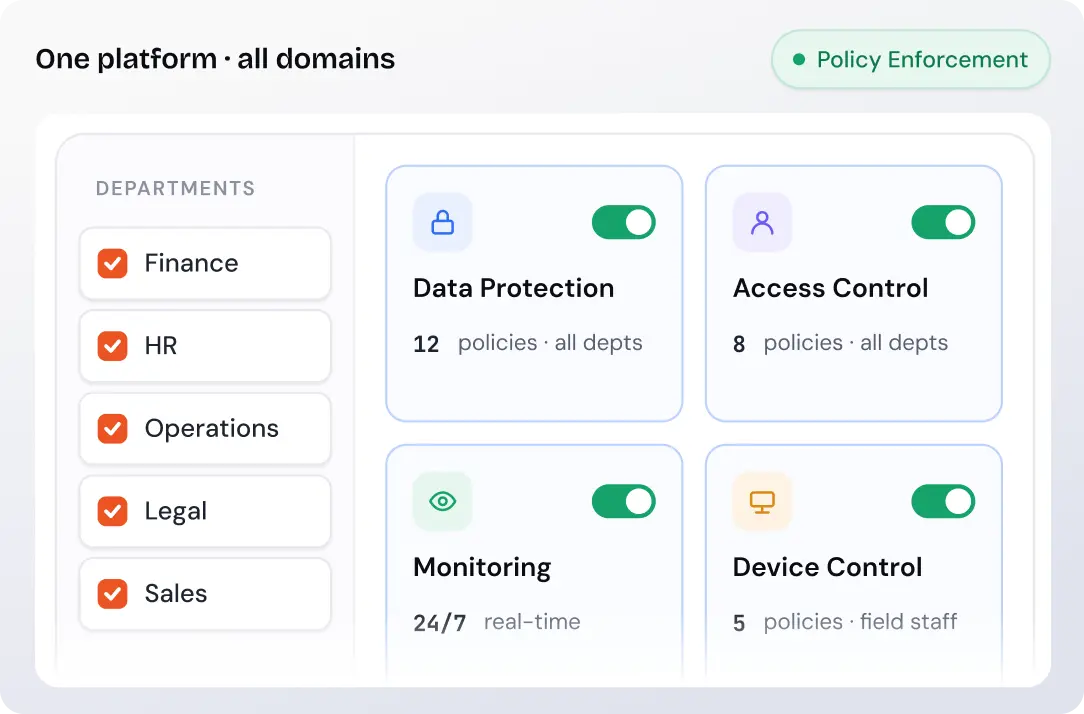
Manage data protection policies, access controls, and monitoring from a centralized system with full visibility across users, devices, and data movement. Ensure consistent policy enforcement while simplifying security operations across departments.
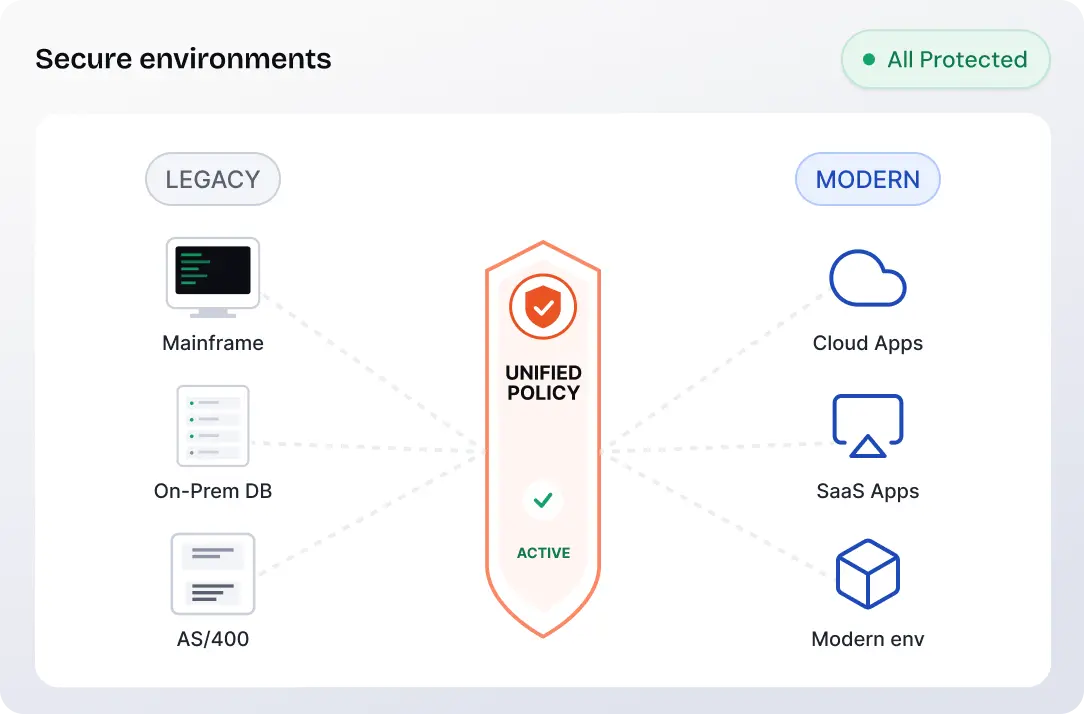
Secure both legacy infrastructure and modern cloud environments without disrupting existing operations. Maintain consistent data protection across diverse systems used in government environments.
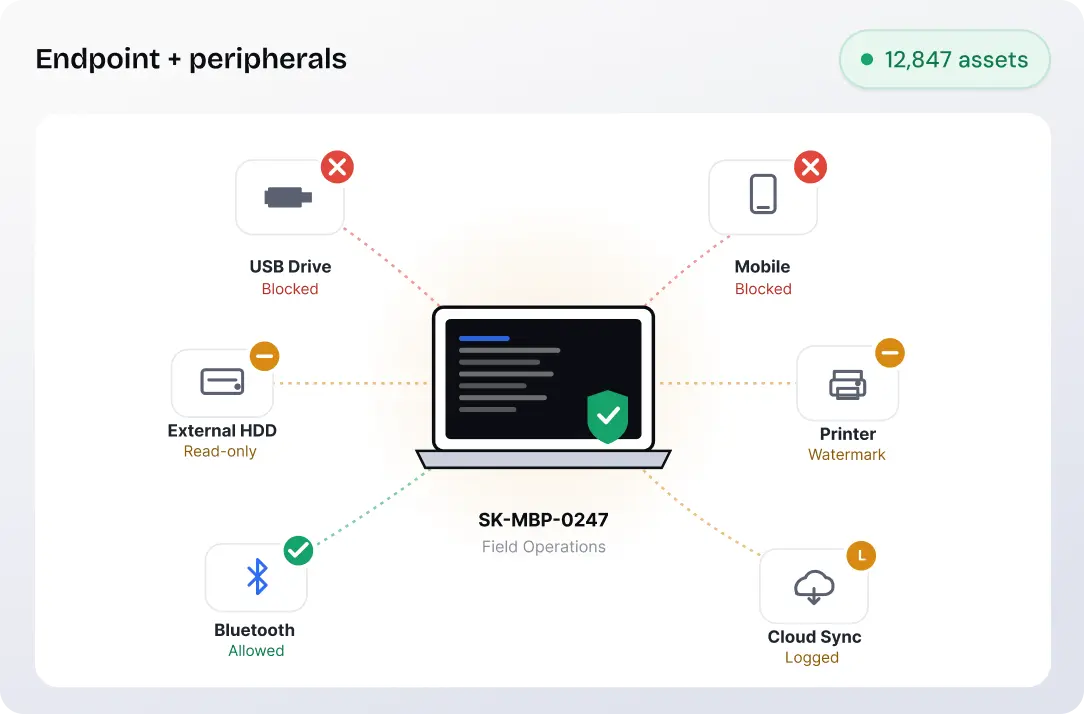
Control how sensitive data is accessed and transferred across endpoints and field devices. Restrict USB usage, external storage, and unauthorized interactions to reduce data leakage risks.
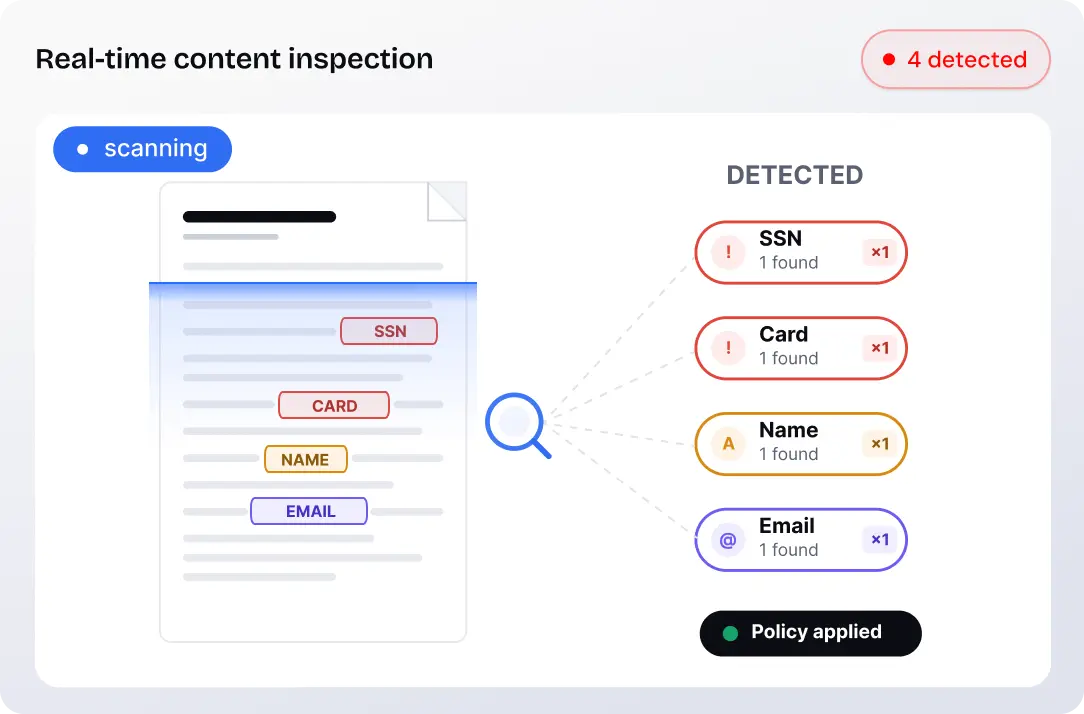
Identify sensitive data in real time based on content and context across systems. Prevent unauthorized sharing and exposure with policy-driven controls.
Meet global and regional compliance requirements while ensuring sensitive government data is handled securely across systems.

Protect personal and operational data in accordance with India’s data protection regulations while ensuring secure handling across systems. With proper access controls and continuous monitoring, agencies can reduce risks and maintain compliance.

Secure personal data in line with global privacy standards by controlling how information is accessed, processed, and shared. This helps government organizations reduce regulatory risks while strengthening overall data protection practices.

Maintain strong information security practices by implementing standardized controls and processes. This ensures better risk management, audit readiness, and protection of sensitive government data.
Data Loss Prevention features that go beyond detection.