Hello there!
Need Help? We are right here!

Need Help? We are right here!
Search Results:
×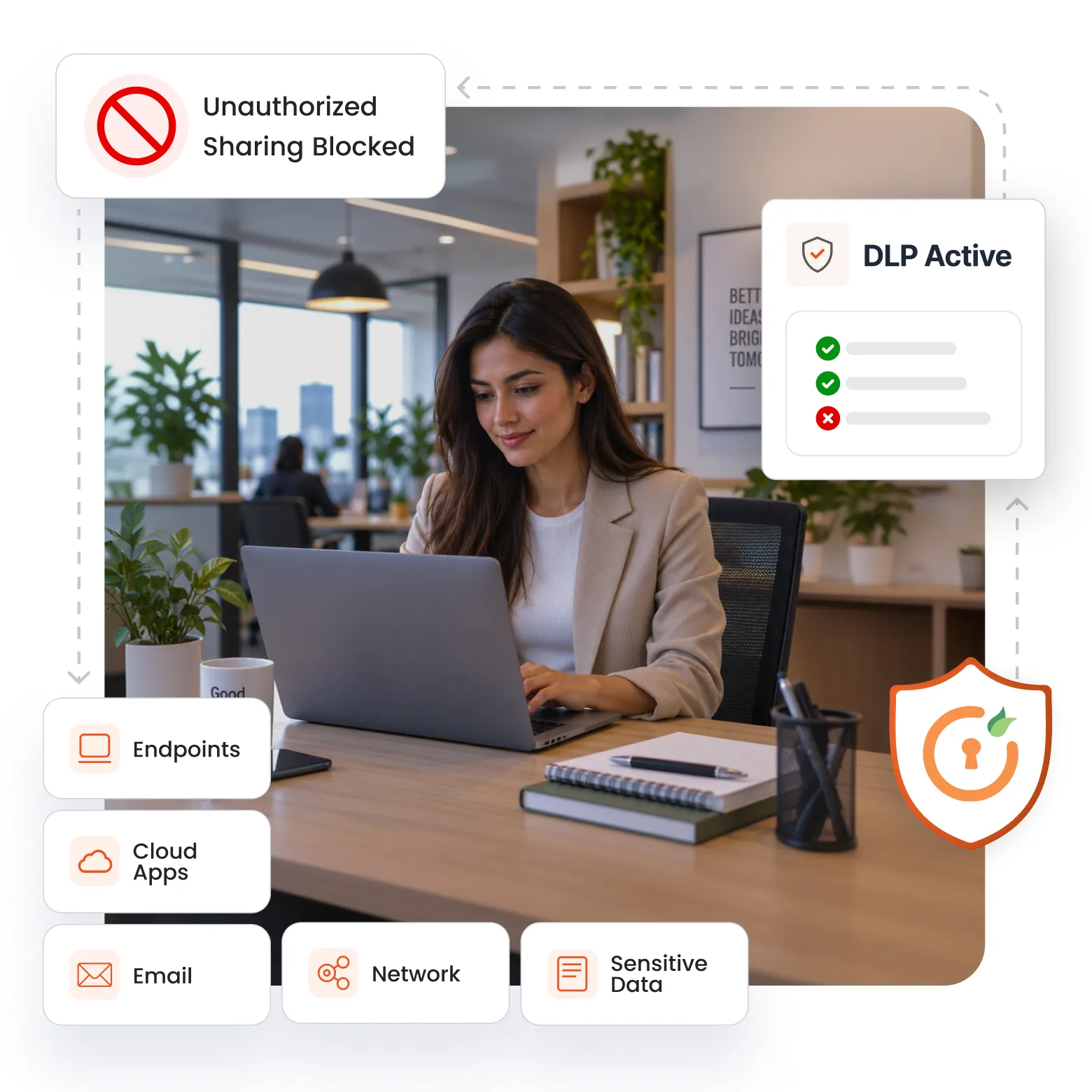
Customer records, proprietary code, and business-critical files need more than access controls. With data loss prevention, SaaS teams can detect sensitive content and enforce policies that govern how it moves.

Protect personally identifiable information, account details, and customer records from unauthorized sharing across supported endpoints, email, and cloud applications.

Keep proprietary code, product roadmaps, and technical documents within approved workflows using content inspection and file fingerprinting.

Detects credentials and sensitive authentication information in inspected content and helps prevent exposure through unauthorized cloud sharing.

Identify payment information, financial records, and confidential business documents. Apply policies that restrict where sensitive files can go and safeguard transactions.
Know what needs protection, define how it can be used, and act when activity violates your policies. Bring discovery, classification, and enforcement together to reduce manual oversight.
Know where sensitive information lives before it becomes an exposure risk.
Strengthen SaaS data security across stored files, active workflows, and outbound transfers. Apply controls at supported inspection points to
reduce exposure throughout the information lifecycle.
Discover and classify sensitive files stored on supported endpoints, networks, cloud repositories, and emails.
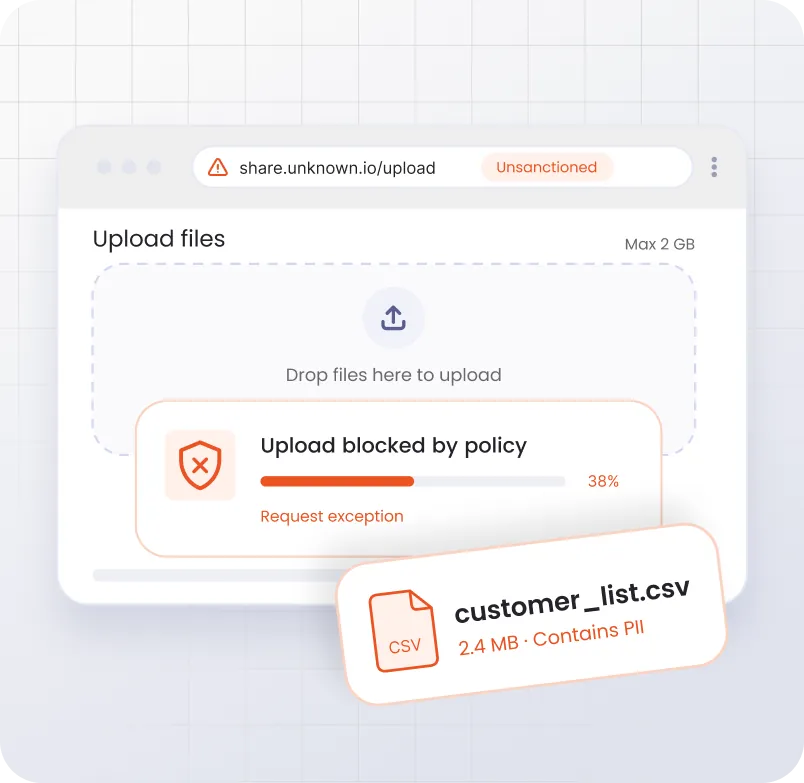
Inspect sensitive information moving through supported email, browser uploads, and cloud transfers. Stop transmissions that violate your policies.
Control supported activities, including copying, pasting, and file transfers, to reduce leakage while employees work with sensitive information.
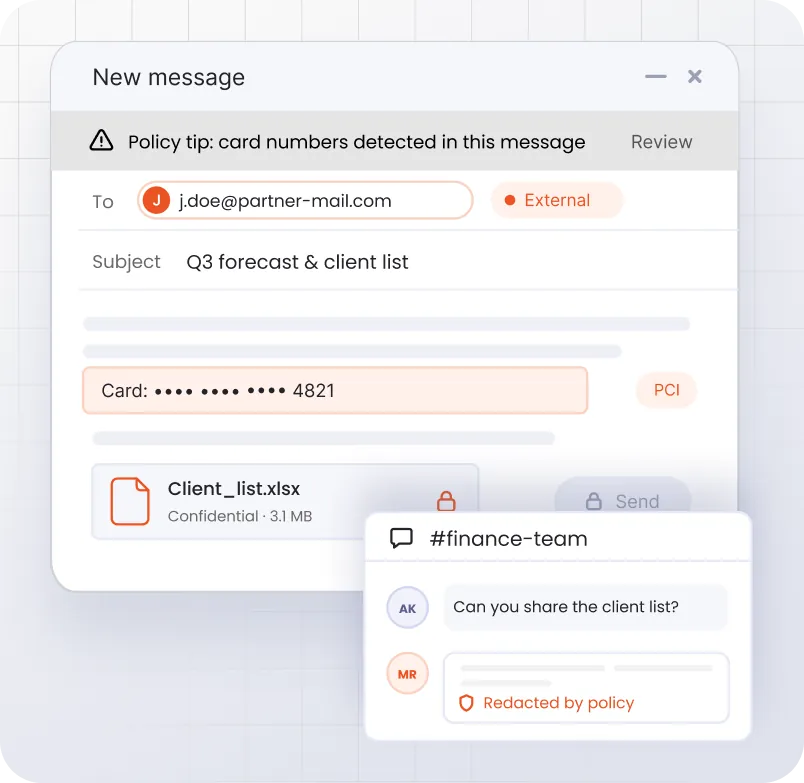
Inspect outbound emails, attachments, and supported cloud-sharing activity to help prevent confidential information from reaching unauthorized recipients.
A customer export, personal cloud upload, or misplaced attachment can put trust at risk. Strengthen data loss prevention for SaaS companies with controls built around everyday leakage paths.

Detects sensitive customer information in outbound content and blocks sharing that violates approved recipient or destination policies.

Use fingerprinting and content-based rules to detect protected files and restrict their movement through monitored channels.
Prevent employees from uploading confidential files to unauthorized websites, personal cloud storage, and unapproved file-sharing services via a built-in Mobile Device Management (MDM).

Monitor sensitive file activity and restrict policy-violating transfers, whether they result from deliberate misuse or careless handling.

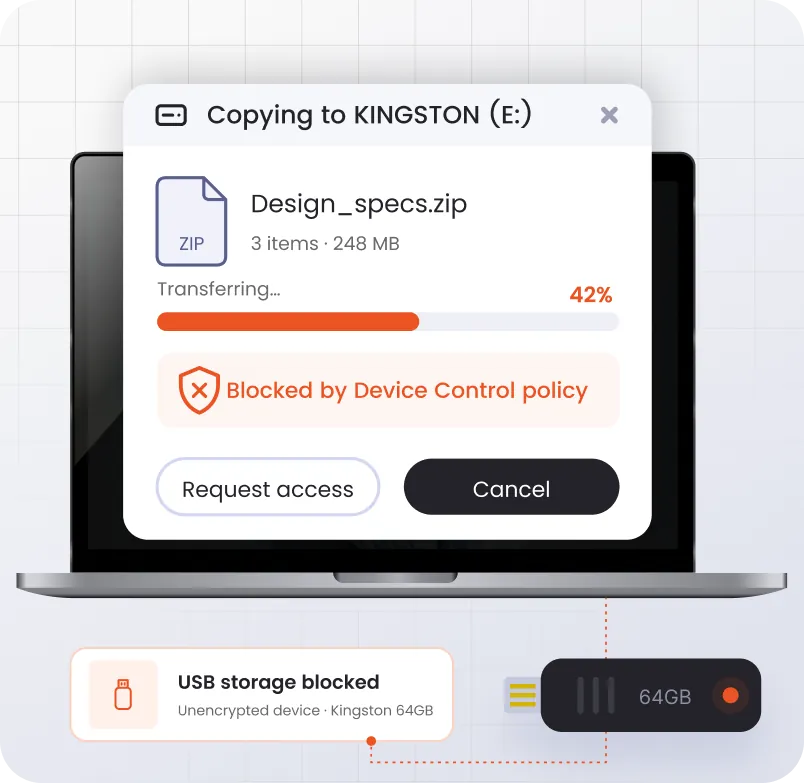
Block unauthorized USB storage, allow approved devices, or enforce read-only access to reduce data loss through removable media.

Catch sensitive content in emails, attachments, and uploads before routine sharing becomes an avoidable disclosure.
Protect sensitive information where employees access, use, and share it. Bring supported endpoint, browser, email, cloud, and removable-media controls under centralized policies.
Monitor and control sensitive data movement
Protect data shared with cloud/SaaS applications
Control uploads and unauthorized transfers
Prevent sensitive information from being shared externally
Control USB and external storage transfers
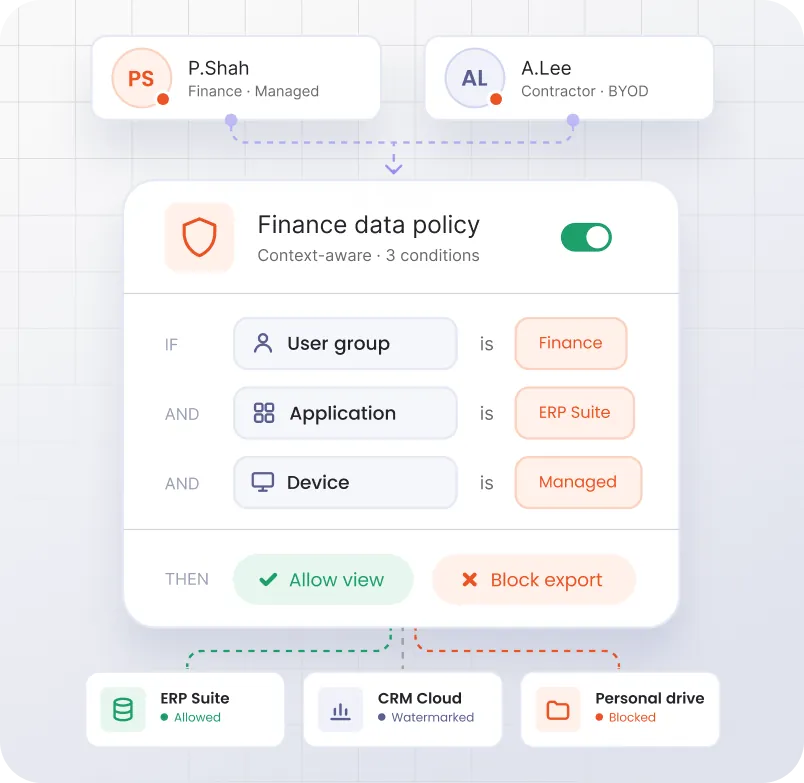
Apply policies based on application and user context
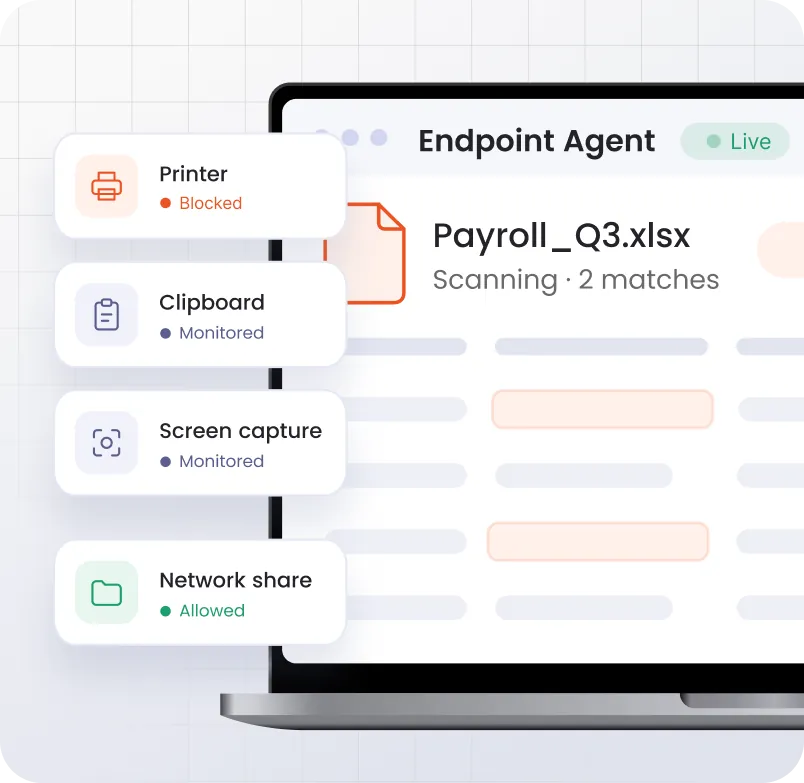
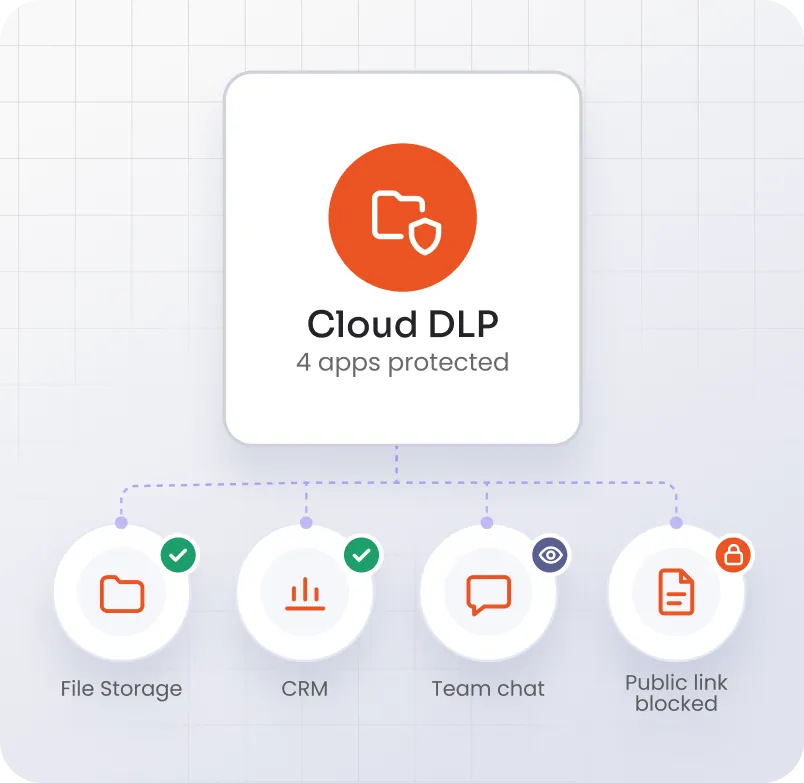
Extend protection into supported services, including Microsoft 365 and Google Workspace. Manage DLP alongside endpoint security and device
management to simplify day-to-day administration.







Protect the information customers depend on you to safeguard. Use classification, policy enforcement, and activity records to support security requirements and compliance efforts.
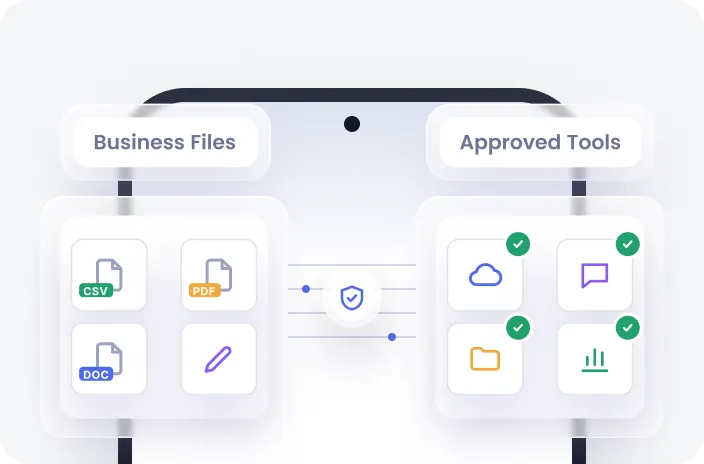
Protect customer exports, contracts, and product documentation as employees move information between approved business tools.
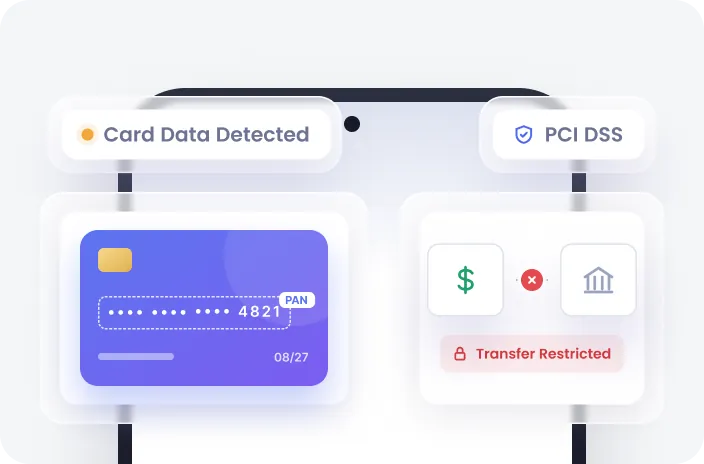
Detect payment card information and financial records, then restrict unauthorized transfers to support secure handling and PCI DSS compliance efforts.
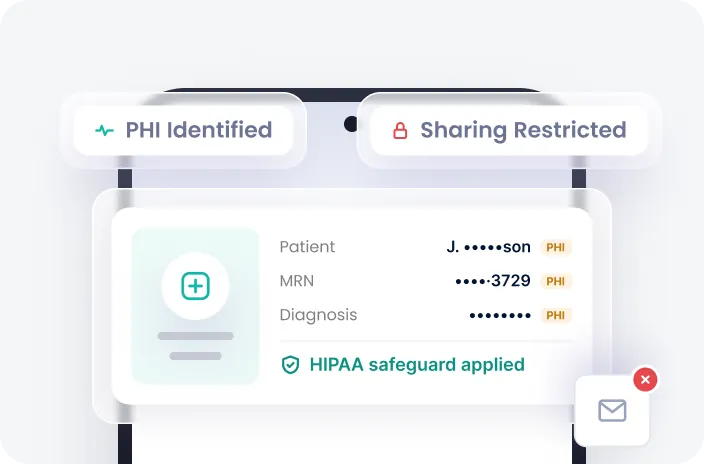
Identify protected health information and apply sharing restrictions that support HIPAA-related safeguards across monitored workflows.
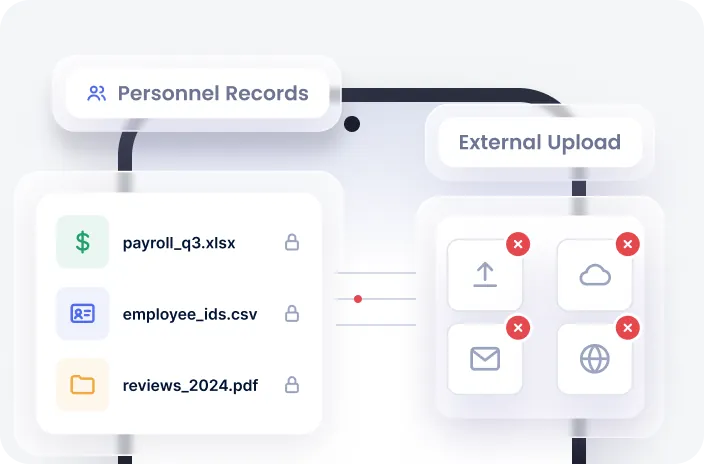
Protect employee identifiers, payroll files, and confidential personnel records from unauthorized uploads, transfers, and external sharing.
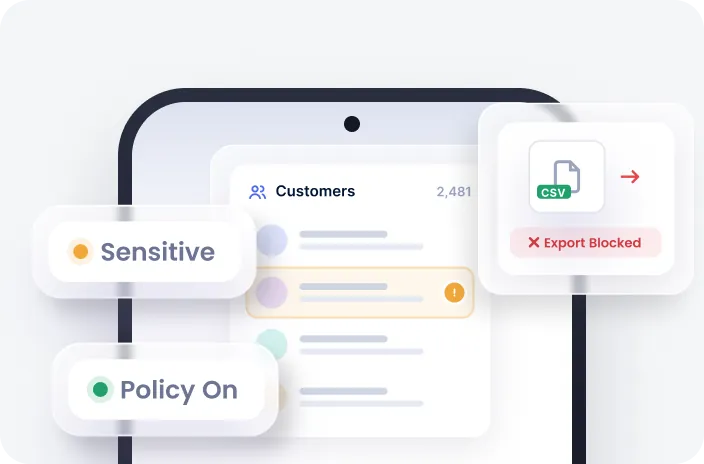
Reduce exposure from customer lists, contact records, and exported reports with policies that detect sensitive content and control outbound movement.
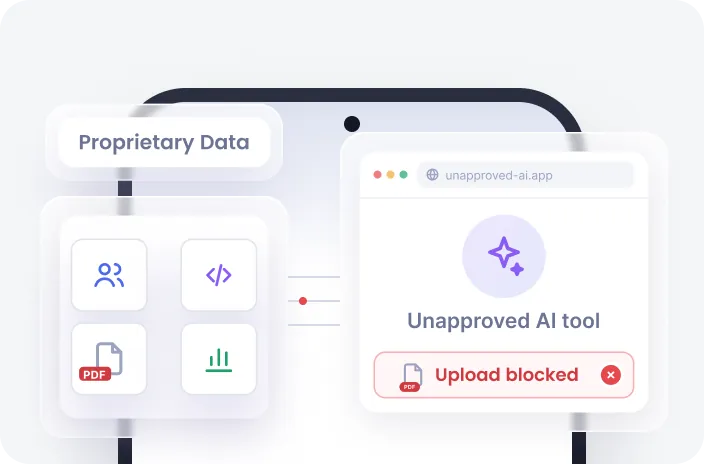
Help prevent sensitive customer information and proprietary files from reaching unapproved AI websites through monitored browser uploads.
Ensure cross-platform protection. Control data exposure on Windows, macOS, ChromeOS, iOS, and Android.
From a unified dashboard, identify risks speedily. Review file activity, policy violations, and enforcement actions from a single spot.
Flexible policy enforcement helps prevent unauthorized data sharing. Monitor, block, quarantine, and get instant alerts in case any policy is violated due to unauthorized sharing.
Manage endpoint DLP and mobile device management from a single console. Coordinate data protection with device controls instead of managing the two separately.
DLP for SaaS companies identifies sensitive information and applies policies to its use and sharing. It helps reduce accidental disclosure and unauthorized transfers across monitored applications and devices.
DLP inspects content, identifies sensitive information, and evaluates activity against policies. Depending on the channel, it can monitor, alert on, or restrict sharing that violates those policies.
DLP can help protect personal information, health records, payment data, financial files, credentials, and proprietary content. Detection depends on configured rules and supported inspection capabilities.
DLP detects sensitive content moving through monitored channels and applies controls such as blocking transfers or restricting external sharing. Its effectiveness depends on policy configuration and channel coverage.
Yes. Cloud DLP addresses supported applications and sharing activity, while endpoint DLP adds controls for local file use and transfers. Available protections vary by platform and integration.