Hello there!
Need Help? We are right here!

Need Help? We are right here!
Search Results:
×SumoLogic SIEM is a cloud-based security solution that detects threats in real time, analyzes event and incident log data from all security tools. miniOrange provides secure access and full control to SumoLogic for enterprises and applications. With the help of the given guide you can configure SumoLogic easily.
miniOrange offers free help through a consultation call with our System Engineers to setup SIEM integration with your SumoLogic Instance in your environment with 30-day free trial.
For this, you need to just send us an email at idpsupport@xecurify.com to book a slot and we'll help you in no time.
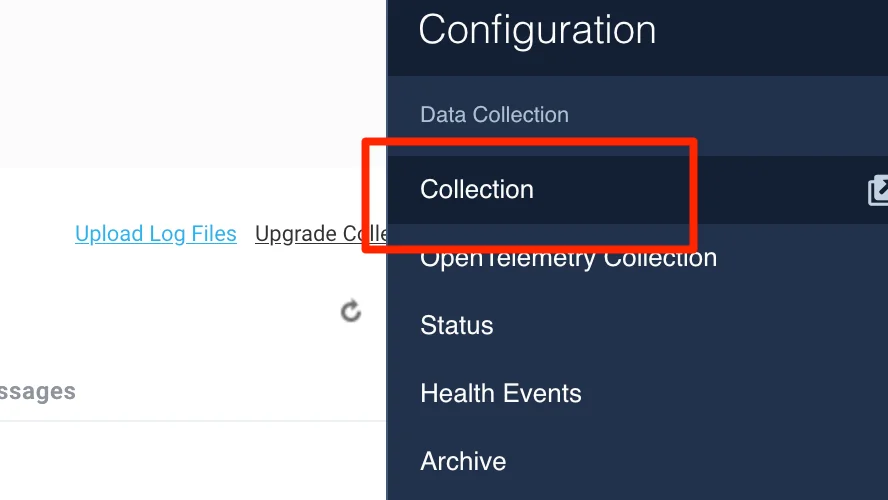
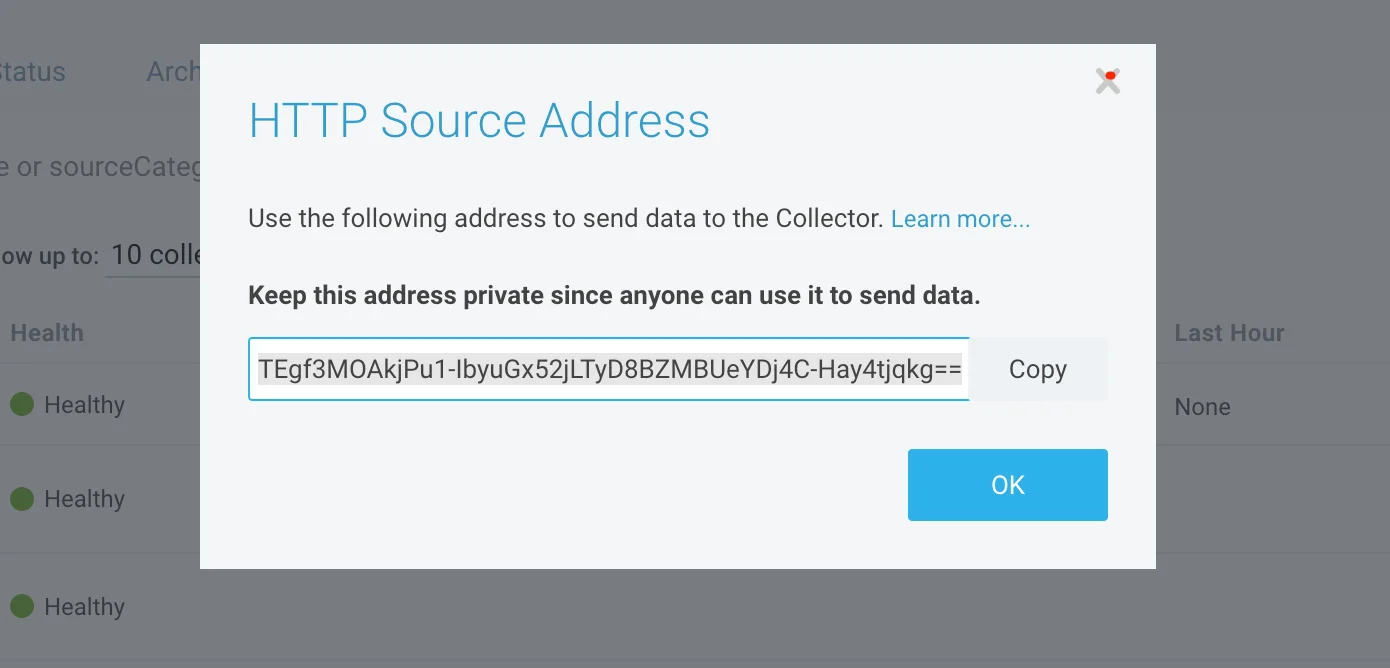
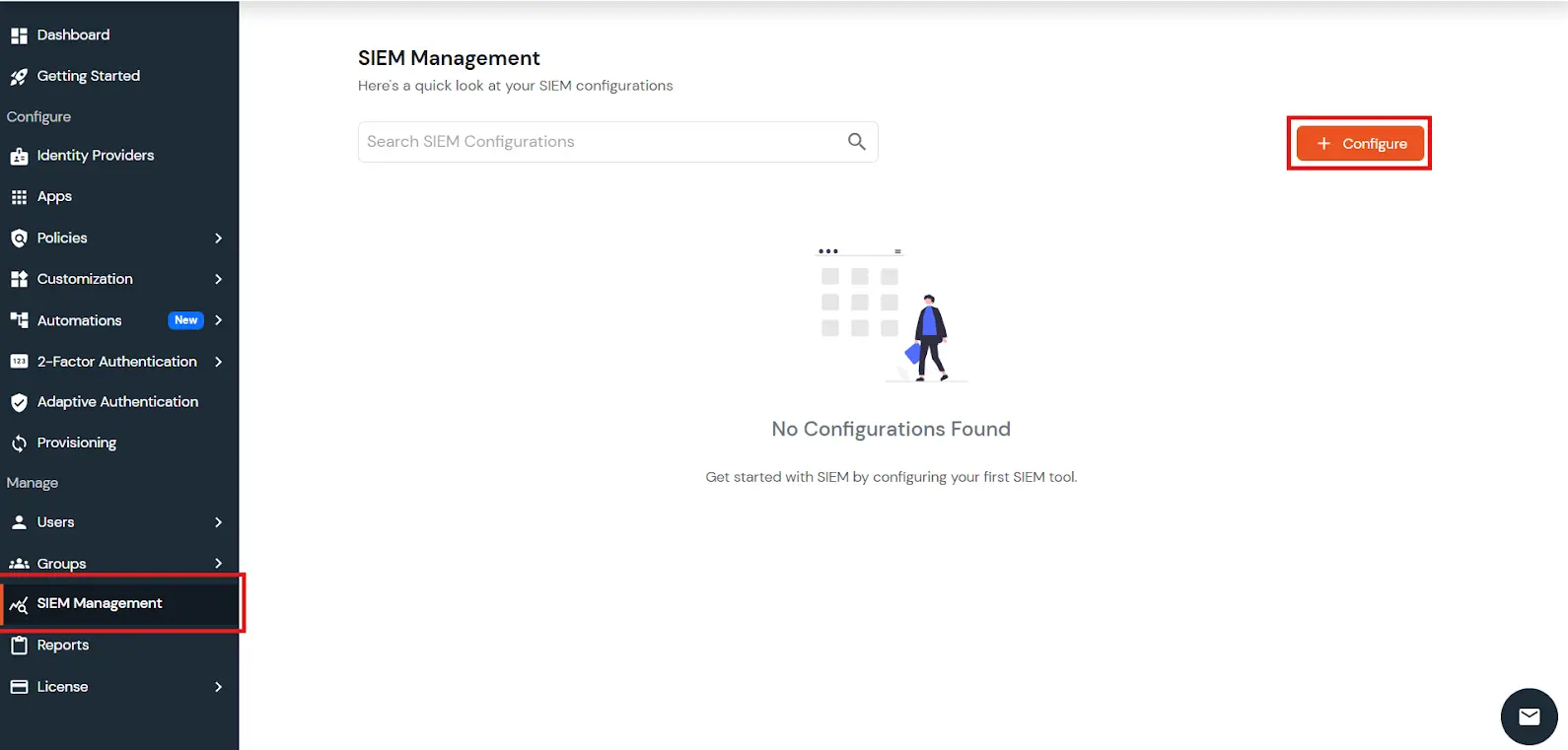
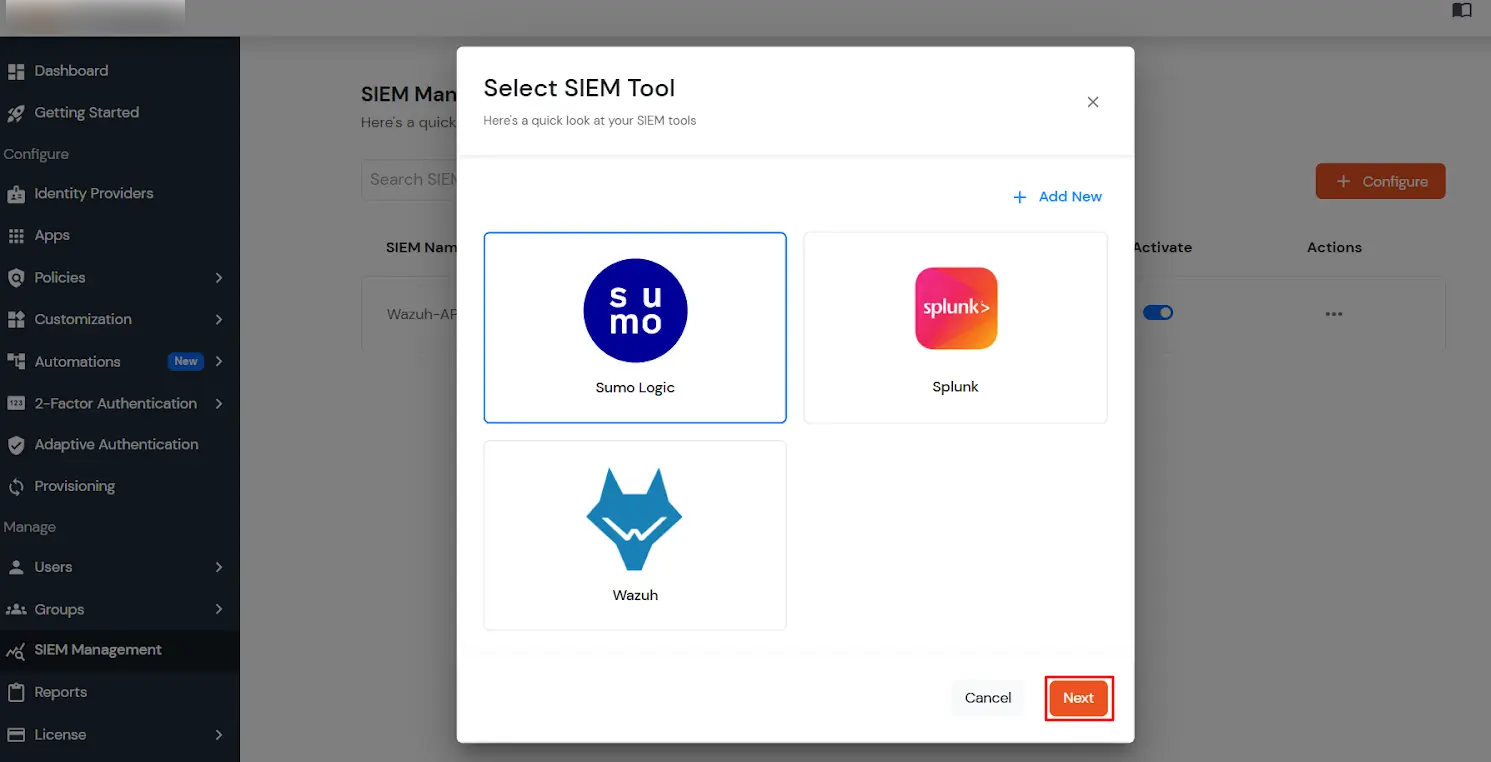
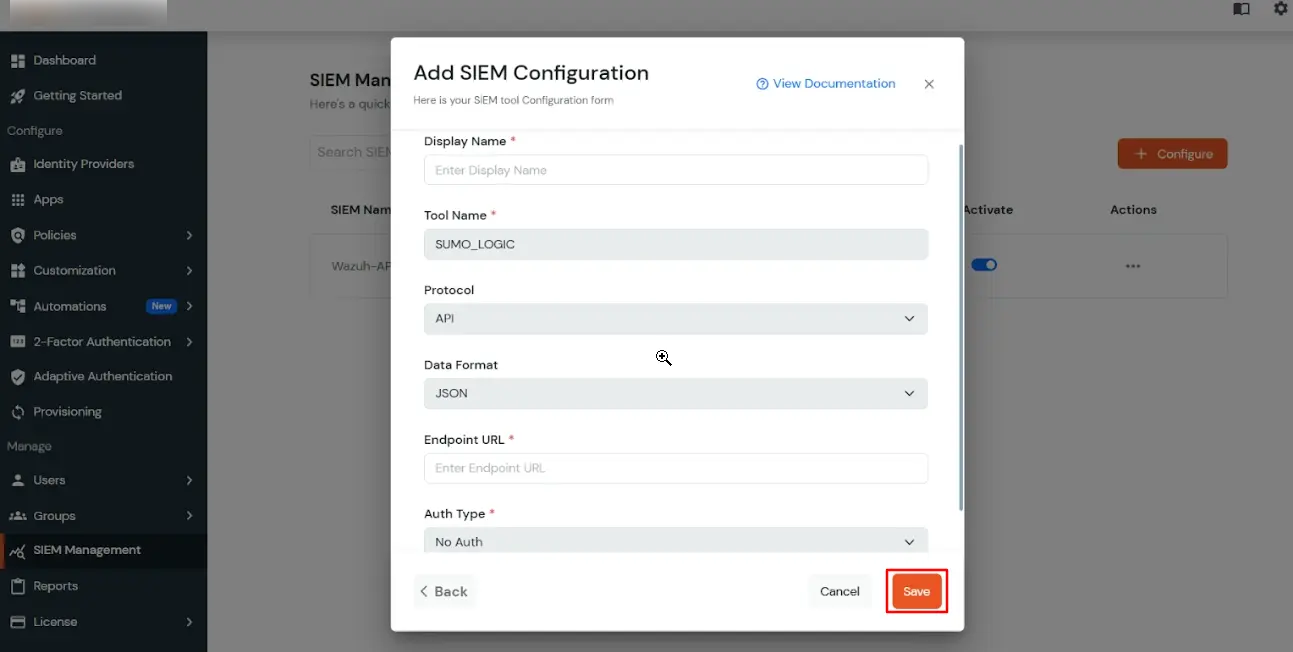
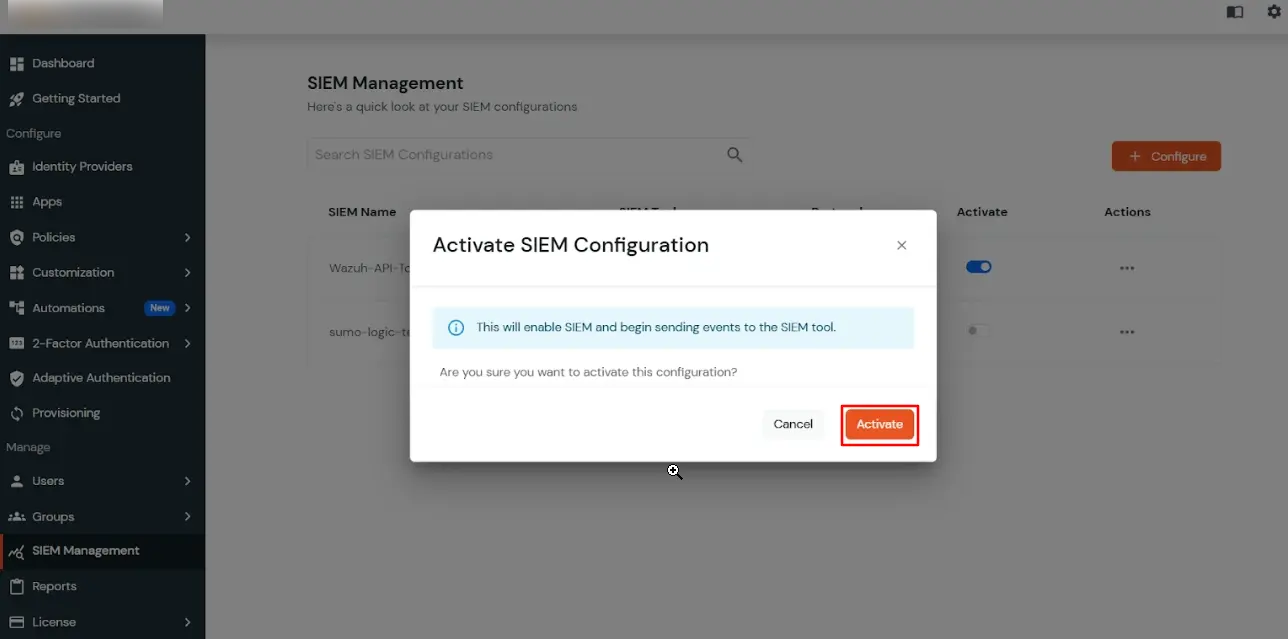
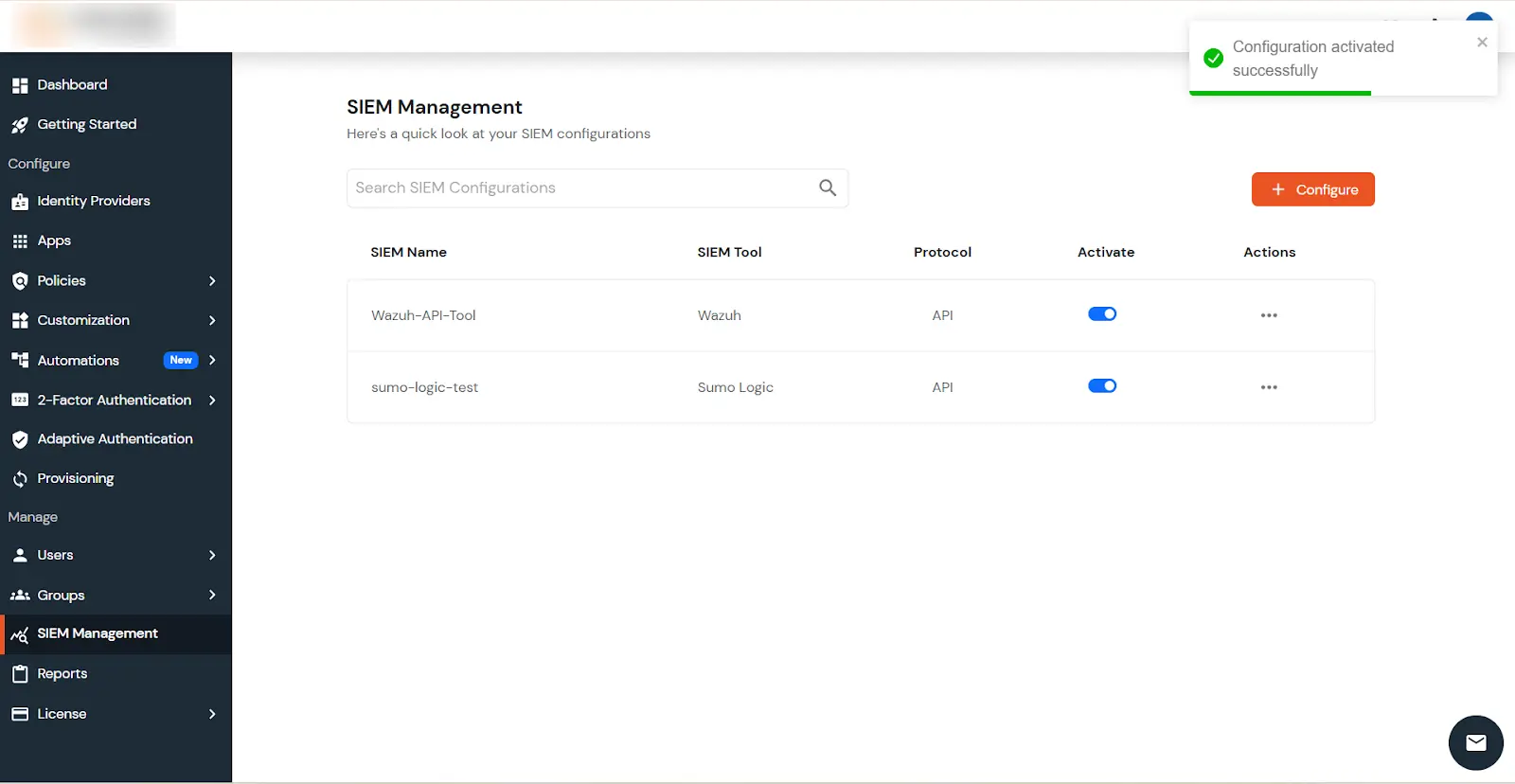
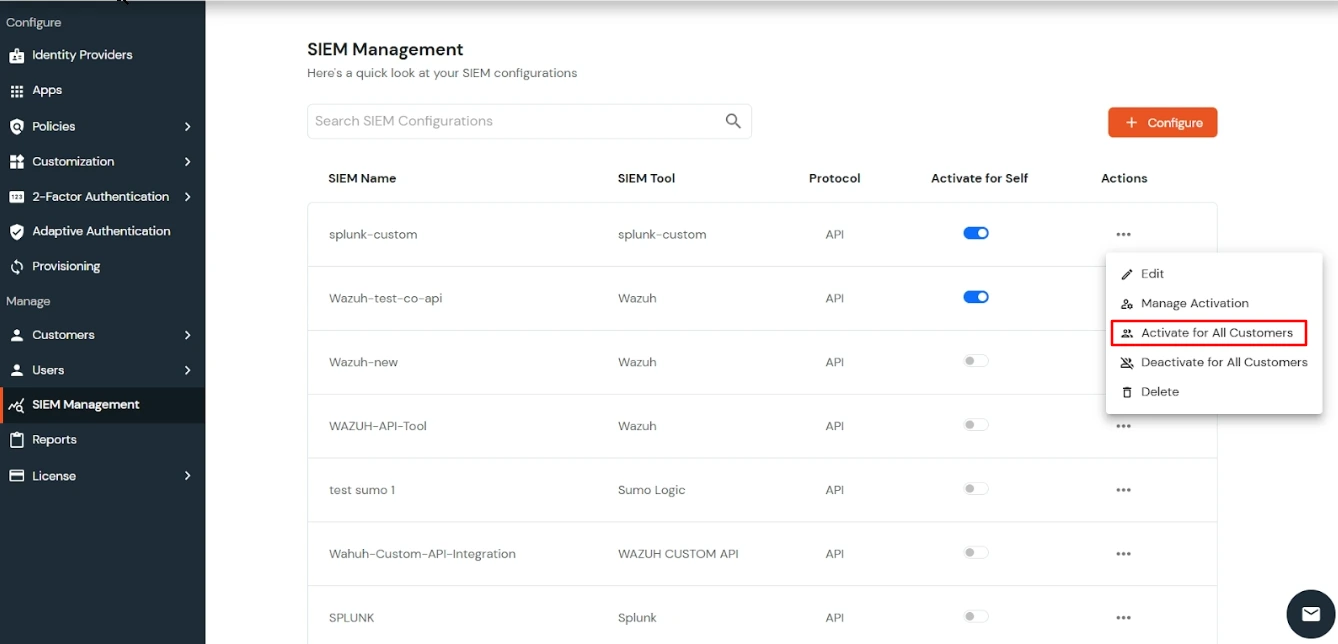
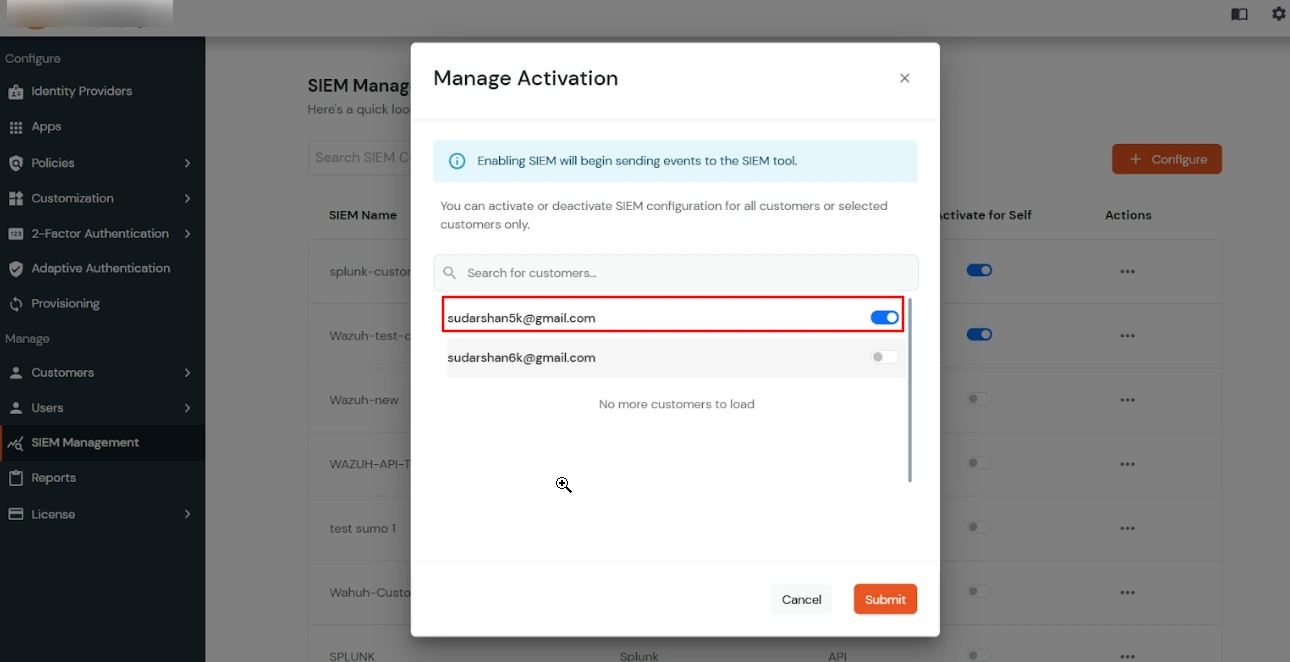
Superadmin can also activate the SIEM tool for customers using the Manage activation options. Admin can either activate the SIEM tool for all the customers using Activate For all customers option or can activate for individual customers using manage activation option available under the actions menu by clicking on 3 dots.
Please follow this guide to know more.
                _source=##name_of_your_source##
              | where audit.audittype = "MFA_AUDIT"
              | audit.target.identifier as Identifier
              | audit.status as Status
              | fromMillis(audit.createdDttm) as Time
              | formatDate(Time,"dd/MM/yyyy HH:mm:ss") as FormattedTime
              | count by Identifier, Status, FormattedTime
              | fields -_count
                _source=##name_of_your_source##
              | where audit.auditType = "ADMIN_AUDIT"
              | audit.status as Status
              | audit.target.identifier as Identifier
              | audit.eventType as EventType
              | count by Identifier, EventType, Status
              | fields -_count
                _source=##name_of_your_source##
              | where audit.auditType = "ADMIN_AUDIT"
              | where audit.eventType = "Password Reset"
              | audit.target.identifier as Identifier
              | auditValue as AuditMessage
              | audit.status as Status
              | fromMillis(audit.createdDttm) as temptime
              | formatDate(temptime,"dd/MM/yyyy HH:mm:ss") as FormattedTime
              | count by Identifier, AuditMessage, Status, FormattedTime
              | fields -_count