Hello there!
Need Help? We are right here!

Need Help? We are right here!
Search Results:
×Bring privacy into every data interaction with the
security,
control, and scale enterprises demand.
Countries Served Worldwide
Years of Securing Customer Access
Customers Across the Globe
Modern privacy programs require visibility, automation, and
governance. miniOrange helps organizations manage sensitive data,
streamline compliance activities,
and maintain privacy readiness across evolving regulations.
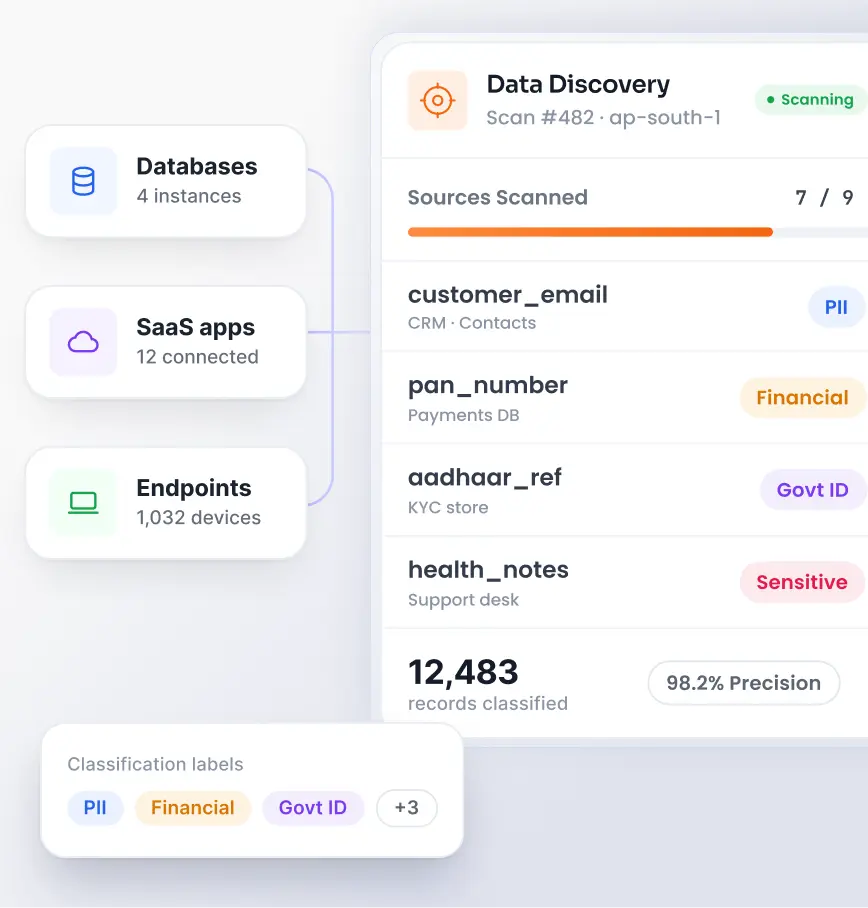
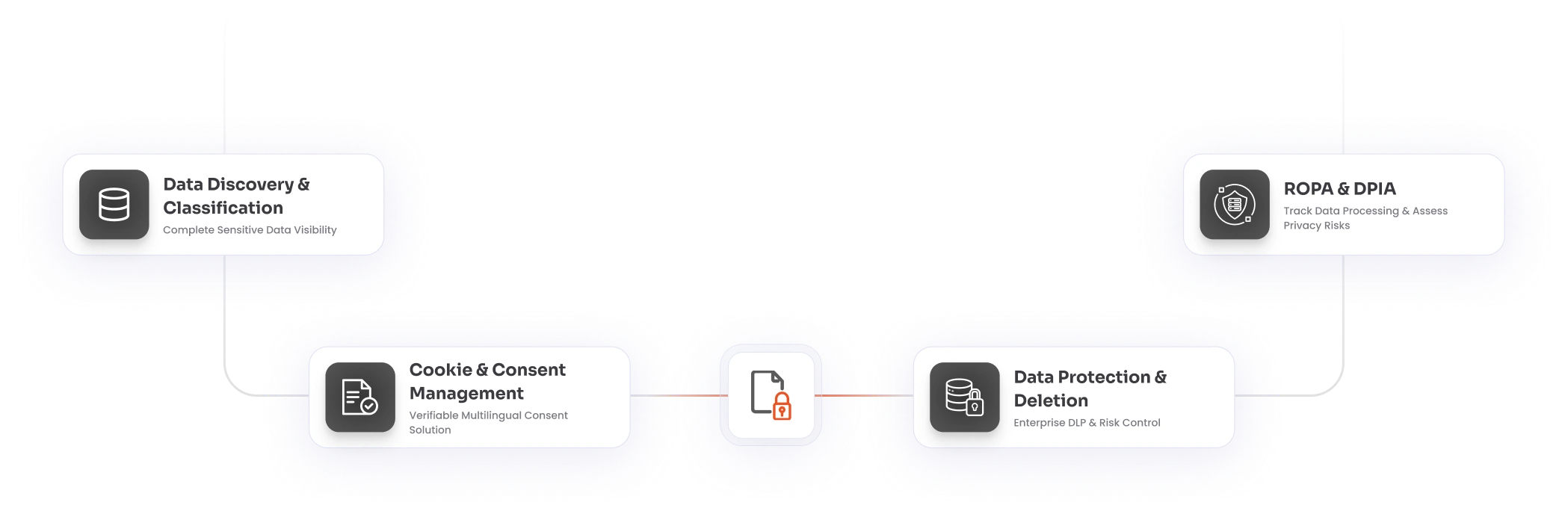
Discover personal and sensitive data across connected sources, creating structured inventories that support classification, privacy requests, and informed data decisions.
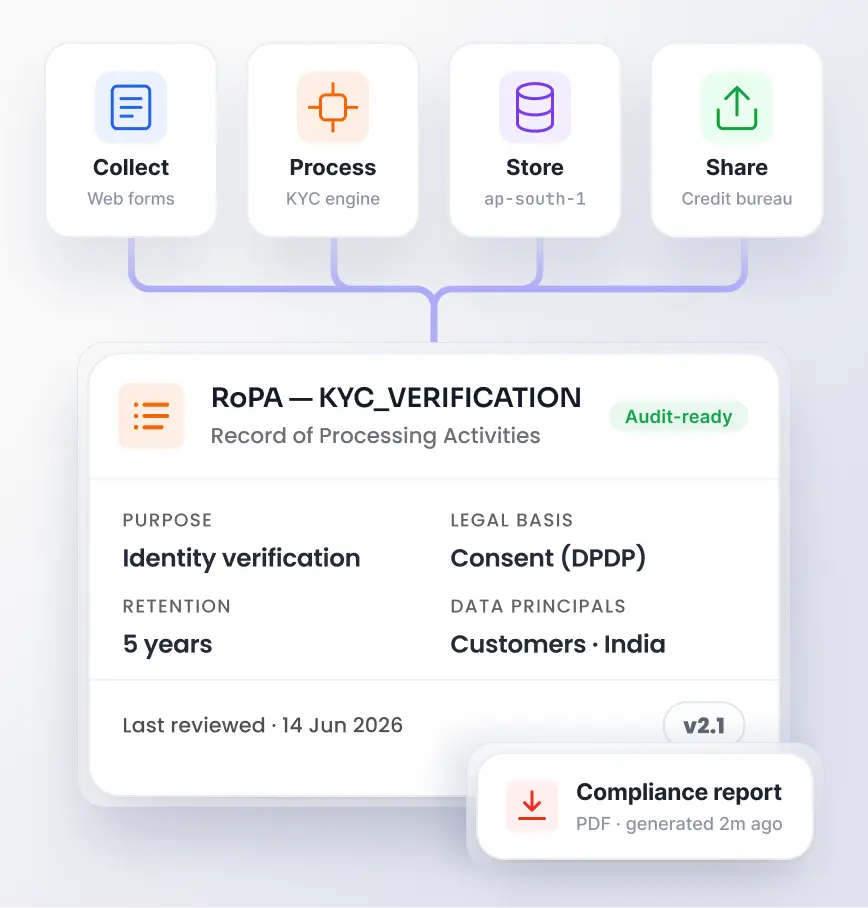
Map personal data flows and processing activities while connecting RoPA, data relationships, and privacy records through a unified view.
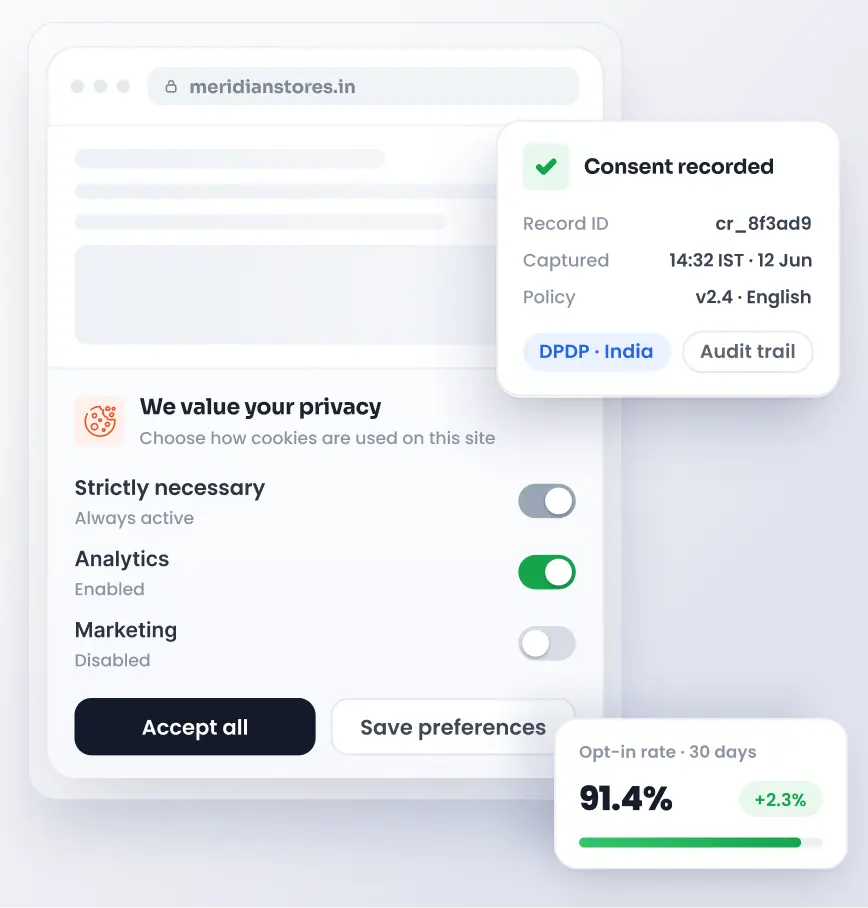
Manage consent across digital and offline channels, supporting 22+ DPDP scheduled languages, granular preferences, tracker controls, and verifiable records
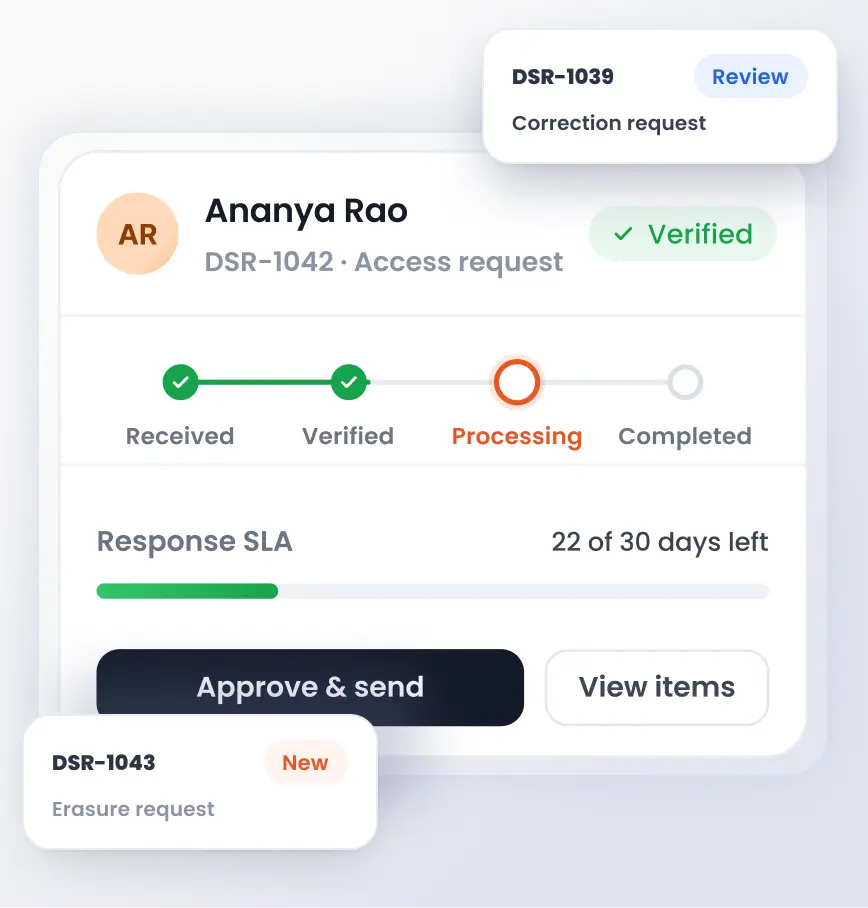
Fulfil individual rights requests across connected sources with automated discovery, source-level actions, SLA management, escalation, and controlled human intervention.
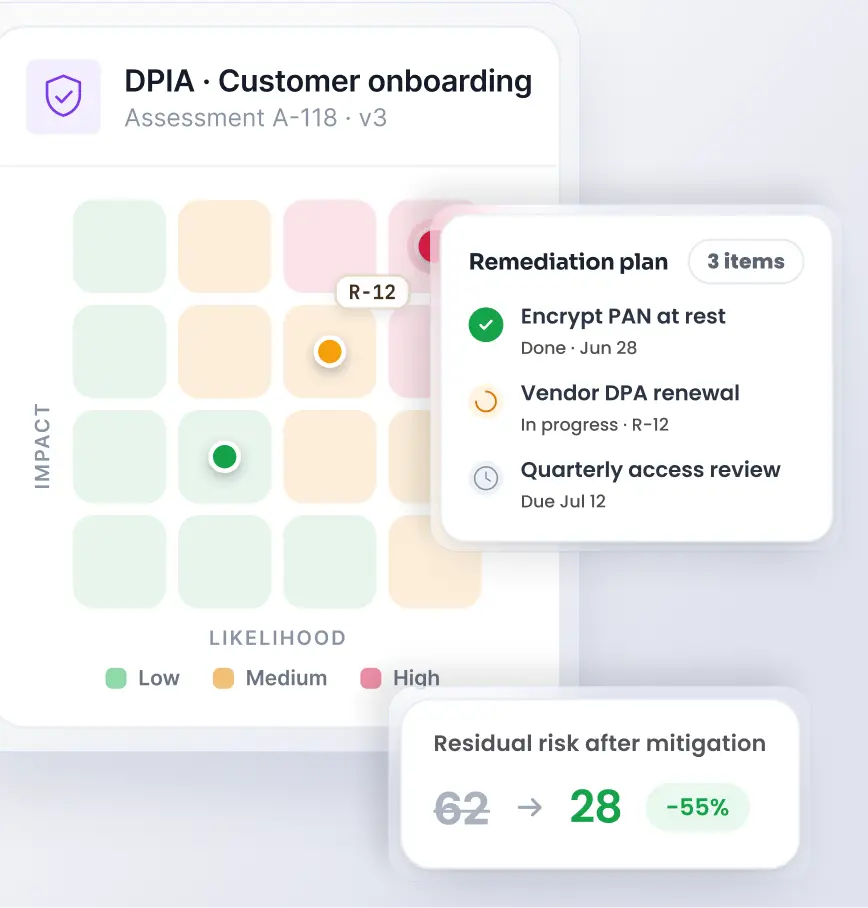
Assess privacy risks, maturity, and compliance while managing responsibilities, questionnaires, scoring, metrics, attestations, and role-based review processes.
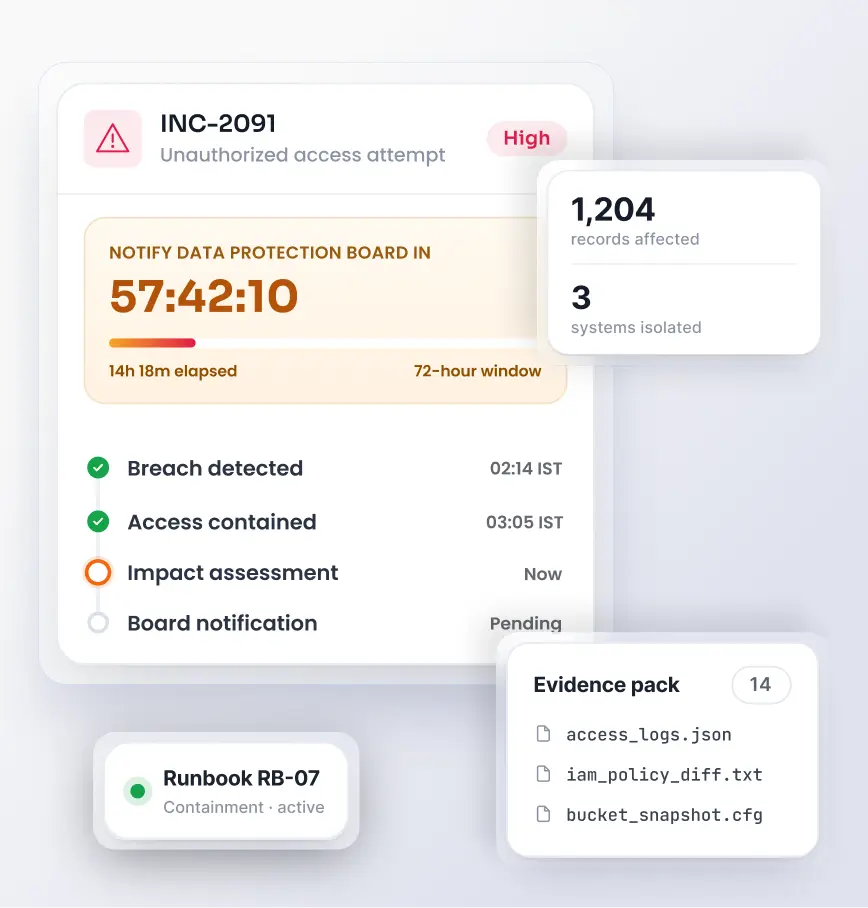
Manage breaches, processor incidents, and grievances with structured records, evidence, notifications, watchlists, audit history, and controlled workflows.
Manage, protect, and govern sensitive data throughout its entire privacy lifecycle.

Manage policies and notices with version control, configurable workflows, reusable templates, approvals, and multilingual delivery across communication channels.

Define retention requirements, reconcile them with Microsoft Purview labels, and connect lifecycle visibility with applicable erasure workflows.

Assess vendors and processors through questionnaires, prefill, scoring, reviews, risk levels, subprocessor tracking, audit documentation, and evidence collection.
Built as enterprise data privacy management software, miniOrange connects
through integrations with HRIS, CRM, cloud storage,
databases, APIs, and SaaS applications to
automate privacy workflows and improve visibility into personal data.












Privacy management goes beyond compliance. Our team assists
businesses to manage personal
data and maintain governance as regulations evolve.
Connect relevant systems using REST APIs, connectors, webhooks, or CSV imports.
Discover personal and sensitive data, build inventories, and map relevant data flows.
Configure DSARs, consent, assessments, grievances, breaches, notifications, and compliance workflows.
Configure permissions, SSO, MFA, forms, notices, templates, notifications, and customizable branding.
Use guided onboarding to introduce teams to dashboards, workflows, records, alerts, and privacy activities.

Cloud SaaS
Private Cloud
100% On-Premise
Address consent, data principal requests, privacy notices, grievances, assessments, and audit records under India’s DPDP requirements.
Fulfil data subject rights while maintaining consent records, RoPA, privacy assessments, breach workflows, notices, and audit trails.
Handle consumer privacy requests with consent preferences, data discovery, privacy notices, and auditable workflows aligned with CCPA requirements.
Support individual rights, consent, privacy assessments, notices, grievances, and compliance records across applicable PDPL requirements.
From security and support to specialist services, miniOrange brings together technology and
expertise to support enterprise privacy programs.
Get direct access to support teams with 24×7 assistance for product questions, implementation challenges, and ongoing privacy requirements.
Access managed DPO, legal, insurance, and specialist services supporting privacy management, regulatory requirements, risk assessment, and ongoing compliance needs.
Protect sensitive privacy information with role-based access, SSO, MFA, authentication controls, and AES-256-GCM encryption with key versioning.
Configure workflows, assessments, notices, consent experiences, permissions, and other privacy processes around your organization’s specific requirements.
miniOrange adapts privacy controls to the compliance demands and data risks unique to each industry, from patient records to customer and employee data.





Still have questions? We've got answers to help you make the right decision.