Hello there!
Need Help? We are right here!

Need Help? We are right here!
Search Results:
×
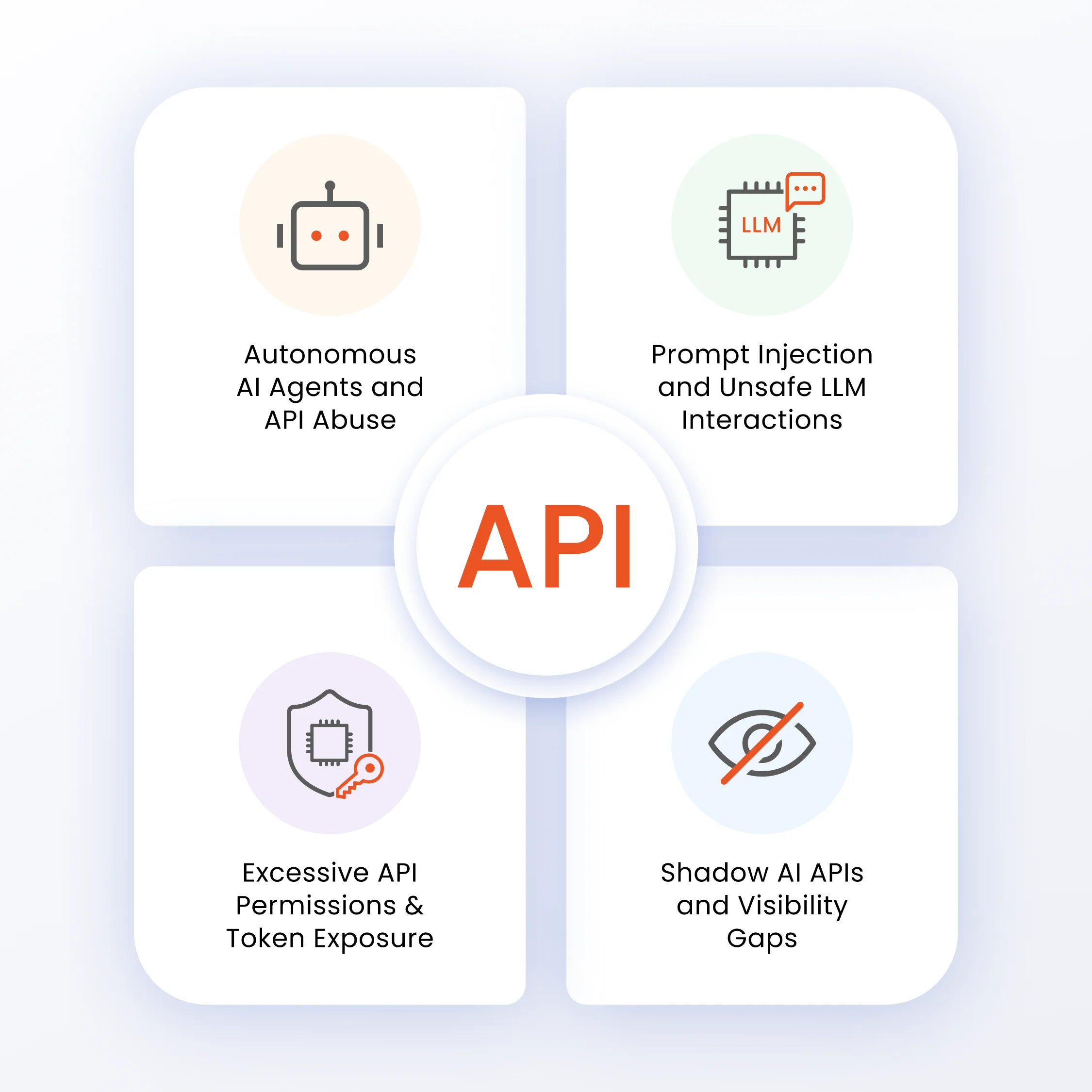
AI-powered APIs, autonomous AI agents, and LLM workflows introduce new runtime risks, visibility gaps, and machine-driven API abuse that traditional API security solutions cannot detect.
AI agents can independently execute API requests, access enterprise systems, and perform actions without continuous human oversight. Without proper controls, compromised or misconfigured agents can generate unauthorized API activity at scale.
Prompt injection attacks and unsafe LLM interactions can manipulate AI systems into making unintended API calls. These attacks may expose sensitive data, bypass controls, or trigger unauthorized actions.
Unmanaged AI APIs and unauthorized integrations often operate outside traditional security monitoring. This creates blind spots that make it difficult to detect exposure and runtime risks.
Overprivileged APIs, exposed tokens, and insecure credentials increase the risk of unauthorized access. Attackers can exploit these weaknesses to gain access to sensitive systems and data.
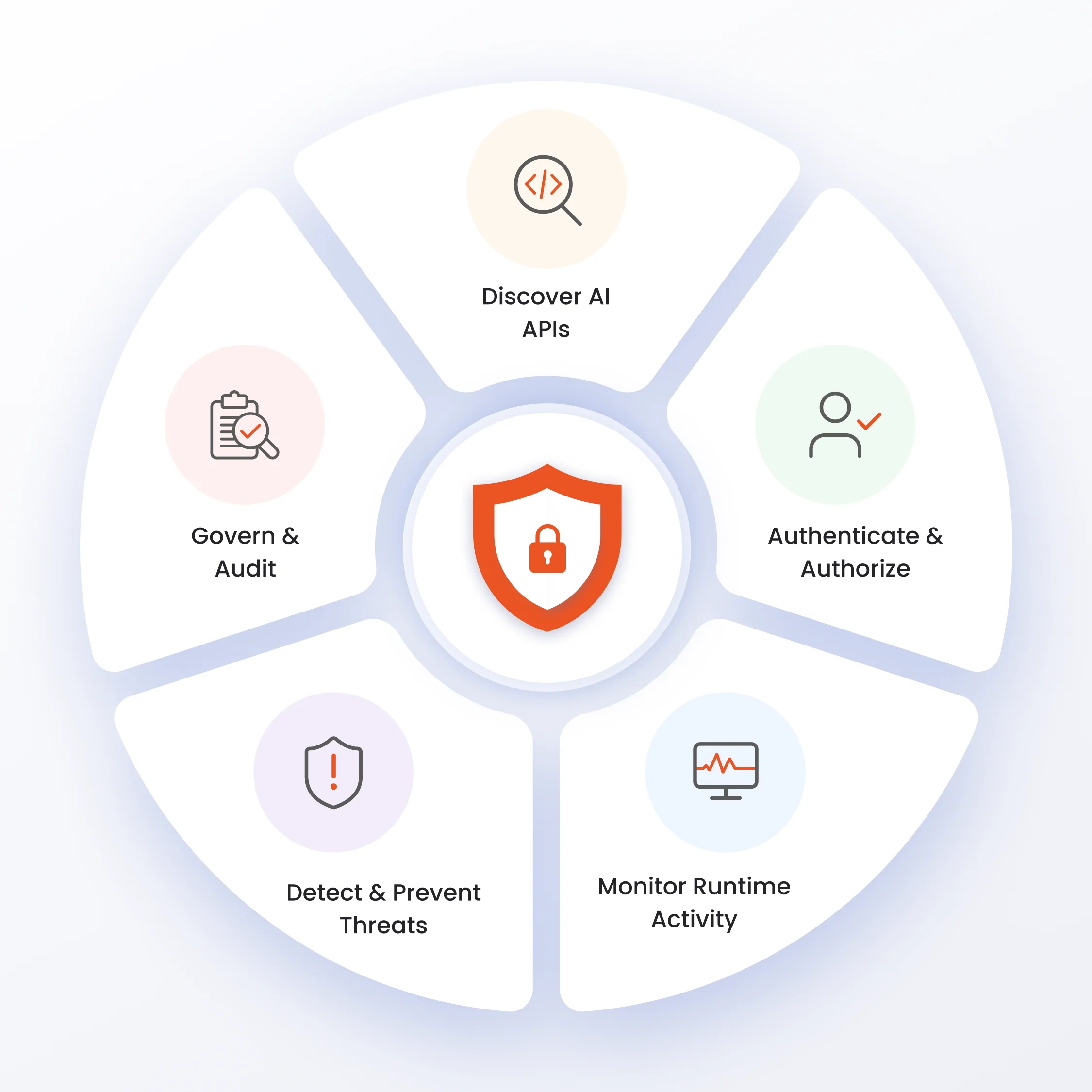
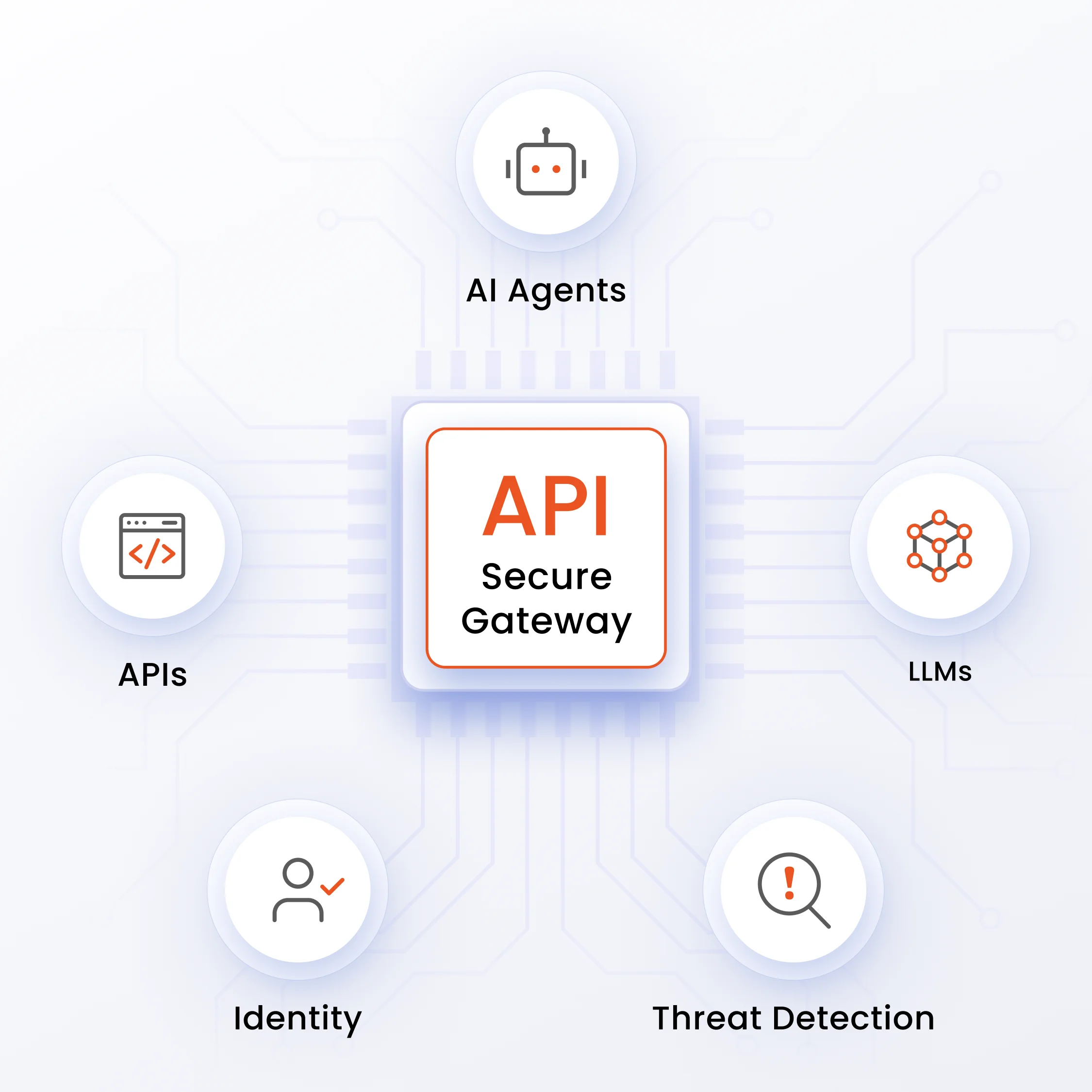
AI API security continuously protects AI agents, LLMs, and enterprise APIs by discovering AI integrations, including shadow and undocumented ones. It verifies identities through authentication and least-privilege enforcement. It monitors runtime activity such as request patterns, payload content, and behavioral anomalies.
AI API security detects AI-specific threats, including prompt injection, token theft, unauthorized API requests, and data leakage in real time. It also enforces policies like rate limiting, scope controls, and whitelist-based access filtering to keep AI-powered applications secure and compliant.
Protect AI-powered APIs, AI agents, and LLM workflows with continuous API discovery, runtime threat detection, identity-aware access controls, and AI-driven security monitoring across enterprise environments.
Continuously discover AI APIs, shadow APIs, and AI integrations across cloud and enterprise environments. Maintain visibility into API exposure and runtime activity from a central platform.
Detect anomalous API behavior, AI-driven abuse patterns, and suspicious runtime activity in real time. Identify threats early before they impact business operations.
Secure AI APIs and AI agents using strong authentication and identity-aware access controls. Enforce policy-based authorization to ensure only approved interactions occur.
Protect LLM APIs from prompt injection, unsafe API execution, and insecure plugin interactions. Reduce the risk of malicious or unintended AI-generated requests.
Maintain centralized oversight of AI APIs, runtime activity, and security policies. Improve auditability and governance across AI-driven environments.
Secure AI-powered APIs, autonomous AI agents, LLM integrations, and GenAI workflows while preventing runtime API abuse, unauthorized access, and AI-driven threats.

Protect and secure AI agents that interact with APIs, enterprise applications, and business systems. Enforce authentication, authorization, and runtime monitoring for every interaction.

Secure LLM APIs, AI copilots, and GenAI workflows connected to enterprise data and services. Prevent prompt-based attacks and unauthorized API activity across AI workflows.

Detect and prevent API abuse, token misuse, and suspicious machine-driven activity. Reduce the risk of unauthorized access and AI-generated malicious requests.
Detects AI-driven API threats, runtime anomalies, and shadow AI exposure through continuous monitoring. Gain visibility into security risks across AI-powered environments.
Secure AI APIs and AI agents using identity-aware authentication and authorization. Enforce least-privilege access to reduce unnecessary exposure.
Continuously discover AI APIs and monitor runtime exposure across your environment. Apply governance controls to maintain security and compliance.
Extend API security, AI identity governance, and runtime protection from a single platform. Secure AI agents, APIs, and enterprise systems with consistent controls.