Hello there!
Need Help? We are right here!

Need Help? We are right here!
Search Results:
×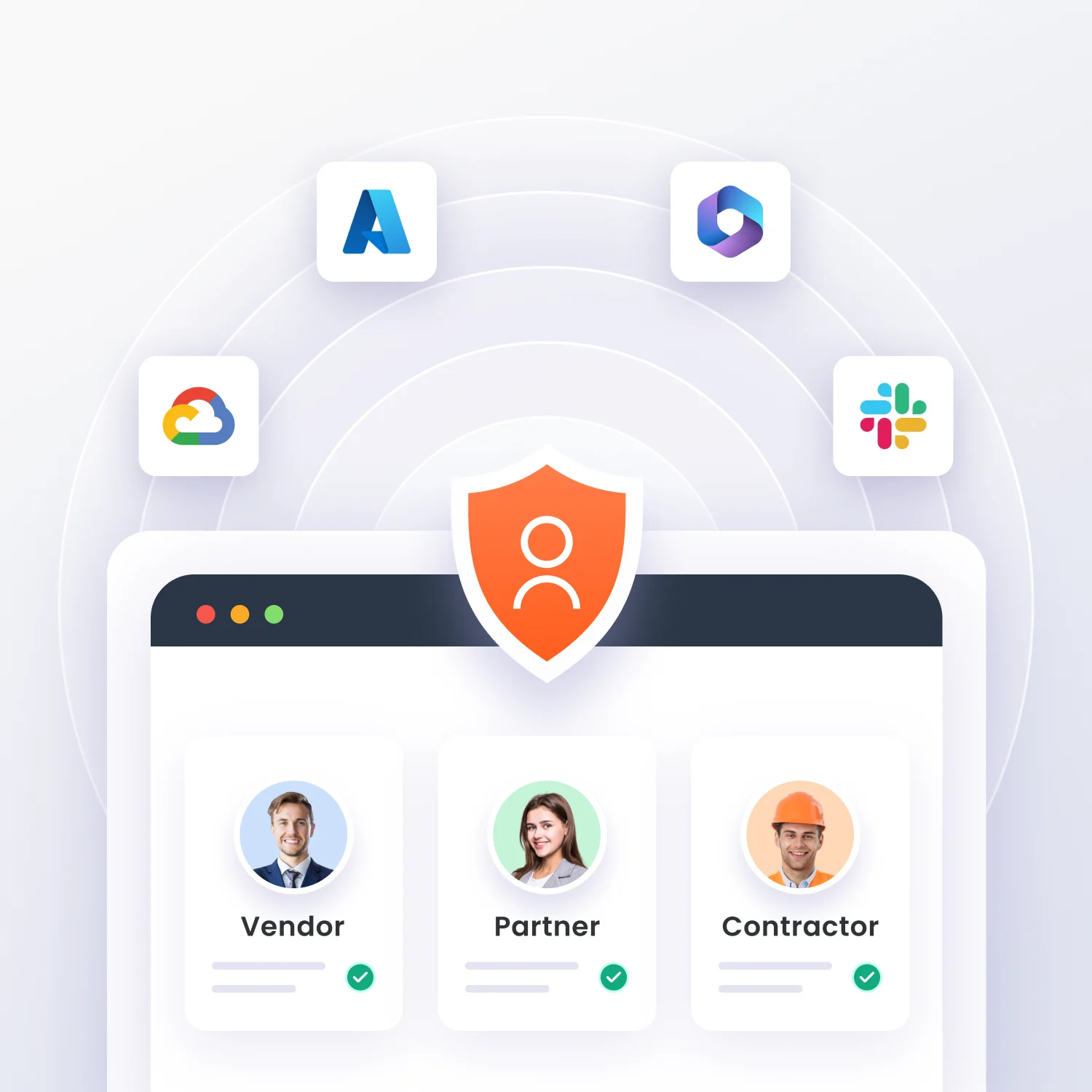
External users need access to applications, systems, and data without becoming employees. Their identities may originate from partner organizations, external identity providers, separate directories, or registration workflows outside traditional workforce systems.
External identity management creates a structured control layer for these identities, connecting authentication, provisioning, access policies, reviews, and revocation to business relationships, contracts, projects, and defined ownership.
Enterprises need a structured way to manage contractors, partners, vendors, and other third-party identities across authentication, access, and lifecycle controls.
External identities can exist across applications, directories, partner systems, and identity providers, making it difficult to establish one reliable view of users, entitlements, and ownership.
Contractors and partners may retain permissions after their responsibilities change, creating access that no longer reflects their current project, role, contract, or business need.
Creating accounts, collecting identity information, assigning permissions, and removing access through tickets, emails, or spreadsheets introduces delays and makes lifecycle controls dependent on manual intervention.
External accounts can remain active after contracts, projects, or partnerships end when expiration dates, ownership, and revocation processes are not connected to the identity lifecycle.
External users may authenticate through different identity sources, making it harder to apply common authentication requirements, federation policies, and stronger controls to every access request.
Organizations may know which company a contractor represents without knowing who sponsors the individual, approves access, owns the relationship, or is responsible for periodic reviews.
Connect identities from external providers, partner organizations, and other sources to create a centralized view of external users, relationships, entitlements, and application access.
Support external user authentication through trusted identity providers and federation while applying required authentication methods before users reach protected applications and resources.
Control external access using user type, role, application, organization, device, location, authentication requirements, risk signals, and defined access duration.
Automate provisioning, access changes, reviews, expiration, and deprovisioning based on contract dates, project changes, role updates, and other business events.

Give external users centralized application access through an SSO solution while requiring MFA authentication for sensitive applications, systems, and resources.

Create and update external accounts using identity attributes, business relationships, access requirements, and connected application workflows.

Remove accounts and entitlements when contracts, projects, or external relationships end, preventing access from persisting after its business purpose.

Assign permissions according to roles, responsibilities, and business requirements so external users receive access aligned with their engagement.

Define policies using identity, application, device, location, risk, and other contextual attributes to determine when access should be permitted.

Record authentication events, provisioning activity, access changes, approvals, and administrative actions to support investigations, access reviews, and compliance reporting.
Manage external users and application access through a centralized identity layer designed for third-party access scenarios.
Connect external identity providers and apply authentication requirements before third parties access protected applications and resources.
Federate SSO and MFA across external users and connected applications, simplifying access while maintaining authentication controls.
Automate provisioning, access changes, reviews, and deprovisioning as external users move through their relationship with the organization.
External identity management governs identities belonging to contractors, partners, vendors, consultants, and other non-employees. It covers authentication, provisioning, access control, reviews, and deprovisioning for users who need access to organizational resources.
Yes. External identity management is an IAM capability focused on users outside the workforce. It extends authentication, access control, provisioning, and lifecycle governance to third-party relationships that follow different business and access requirements.
Organizations manage third-party identities by identifying users and relationships, establishing ownership, authenticating users, provisioning appropriate access, applying policies, reviewing entitlements, and removing access when contracts or business relationships end.
Yes. Organizations can federate authentication with trusted external identity providers, allowing contractors, partners, and vendors to use existing identities while the organization controls application access, authentication requirements, and authorization policies.
Third-party identity verification confirms that an external user's claimed identity matches trusted information or verification evidence. It supports onboarding and risk controls but differs from authentication, which validates identity during an access attempt.
Organizations can control external access through role-based permissions, contextual policies, authentication requirements, approval workflows, time-bound access, periodic reviews, and automated deprovisioning. These controls connect access decisions to the user's relationship and business requirements.