Hello there!

Need Help? We are right here!

Support Icon
miniOrange Email Support
success

Thanks for your Enquiry. Our team will soon reach out to you.

If you don't hear from us within 24 hours, please feel free to send a follow-up email to info@xecurify.com

Search Results:

×

Career Village Single Sign-On SSO


Single Sign-On (SSO) solution by miniOrange provides secure Single Sign-On access into Career Village using a single set of login credentials. You can use miniOrange or external identity providers such as Microsoft Entra ID, Okta, or others. With miniOrange you can also access other On-Premise and Cloud Applications using your existing Identity Providers/User Store credentials.


miniOrange and Career Village Single Sign-On (SSO) integration supports the following features:

  • SP Initiated Single Sign-On (SSO)
  • IdP Initiated Single Sign-On (SSO)

Connect with External Source of Users


miniOrange provides user authentication from various external sources, which can be Directories (like ADFS, Microsoft Active Directory, OpenLDAP, AWS etc), Identity Providers (like Microsoft Entra ID, Okta, AWS), and many more. You can configure your existing directory/user store or add users in miniOrange.

Follow the Step-by-Step Guide given below for Career Village Single Sign-On (SSO)

1. Configure Career Village in miniOrange

  • Login into miniOrange Admin Console.
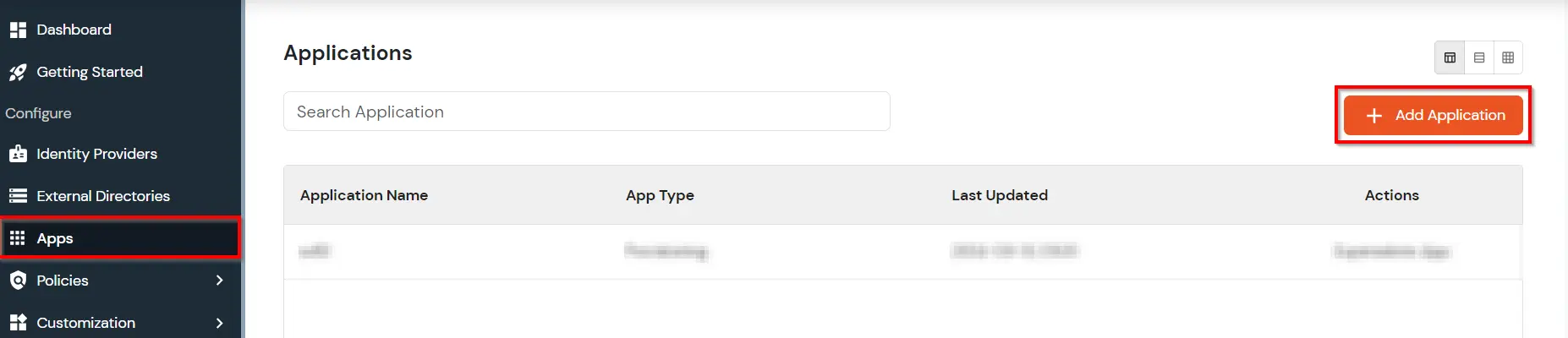
  • Go to Apps and click on Add Application button.
  • Career Village Single Sign-On (SSO) add app

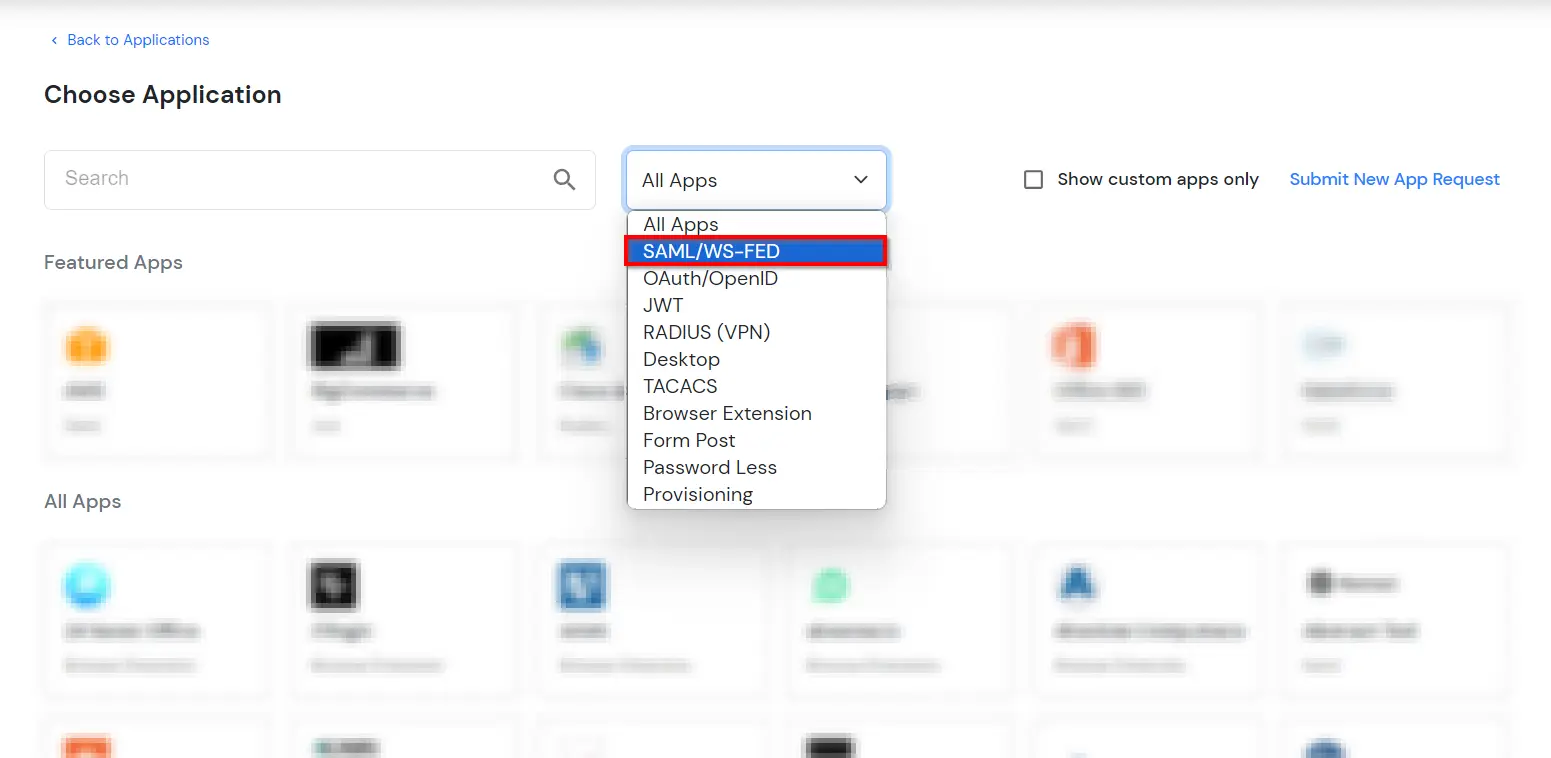
  • In Choose Application Type, select SAML/WS-FED from the All Apps dropdown.
  • Career Village Single Sign-On (SSO) choose app type

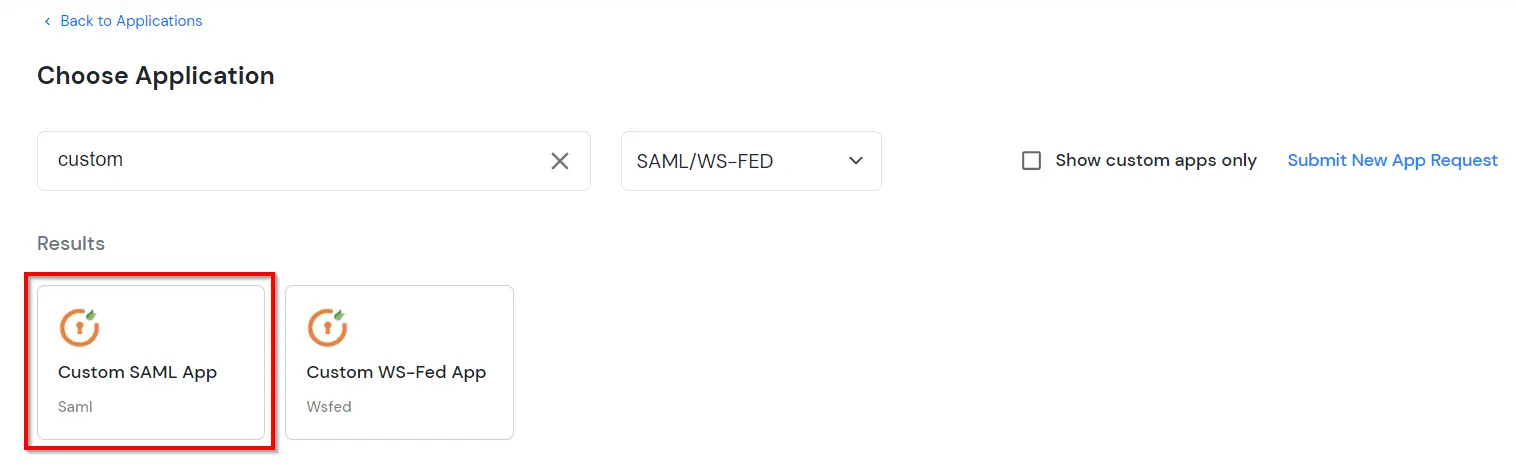
  • Search for Career Village in the list, if you don't find Career Village in the list then, search for custom and you can set up your application in Custom SAML App.
  • Career Village Single Sign-On (SSO) manage apps

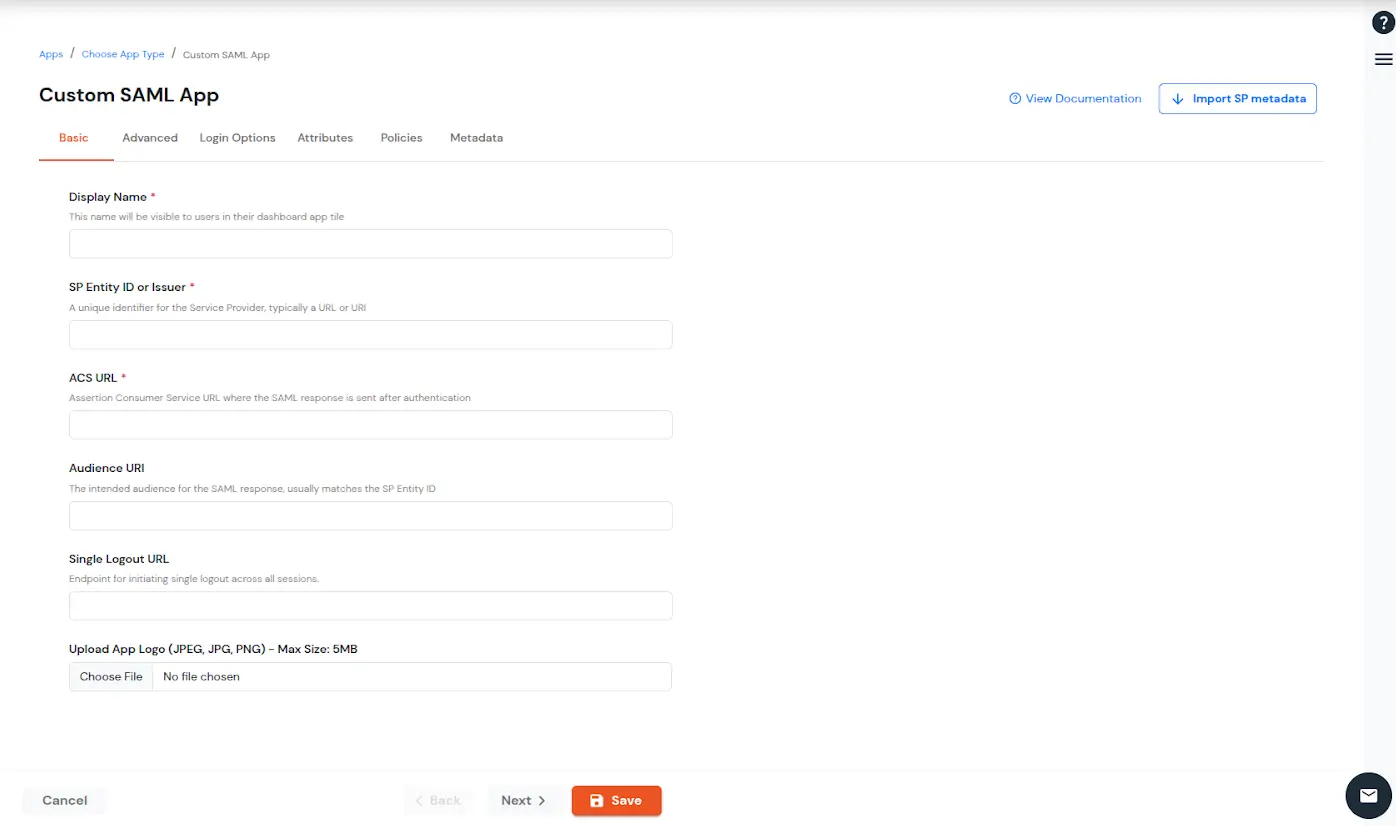
  • Enter the following values in the respective fields.
  • SP Entity ID SP Entity ID or Issuer from the Prerequisites.
    Assertion Consumer Service ACS URL from Prerequisites.
    Career Village SSO: Basic Setting

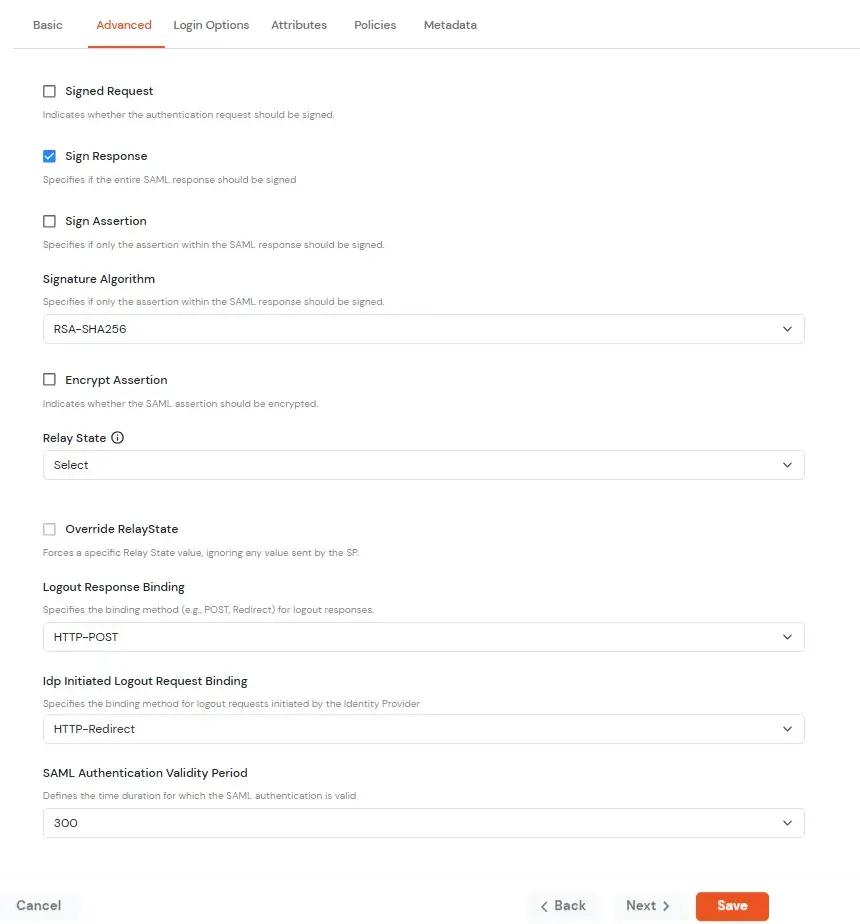
  • Click Next to go to the Advanced settings. Then select Sign Response and Sign Assertion.
  • Career Village SSO: advanced settings

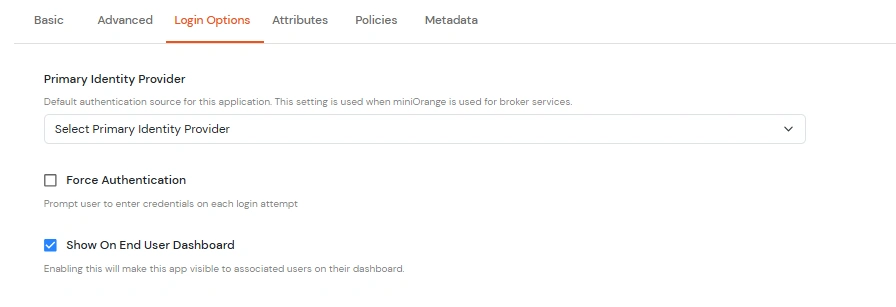
  • Click Next to go to the Login options tab. Here, you can configure the following settings:
  • Primary Identity Provider Select the identity source from where you want the authentication to happen. You will see the list of all configured sources.
    Force Authentication Enable this to enforce authentication on each request to access the application.
    Show On End User Dashboard Disable this if you do not want the app to be visible for all users on end user dashboard.
    Career Village SSO: login Options

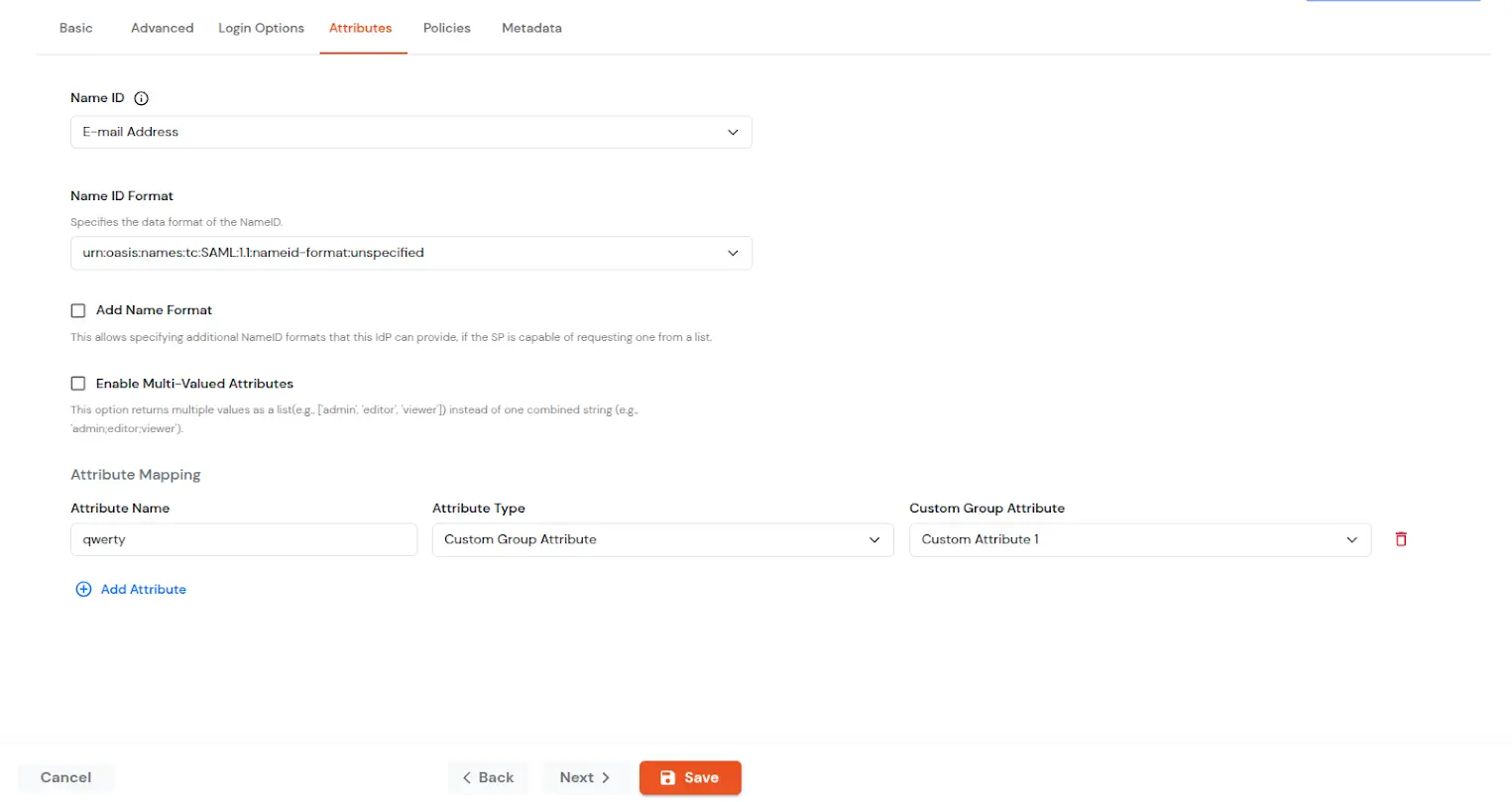
  • Click Next to go to the Attribute Mapping page. Here you can add and configure the attributes to be sent to the app.
  • NameID NameID is the unique identifier for the authenticated user included in the SAML assertion. It allows the Service Provider to recognize and map the user to an account. Generally, NameID is a username or Email Address.
    NameID format Defines what type of identifier is used in the NameID (e.g., email, persistent, transient) so the SP can correctly map the user. If the SP does not request a specific format, the IdP can leave it unspecified and use a default.
    Add Name Format Name Format defines how attribute names are represented in a SAML assertion (e.g., as simple strings or URIs). It helps the SP correctly interpret attribute naming and ensures consistency between IdP and SP.
    Enable Multi-Valued Attributes

    Enabled: Commas (,) and semicolons (;) are treated as separators, so the attribute is split into a clean list. Example: roles = ['admin', 'editor', 'viewer'].

    Disabled: Commas and semicolons are not treated as separators, so the attribute stays as one combined string. Example: roles = "admin;editor;viewer".

    Attribute Mapping You can Add Attributes to be sent in SAML Assertion to SP. The attributes include user’s profile attributes such as first name, last name, full name, username, email, custom profile attributes, and user groups, etc.
    Career Village SSO: Add attributes

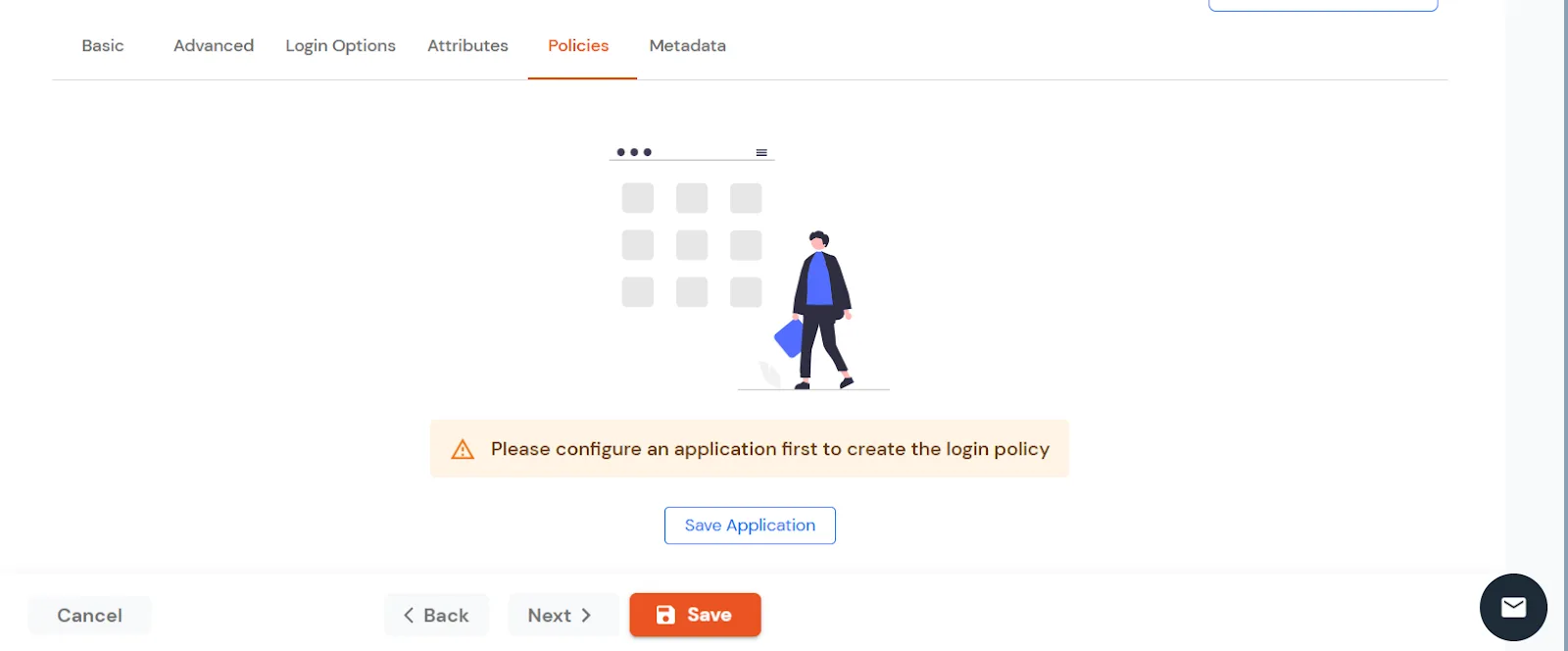
  • Click Next to go to the Login policy. You need to Save the Application first to configure the policy for the application.
  • Career Village SSO: Save the application in the Policies section

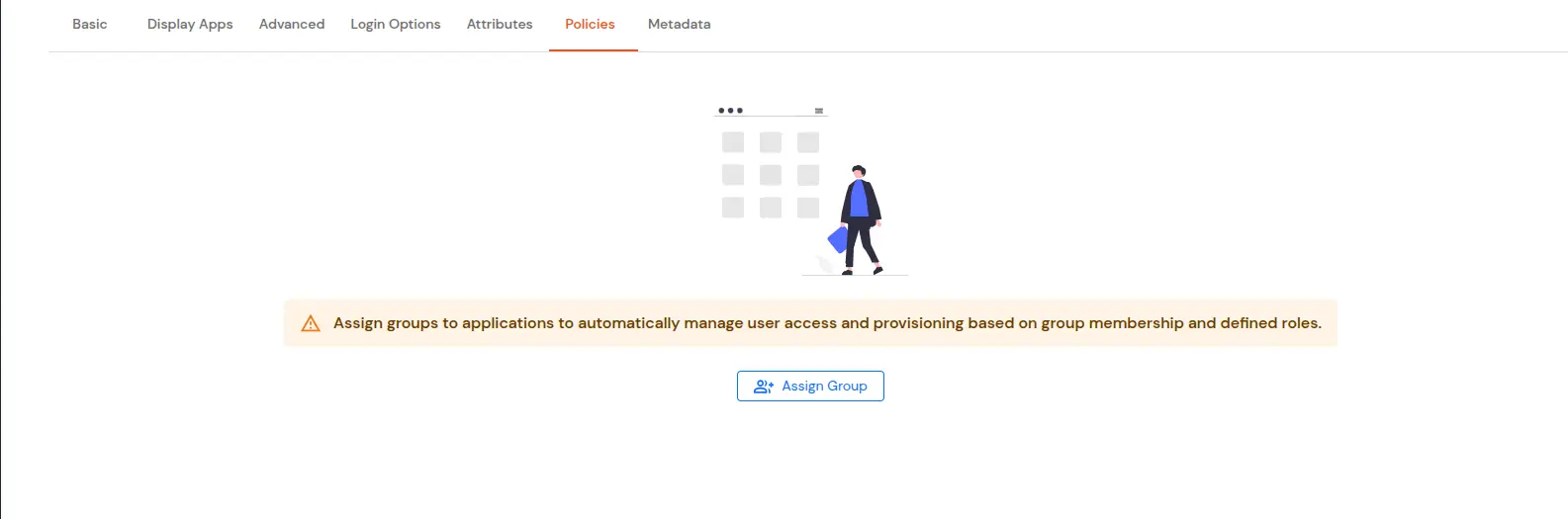
  • After the application is saved you can configure the policy for that application.
  • Career Village SSO: Go to Policies and Assign Group

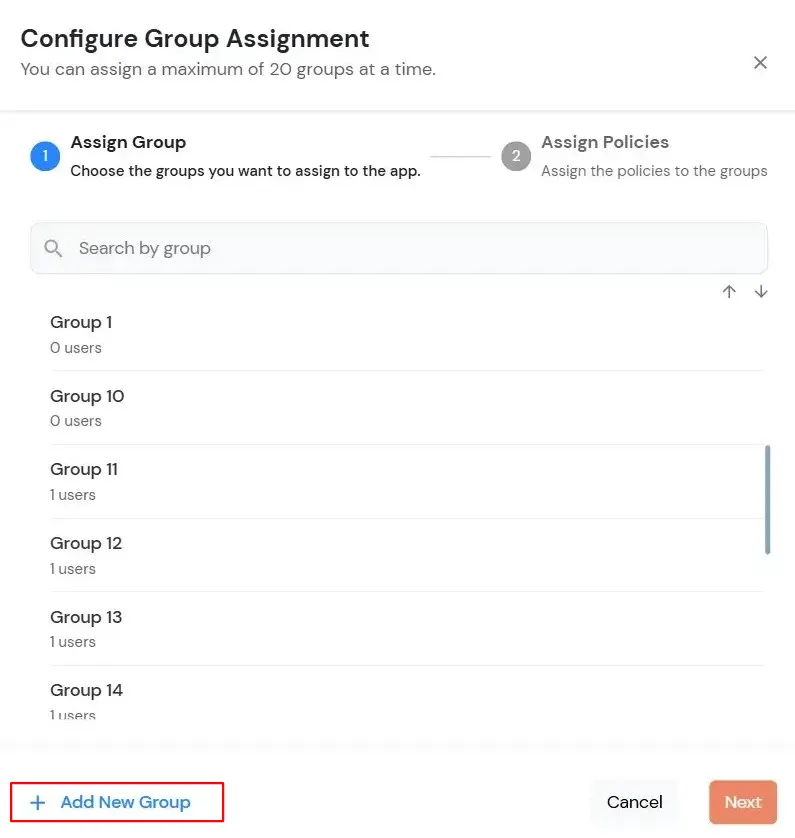
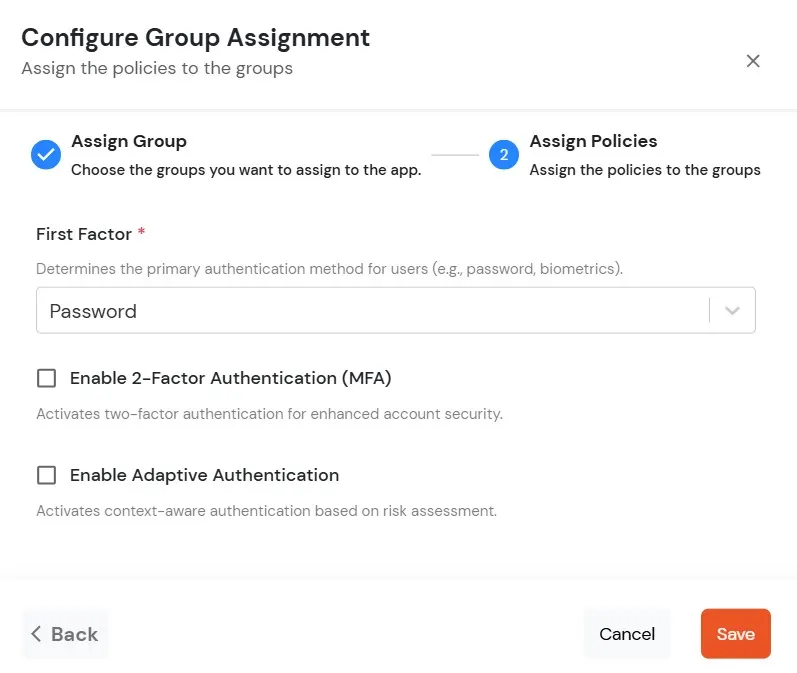
  • Click on the Assign group button. A new Configure Group Assignment Modal tab will open.
    • Assign Group: Select the groups you want to link with the application. You can select up to 20 groups at a time.
    • Career Village SSO: Configure Group Assignment

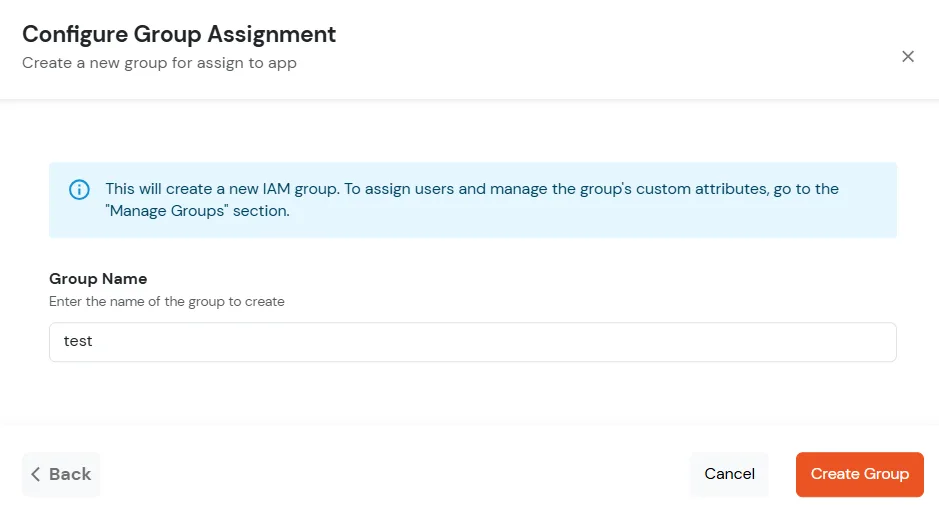
    • If you need to create a new group, click on Add New Group button.
    • Enter the Group name and click on Create Group.
    • Career Village SSO: Create New Group

    • Click on Next.
    • Assign Policies: Add the required policies to the selected groups. Enter the following details:
    • First Factor: Select the login method from the dropdown.
      • If you select Password as the login method, you can enable 2-Factor Authentication (MFA) and Adaptive Authentication, if needed.
      • If you select Password-less as login method, you can enable 2-Factor Authentication (MFA) if needed.
  • Career Village SSO: Add Login Policy

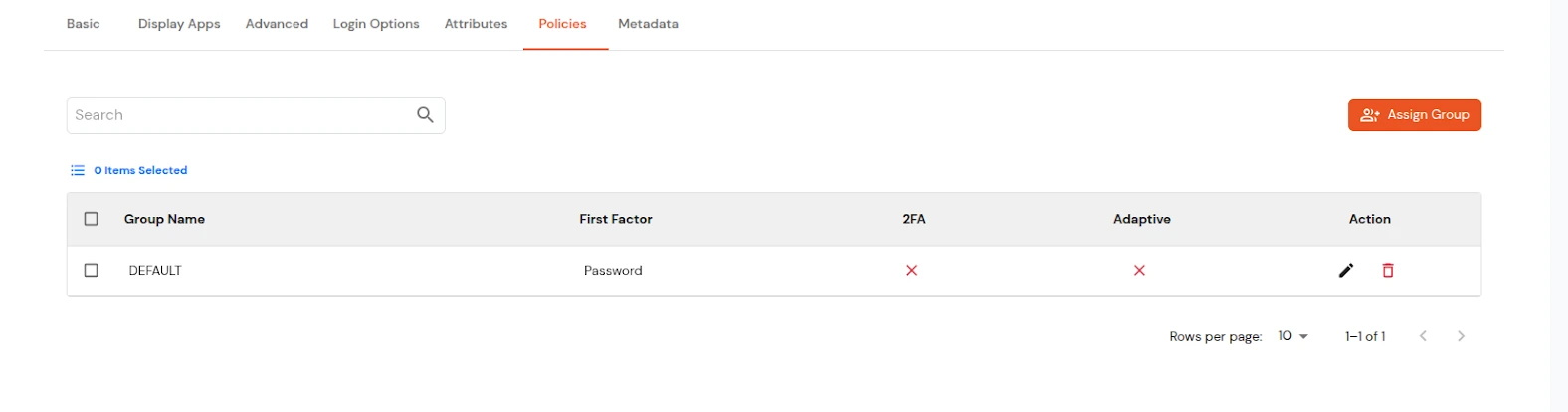
  • Click on Save. Policies will be created for all the selected groups.
  • You will see the policy listed once it’s successfully added.
  • Career Village SSO: Add Multiple Login Policies

    To get miniOrange metadata details in order to configure Career Village :
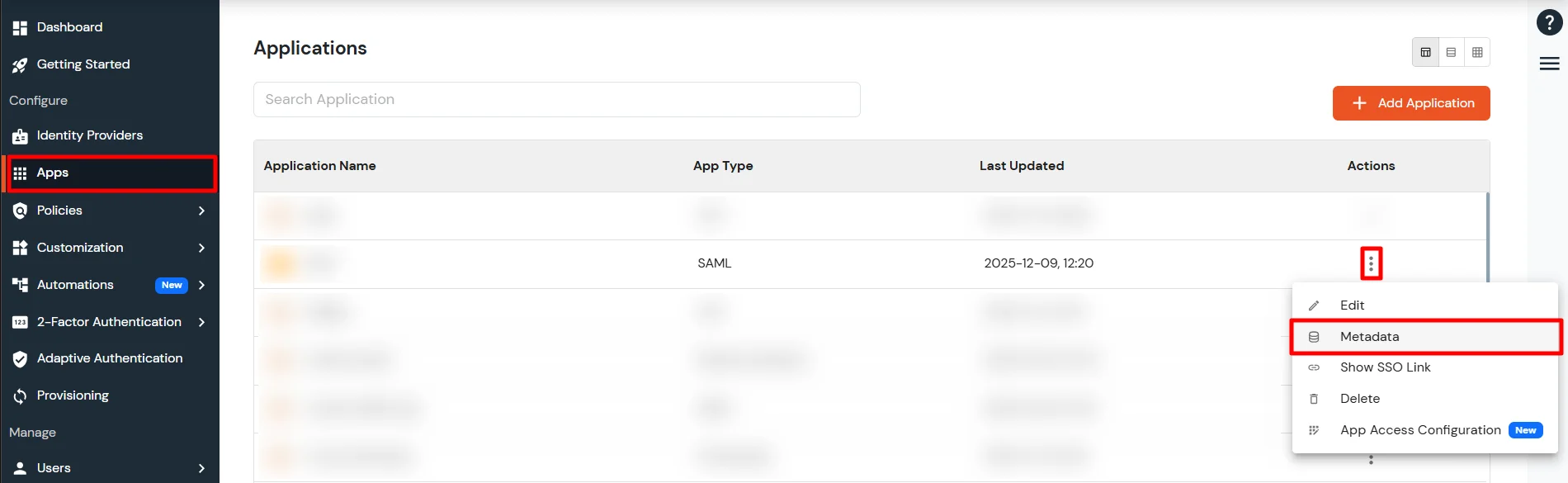
  • Go to Apps >> Applications.
  • Search for your app and click on the icon ' ' in Actions menu against your app.
  • Click on Metadata to get metadata details, which will be required later. Click on Show SSO Link to see the IDP initiated SSO link for Career Village.
  • Go to Metadata link Career Village SAML SSO

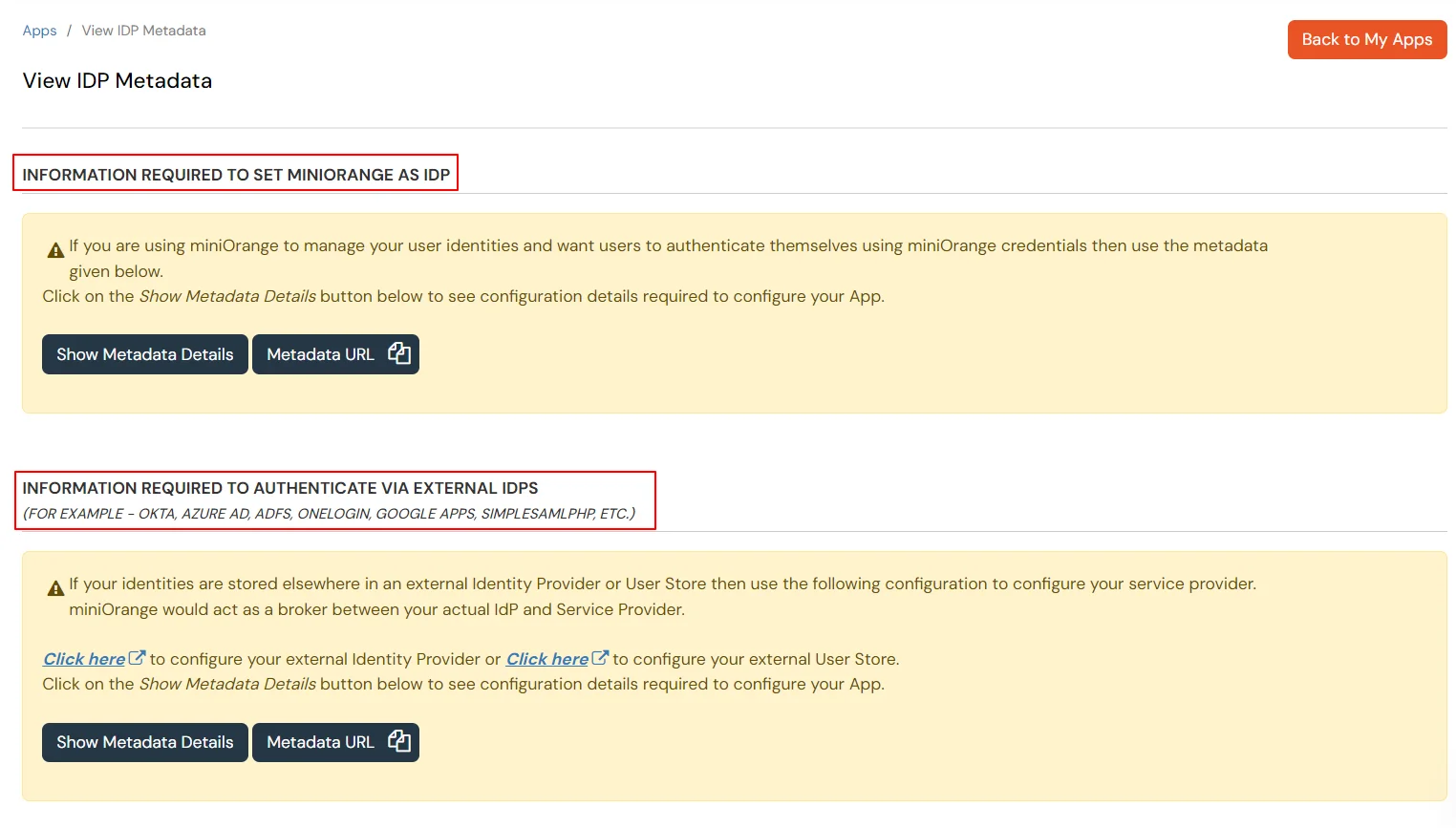
  • On the View IDP Metadata page -

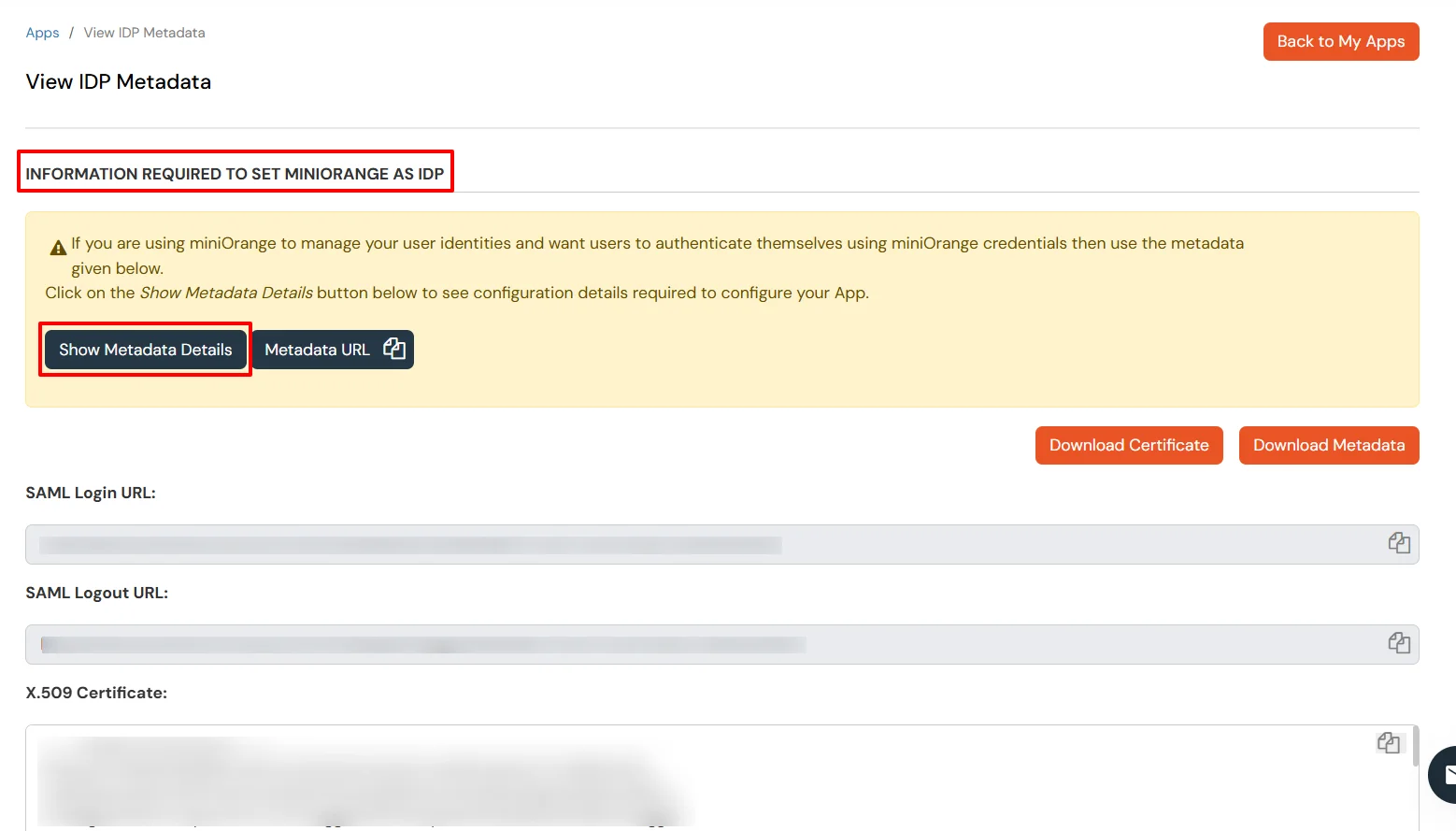
    1. If you want to use miniOrange as User-Store i.e., your user identities will be stored in miniOrange then download the metadata file under the heading 'INFORMATION REQUIRED TO SET MINIORANGE AS IDP'.

    2. If you want to authenticate your users via any external Identity Provider like Active Directory, Okta, OneLogin, Google, Apple ID, etc then download the Metadata file under the heading 'INFORMATION REQUIRED TO AUTHENTICATE VIA EXTERNAL IDPS'.
  • Career Village Single Sign-On (SSO) On Metadata page

  • Then click on Download Metadata.
  • Career Village Single Sign-On (SSO) Select Metadata details external IDP or miniOrange as IDP

2. Configure SSO in Career Village Admin Account

  • Send the downloaded Metadata XML and the required URLs copied from the miniOrange dashboard to the careervillage support team. They will configure these settings to ensure the SAML SSO connection is properly established on both sides.
  • Fill the details as per the following table.
  • Sign-in URL / SSO URL / IdP SSO URL SAML Login URL from miniOrange metadata
    Sign-out URL / Logout URL SAML Logout URL from miniOrange metadata (if this field is available)
    X.509 Certificate / Signing certificate Paste the X.509 certificate content from miniOrange metadata
  • Click on save.

3. Test SSO Configuration

Test SSO login to your Career Village account with miniOrange IdP:
    Using SP Initiated Login

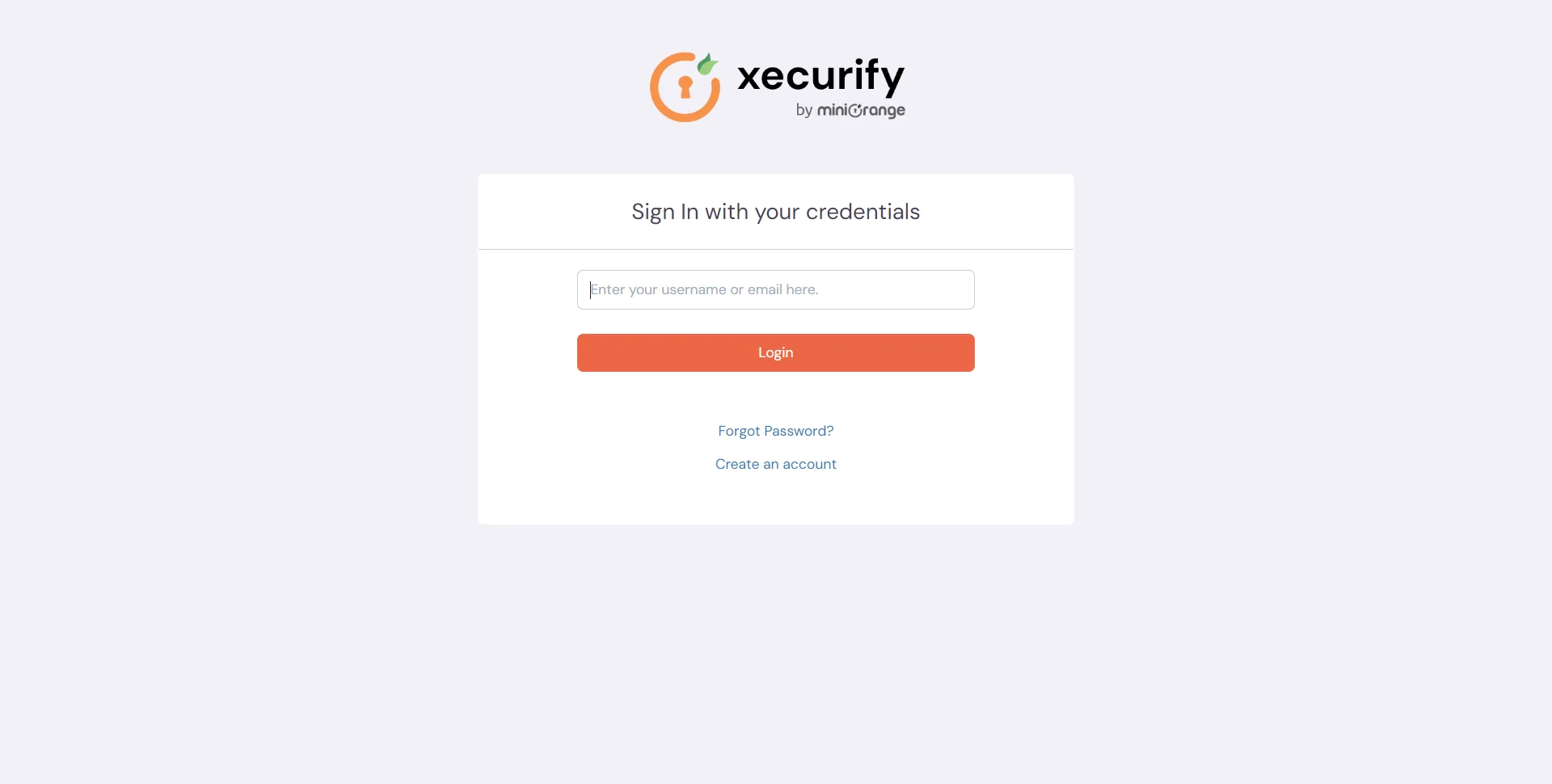
    • Go to your Career Village URL, here you will be either asked to enter the username or click on the SSO link which will redirect you to miniOrange IdP Sign On Page.
    • Career Village Single Sign-On (SSO) login

    • Enter your miniOrange login credential and click on Login. You will be automatically logged in to your Career Village account.

    Using IDP Initiated Login

    • Login to miniOrange IdP using your credentials.
    • Career Village Single Sign-On (SSO)

    • On the Dashboard, click on Career Village application which you have added, to verify SSO configuration.
    • Career Village Single Sign-On (SSO) manage apps


    Not able to configure or test SSO?


    Contact us or email us at idpsupport@xecurify.com and we'll help you setting it up in no time.


4. Configure Your User Directory (Optional)

miniOrange provides user authentication from various external sources, which can be Directories (like ADFS, Microsoft Active Directory, Microsoft Entra ID, OpenLDAP, Google, AWS Cognito etc), Identity Providers (like Okta, Shibboleth, Ping, OneLogin, KeyCloak), Databases (like MySQL, Maria DB, PostgreSQL) and many more. You can configure your existing directory/user store or add users in miniOrange.


1. Create User in miniOrange
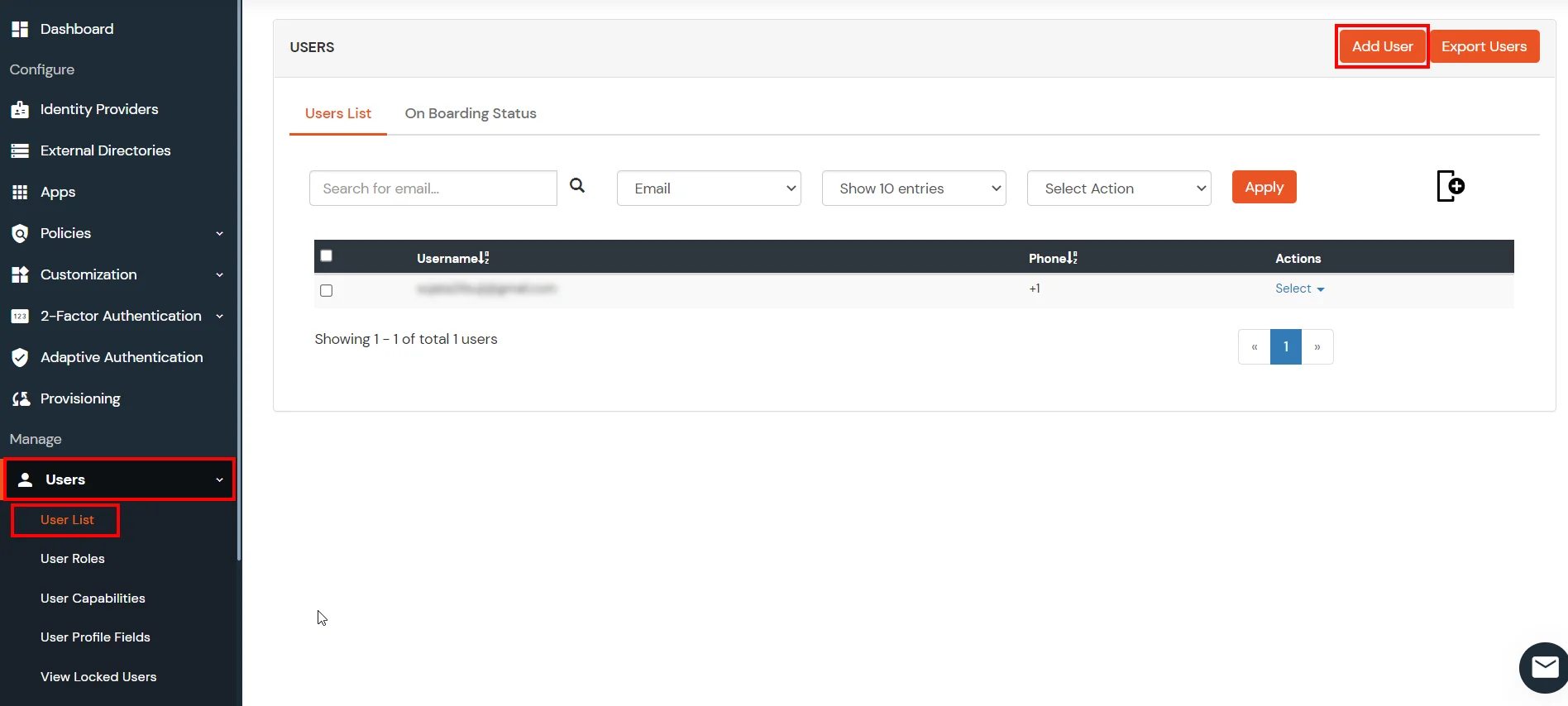
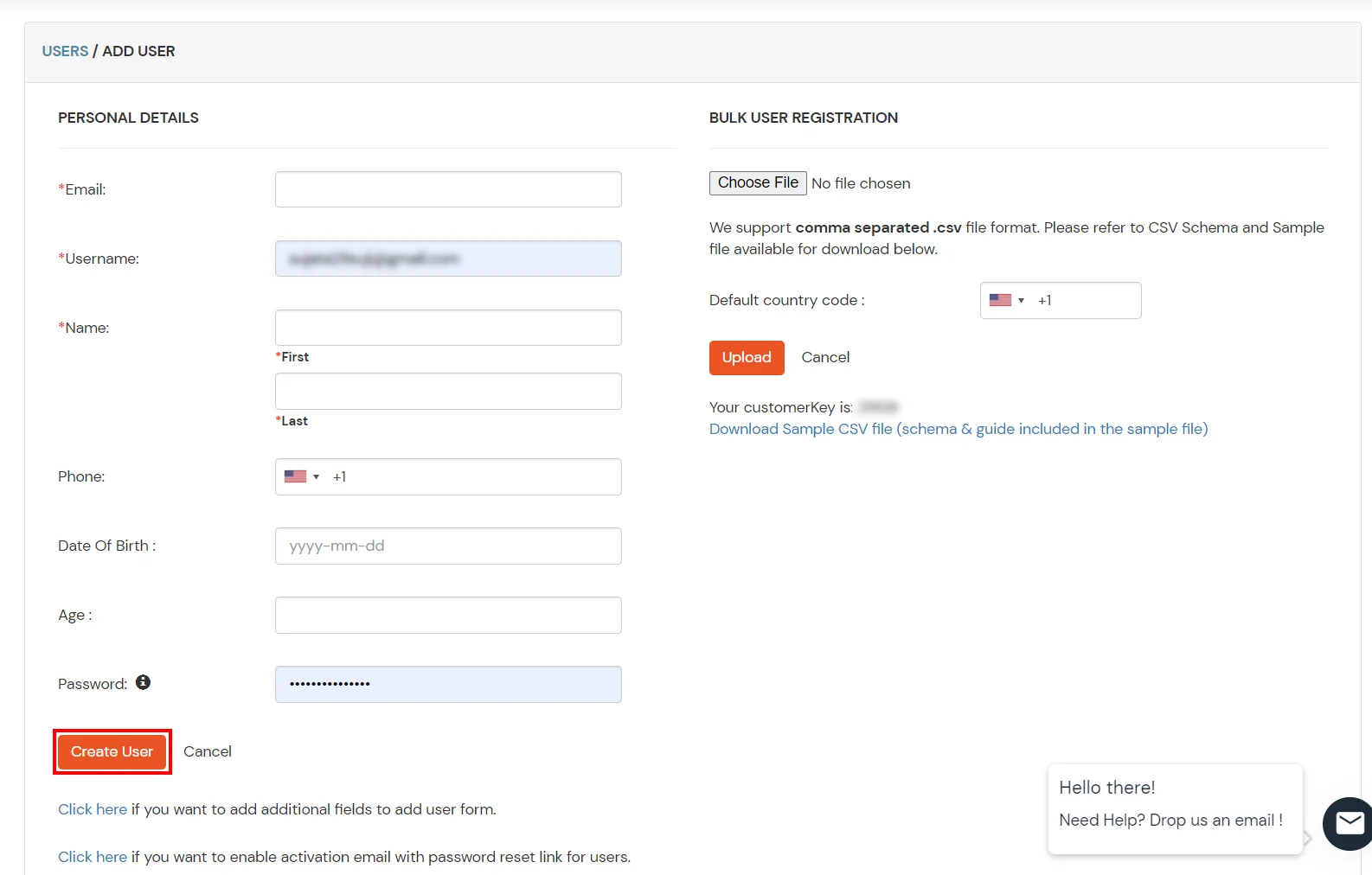
  • Click on Users >> User List >> Add User.
  • Career Village: Add user in miniOrange

  • Here, fill the user details without the password and then click on the Create User button.
  • Career Village: Add user details

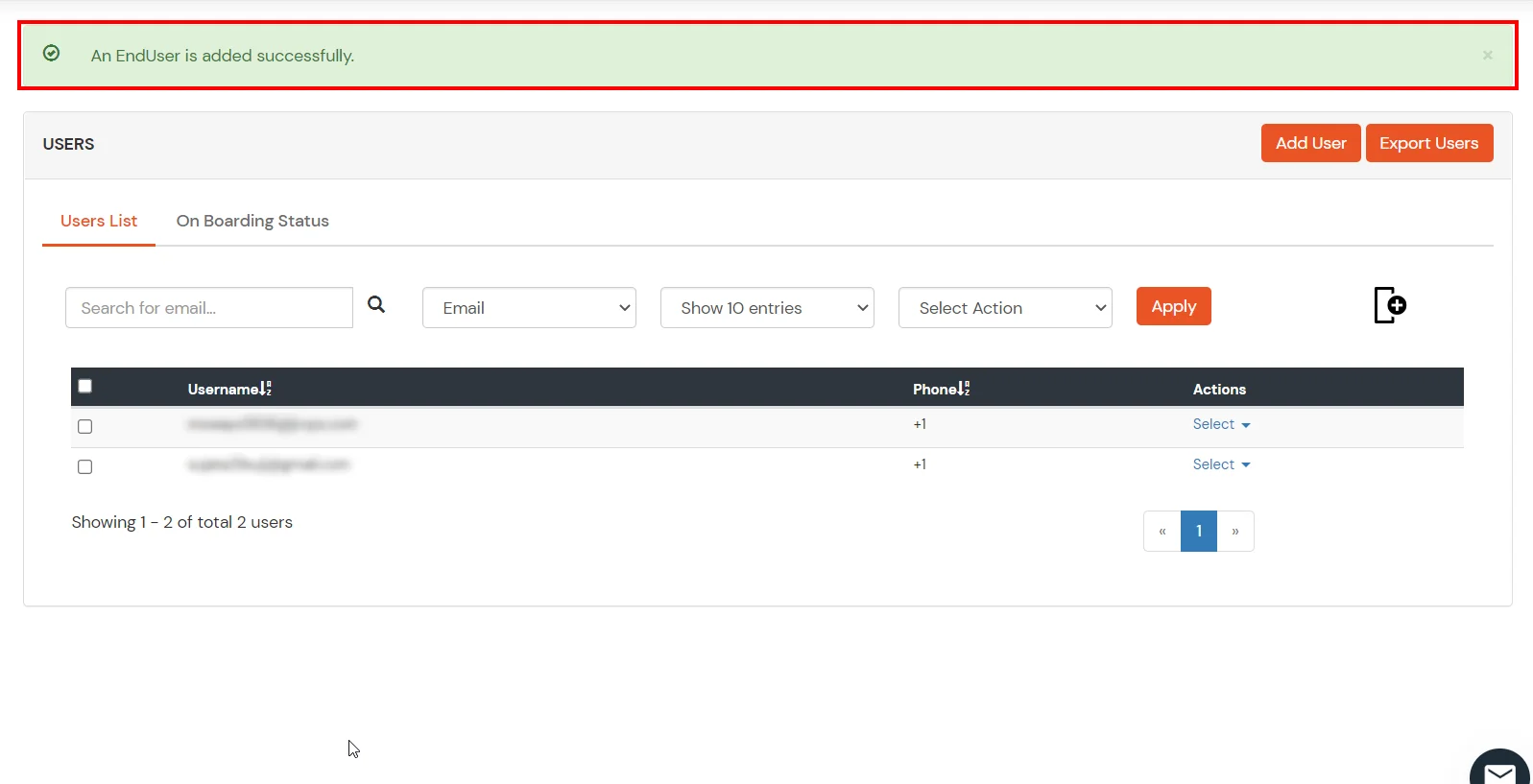
  • After successful user creation a notification message "An end user is added successfully" will be displayed at the top of the dashboard.
  • Career Village: Add user details

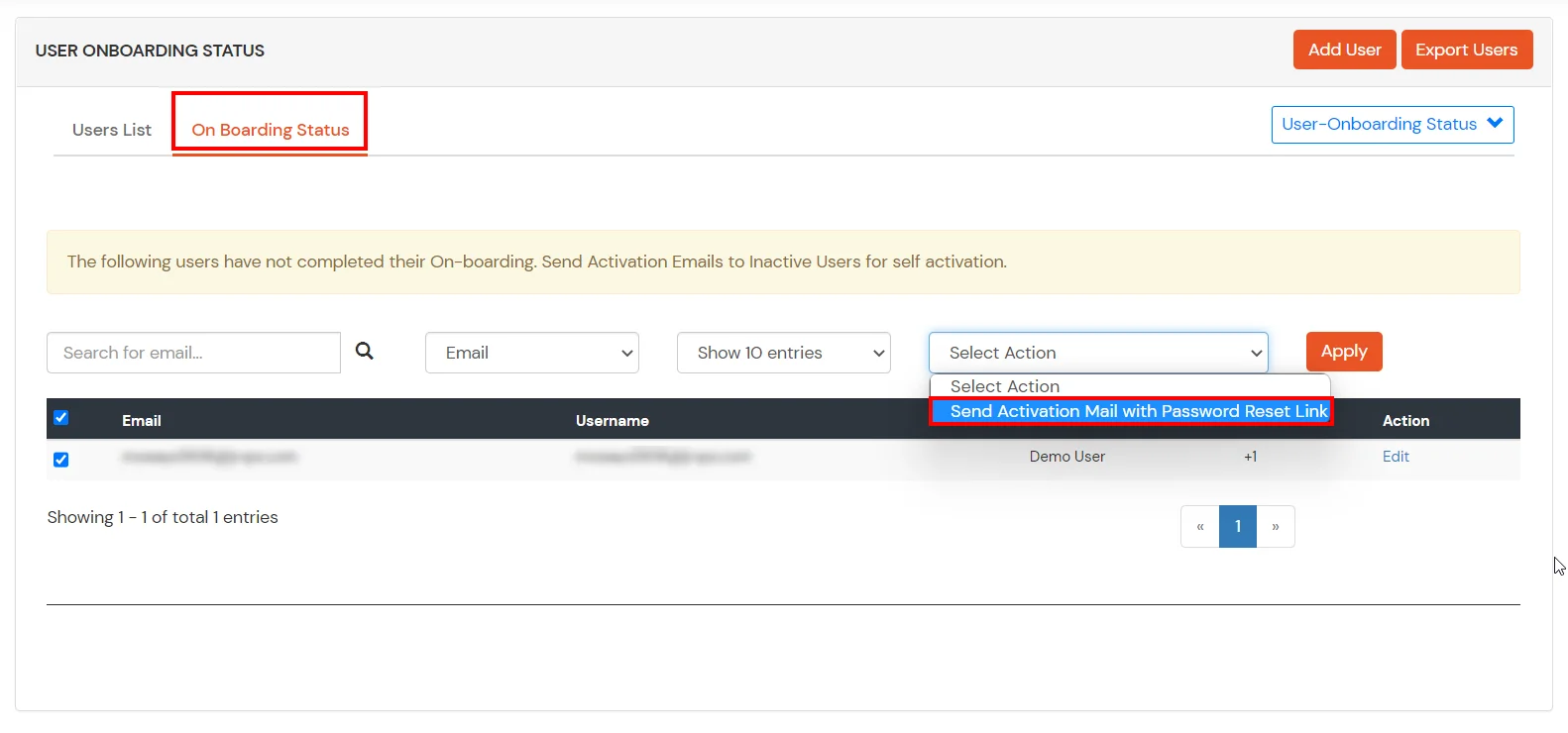
  • Click on Onboarding Status tab. Check the email, with the registered e-mail id and select action Send Activation Mail with Password Reset Link from Select Action dropdown list and then click on Apply button.
  • Career Village: Select email action

  • Now, Open your email id. Open the mail you get from miniOrange and then click on the link to set your account password.
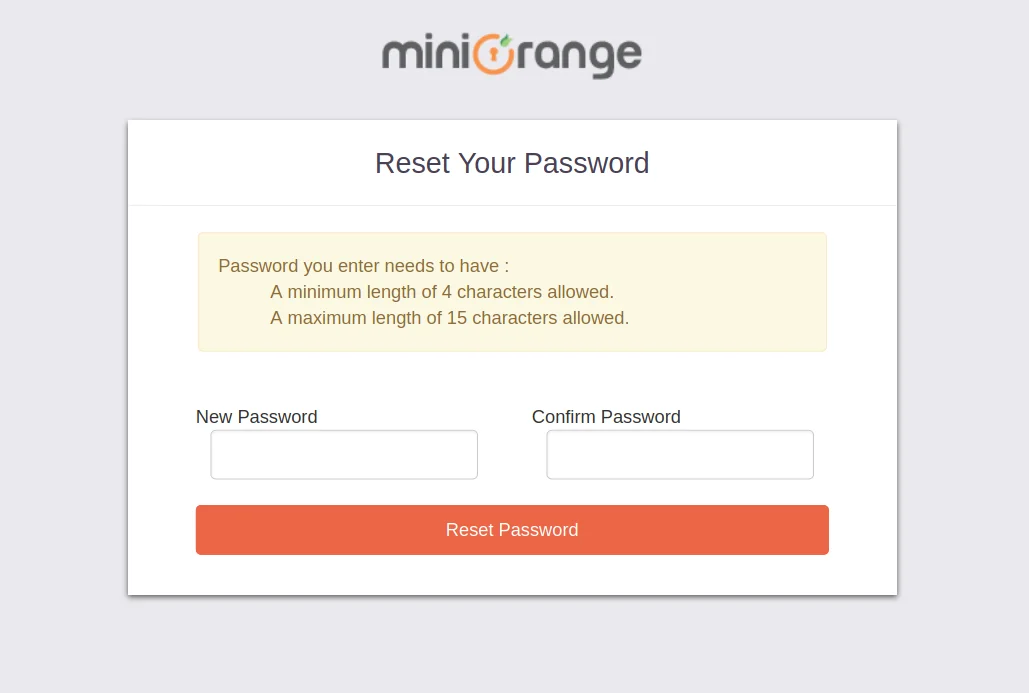
  • On the next screen, enter the password and confirm password and then click on the Single Sign-On (SSO) reset password button.
  • Career Village: Reset user password
  • Now, you can log in into miniOrange account by entering your credentials.

2. Bulk Upload Users in miniOrange via Uploading CSV File.
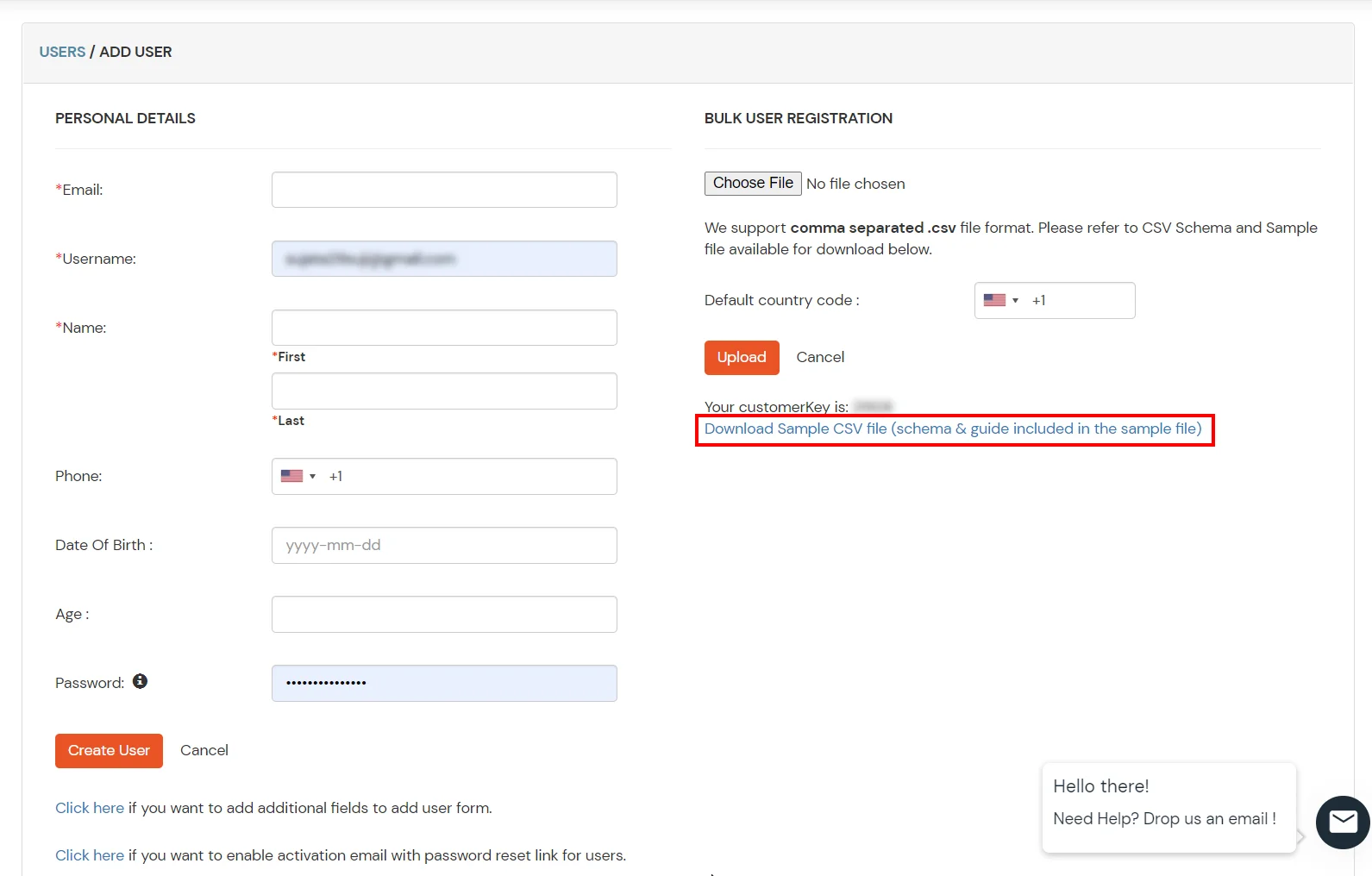
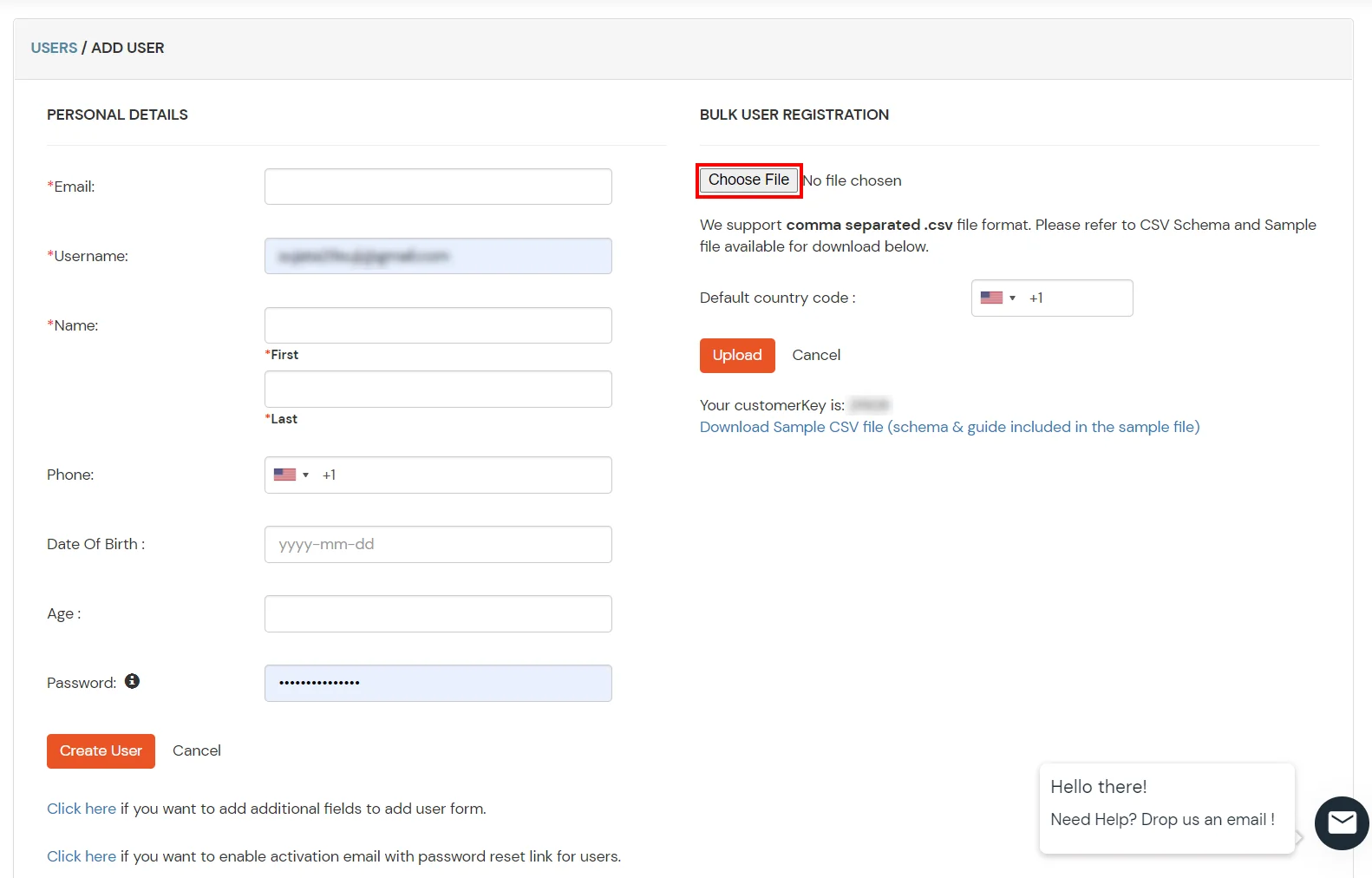
  • Navigate to Users >> User List. Click on Add User button.
  • Career Village: Add users via bulk upload

  • In Bulk User Registration Download sample csv format from our console and edit this csv file according to the instructions.
  • Career Village: Download sample csv file

  • To bulk upload users, choose the file make sure it is in comma separated .csv file format then click on Upload.
  • Career Village: Bulk upload user

  • After uploading the csv file successfully, you will see a success message with a link.
  • Click on that link you will see list of users to send activation mail. Select users to send activation mail and click on Send Activation Mail. An activation mail will be sent to the selected users.
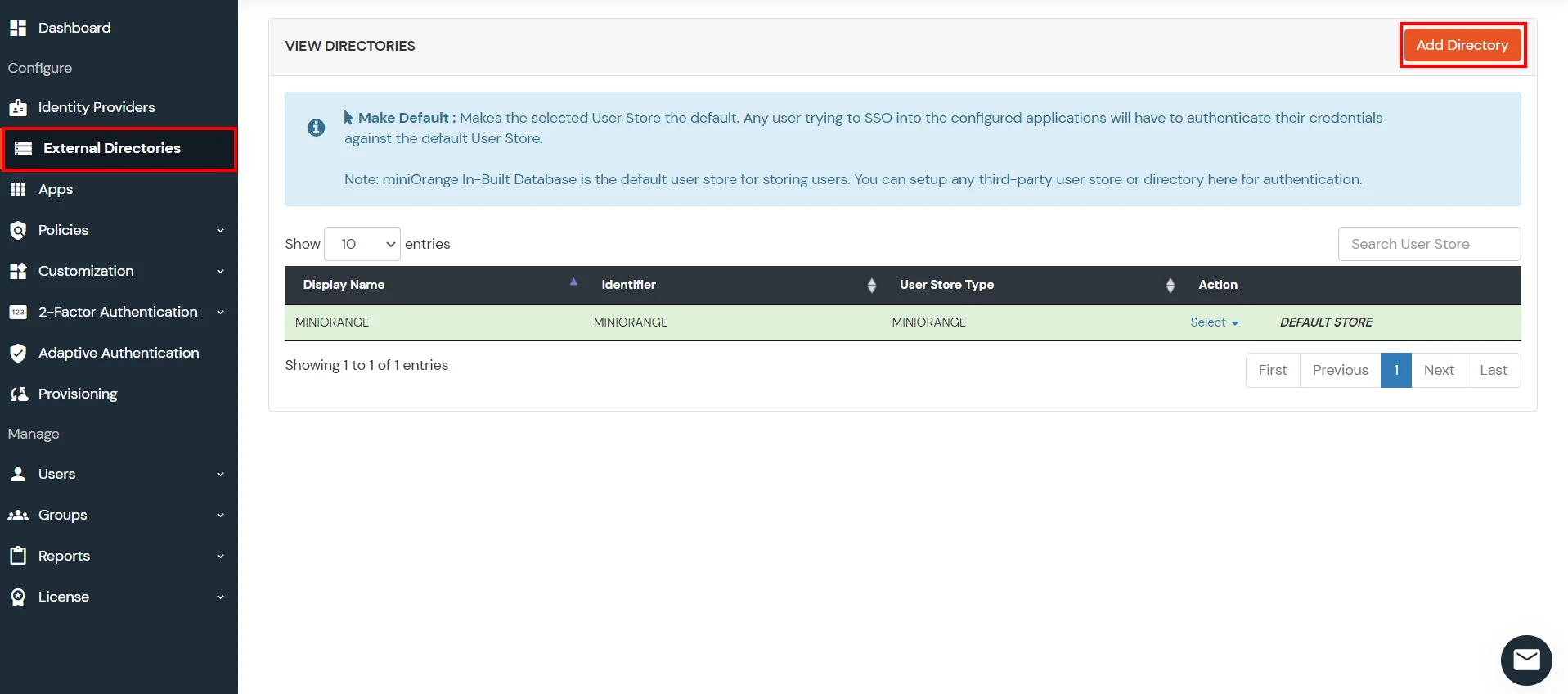
  • Click on Identity Providers >> Add Identity Provider in the left menu of the dashboard
  • Career Village : Configure AD as External Dirctory

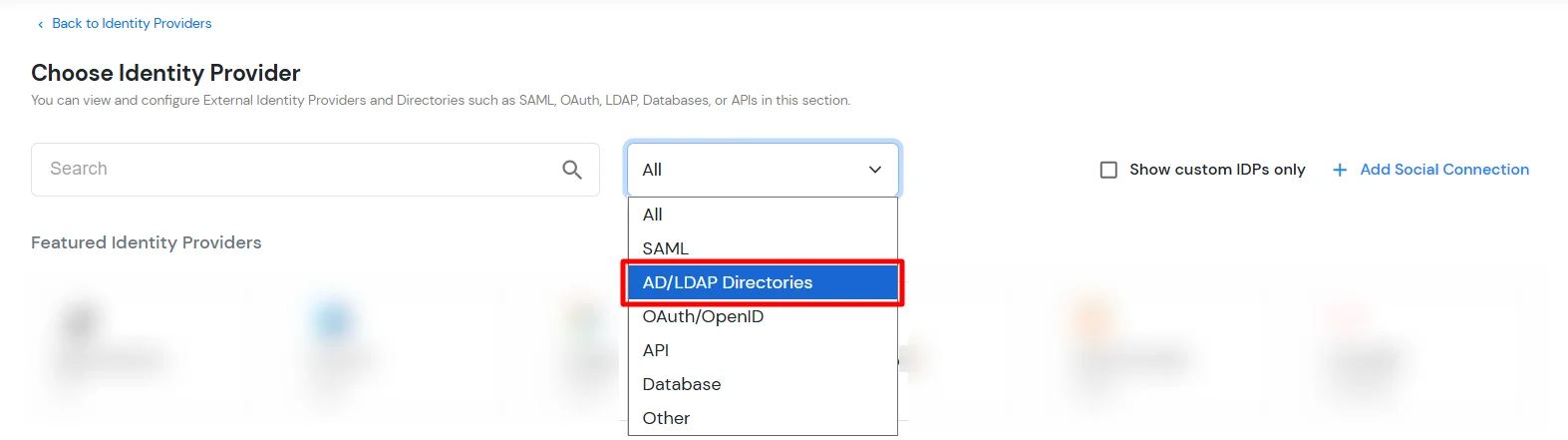
  • In Choose Identity Provider, select AD/LDAP Directories from the dropdown.
  • Career Village : Select  Directory type as AD/LDAP

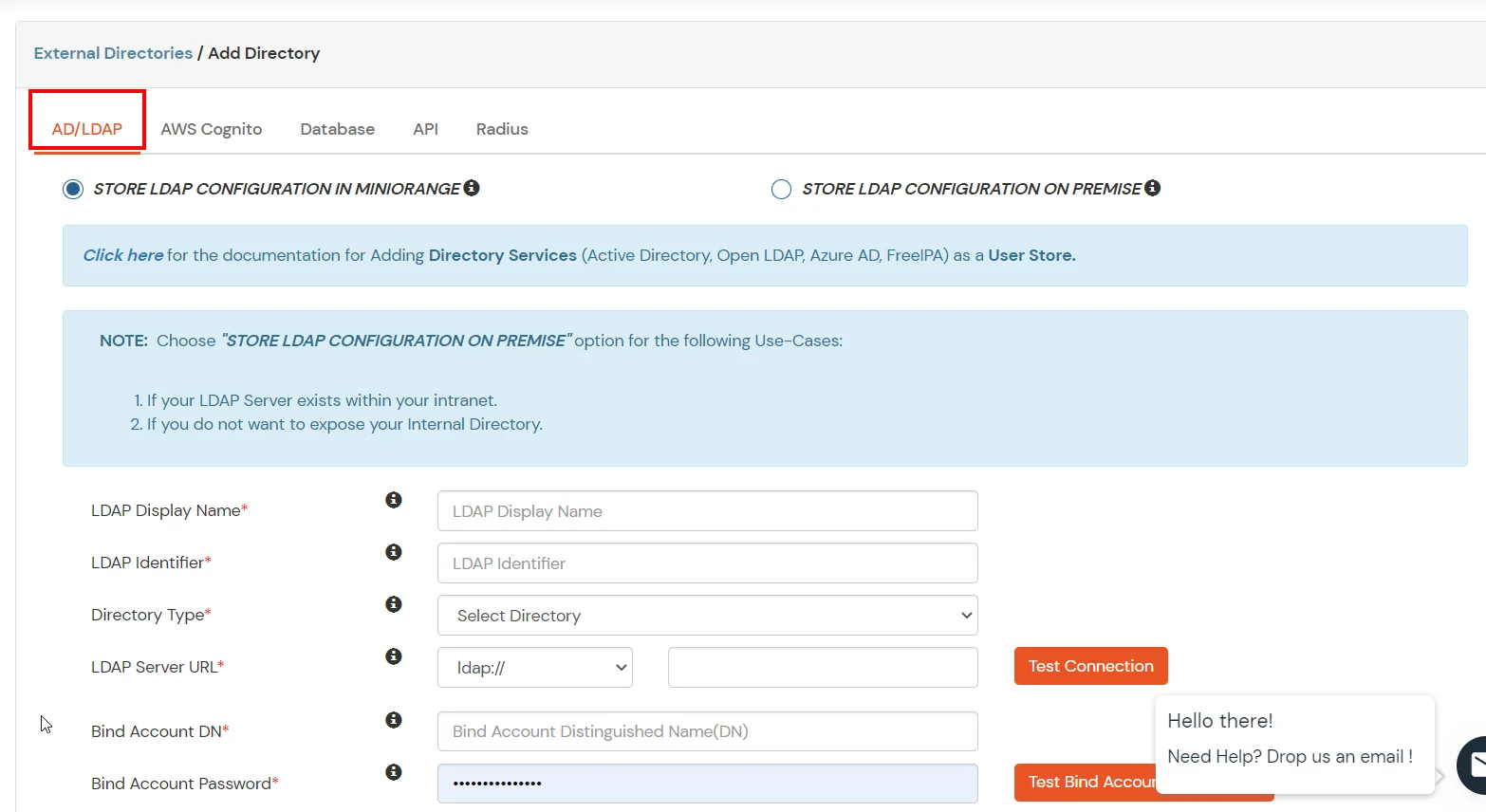
  • Then search for AD/LDAP and click it.
  • Career Village : Select  Directory type as AD/LDAP

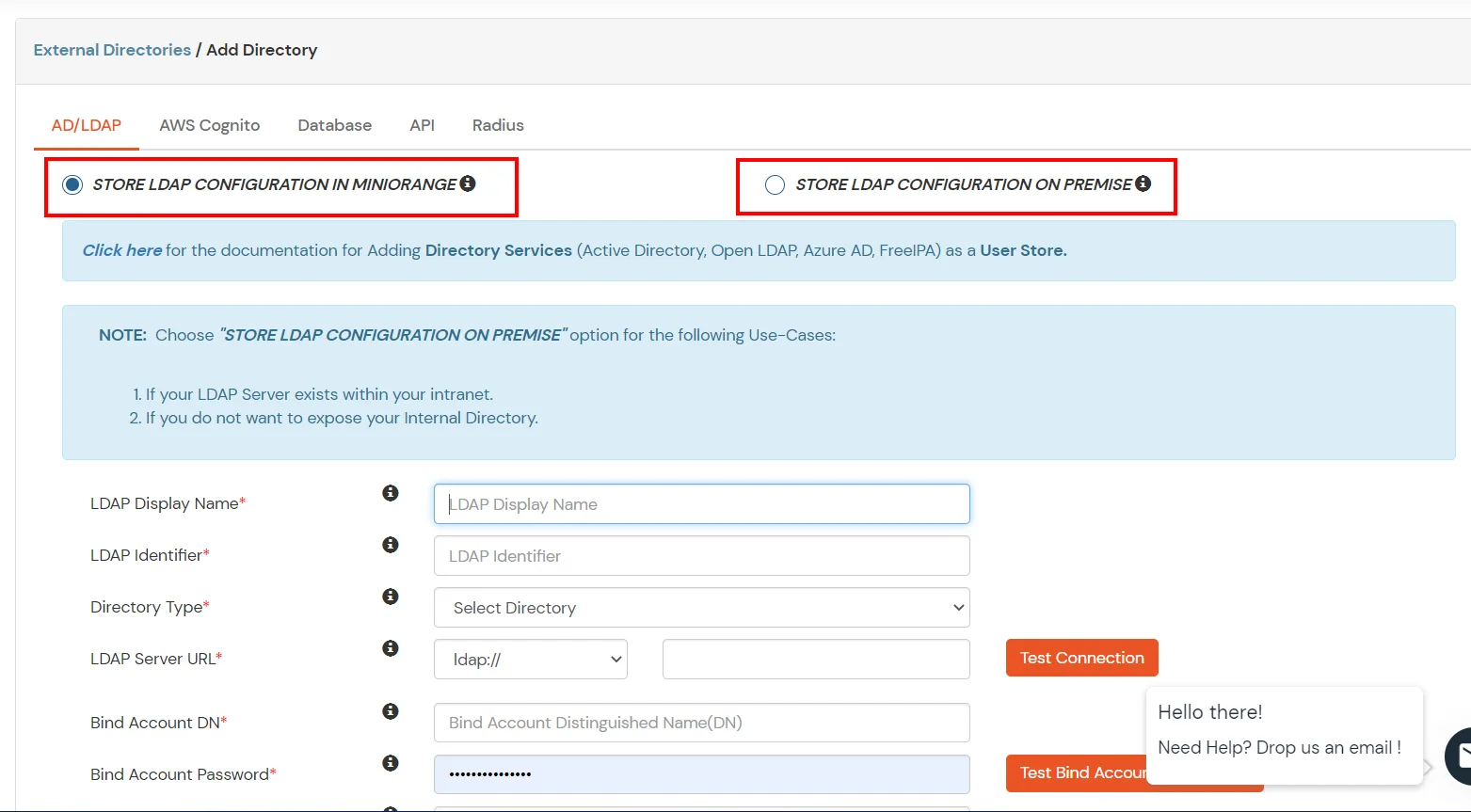
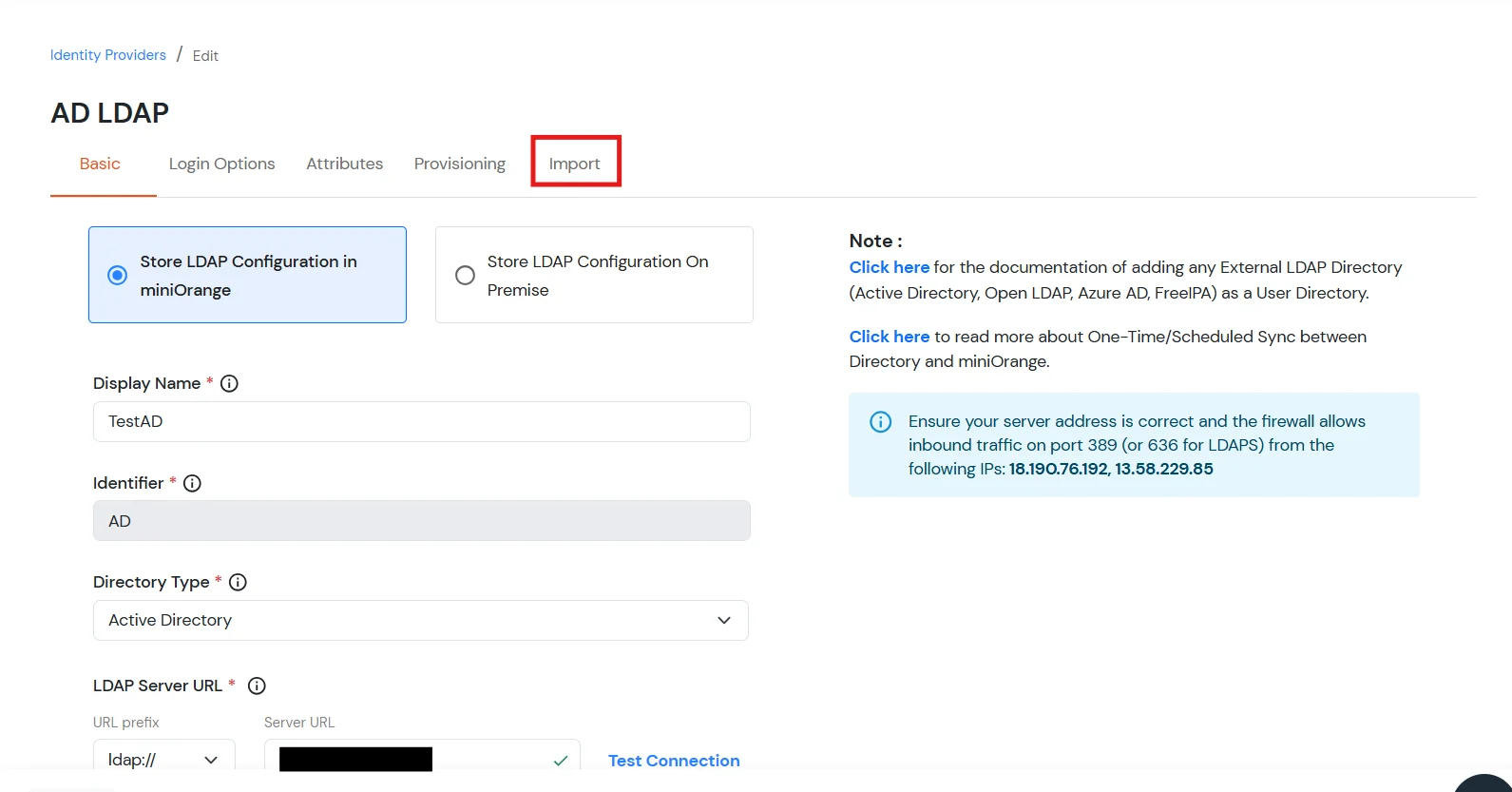
  • STORE LDAP CONFIGURATION IN MINIORANGE: Choose this option if you want to keep your configuration in miniOrange. If the active directory is behind a firewall, you will need to open the firewall to allow incoming requests to your AD.
  • STORE LDAP CONFIGURATION ON PREMISE: Choose this option if you want to keep your configuration in your premise and only allow access to AD inside premises. You will have to download and install miniOrange gateway on your premise.
  • Career Village : Select ad/ldap user store type

  • Enter AD/LDAP Display Name and Identifier name.
  • Select Directory Type as Active Directory.
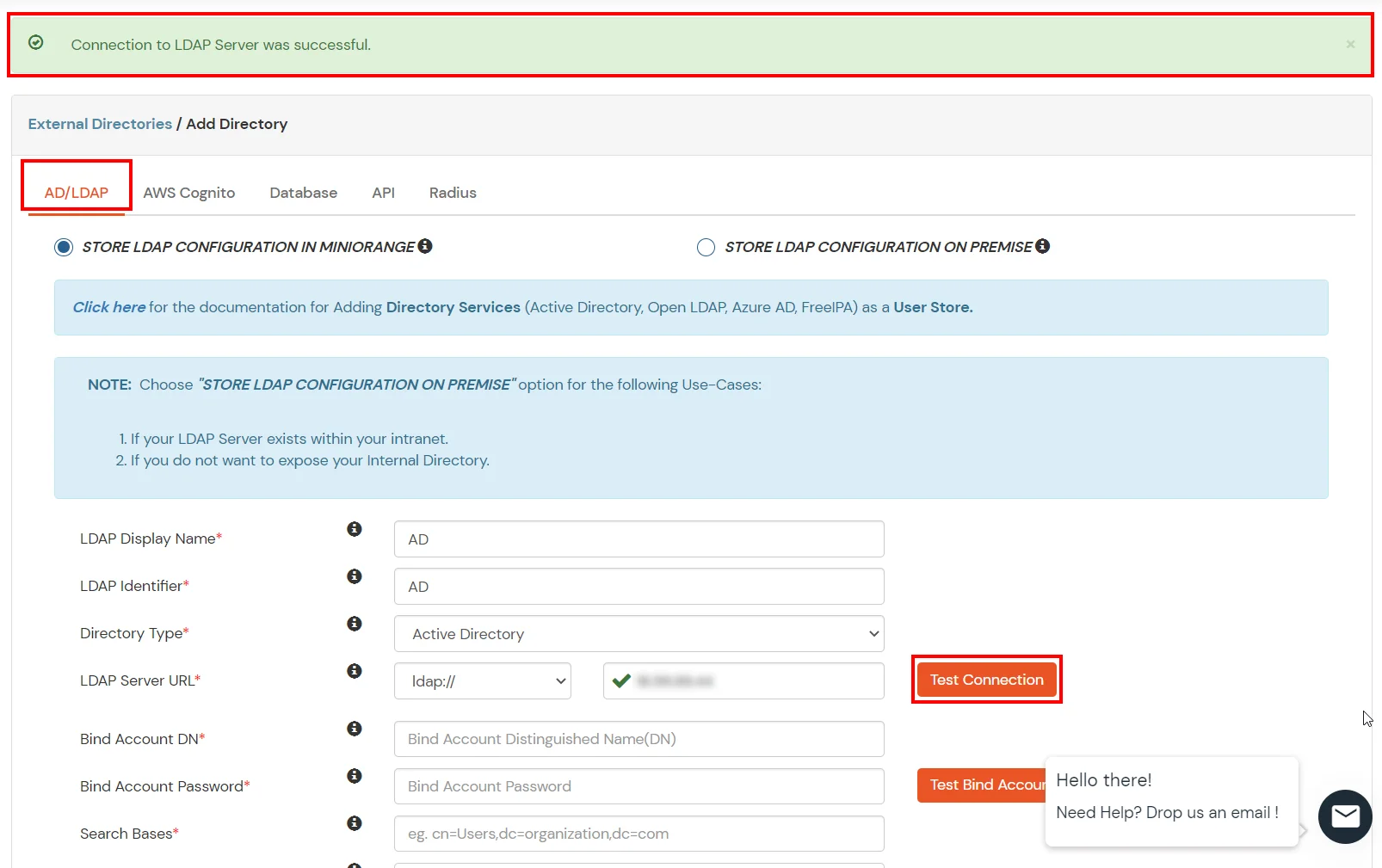
  • Enter the LDAP Server URL or IP Address against the LDAP Server URL field.
  • Click on the Test Connection button to verify if you have made a successful connection with your LDAP server.
  • Career Village : Configure LDAP server URL Connection

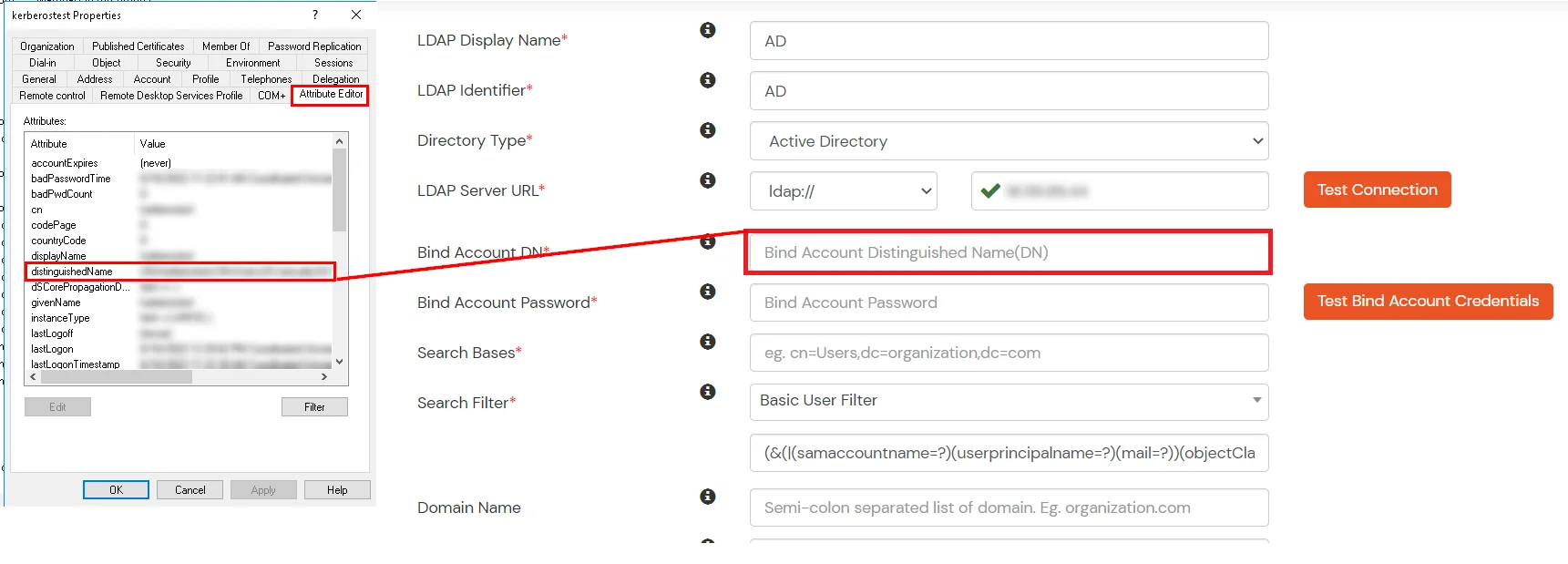
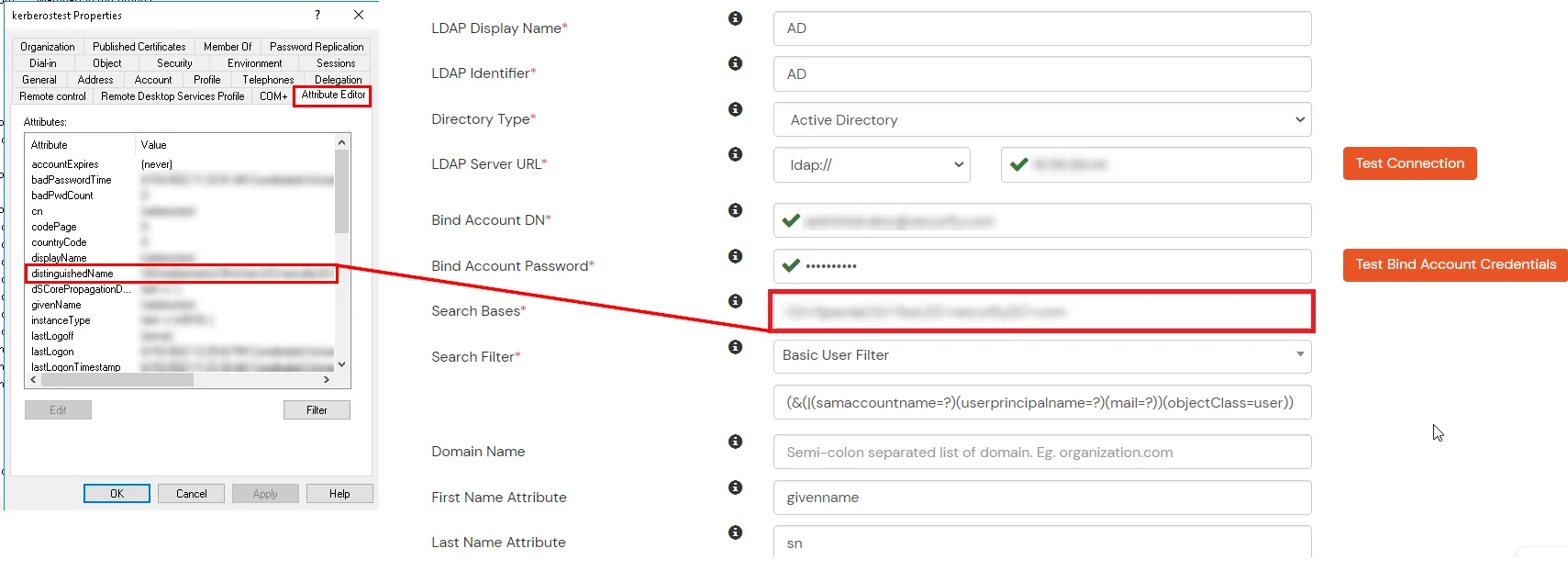
  • In Active Directory, go to the properties of user containers/OU's and search for the Distinguished Name attribute. The bind account should have minimum required read privileges in Active Directory to allow directory lookups. If the use case involves provisioning (such as creating, updating, or deleting users or groups), the account must also be granted appropriate write permissions.
  • Career Village : Configure user bind account domain name

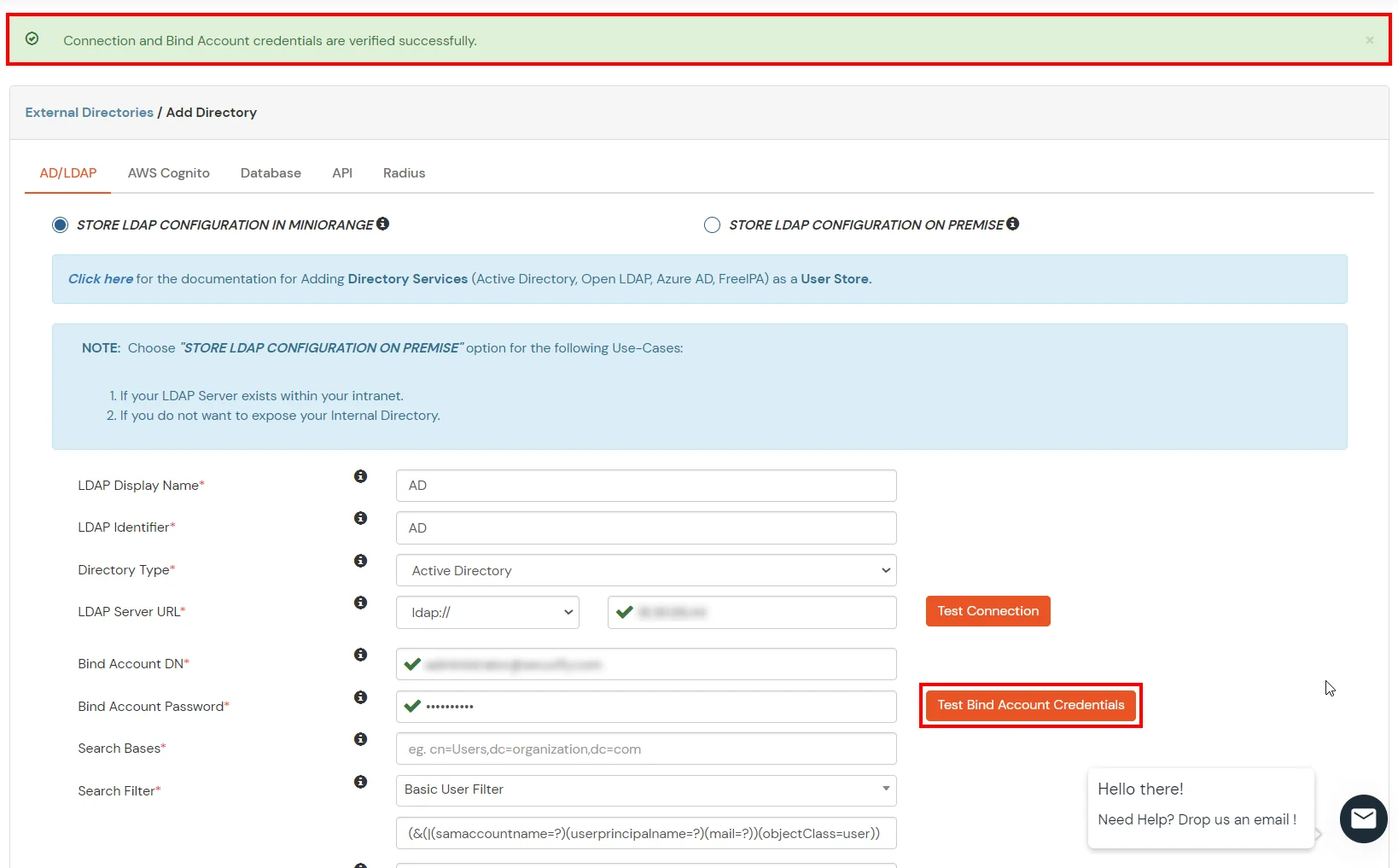
  • Enter the valid Bind account Password.
  • Click on the Test Bind Account Credentials button to verify your LDAP Bind credentials for LDAP connection.
  • Career Village : Check bind account credentials

  • Search Base is the location in the directory where the search for a user begins. You will get this from the same place you got your Distinguished name.
  • Career Village : Configure user search base

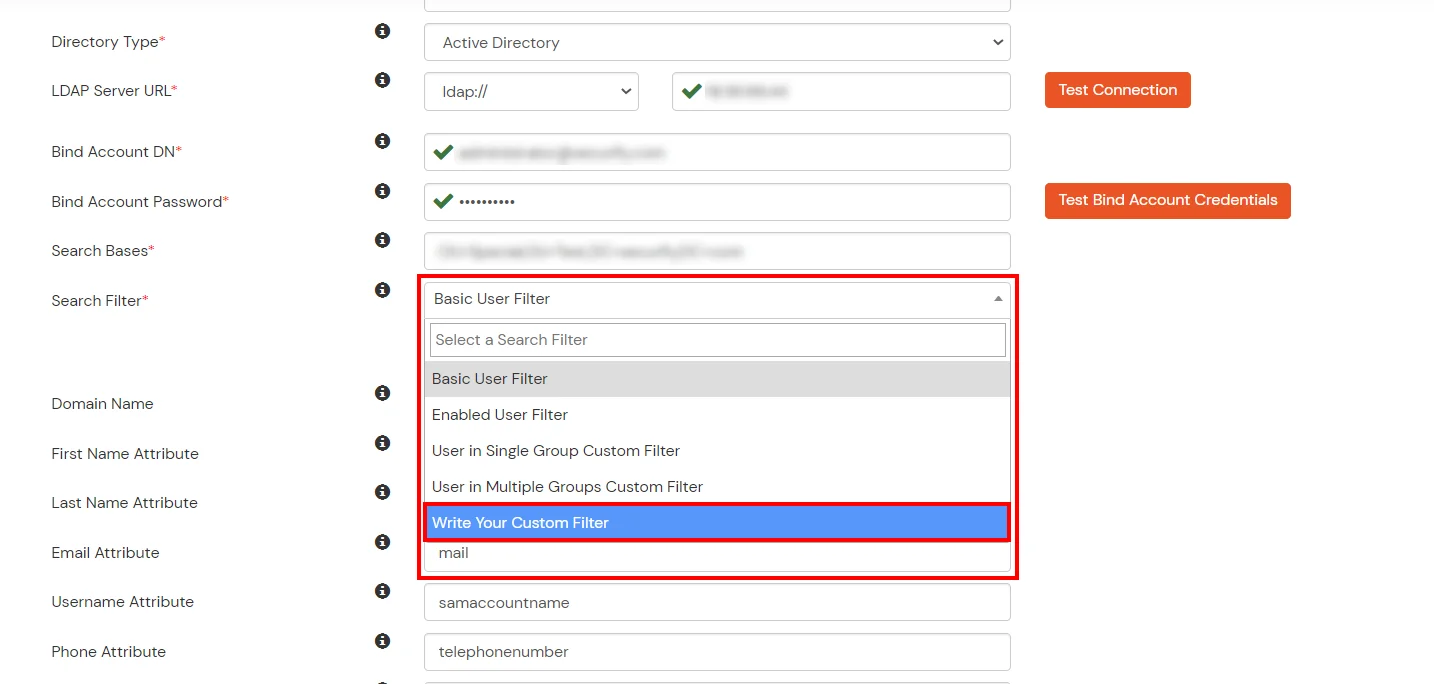
  • Select a suitable Search filter from the drop-down menu. If you use User in Single Group Filter or User in Multiple Group Filter, replace the <group-dn> in the search filter with the distinguished name of the group in which your users are present. To use custom Search Filter select "Write your Custom Filter" option and customize it accordingly.
  • Career Village : Select user search filter

  • Click on the Next button, or go to the Login Options tab.
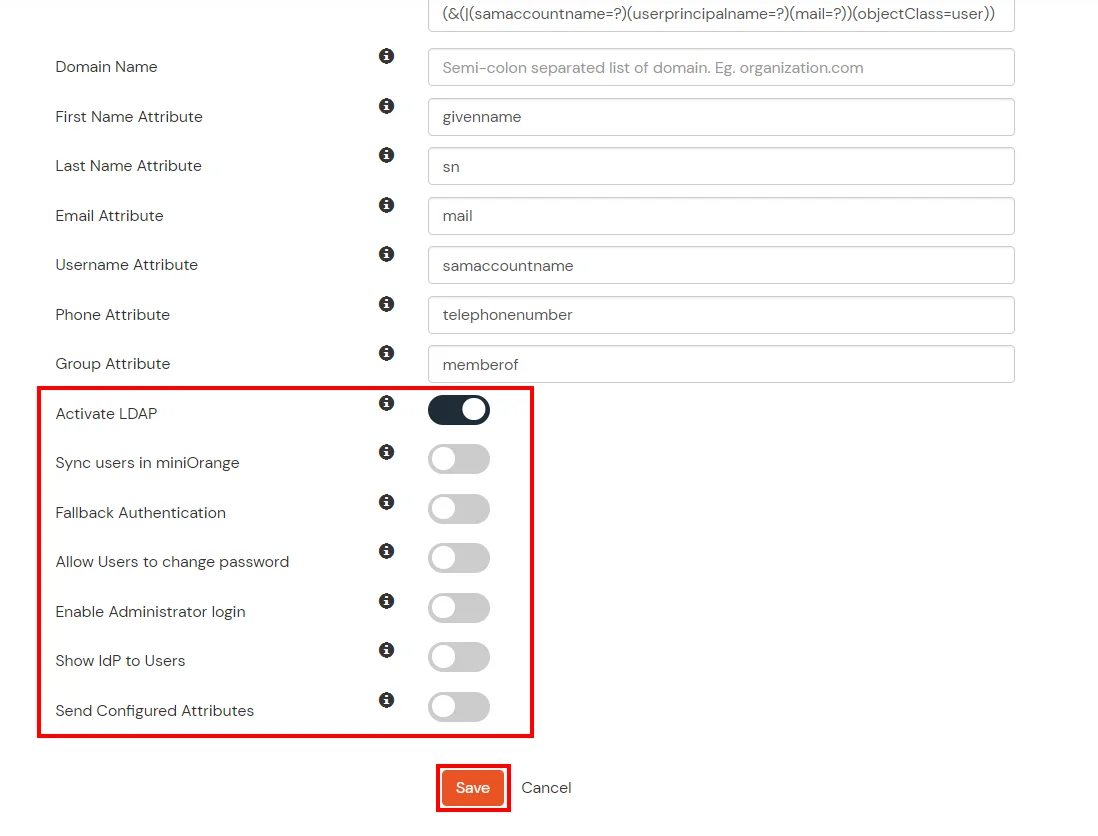
  • You can also configure following options while setting up AD. Enable Activate LDAP in order to authenticate users from AD/LDAP. Click on the Next button to add user store.
  • Career Village : Activate LDAP options

    Here's the list of the attributes and what it does when we enable it. You can enable/disable accordingly.

    Attribute Description
    Activate LDAP All user authentications will be done with LDAP credentials if you Activate it
    Fallback Authentication If LDAP credentials fail then user will be authenticated through miniOrange
    Enable administrator login On enabling this, your miniOrange Administrator login authenticates using your LDAP server
    Show IdP to users If you enable this option, this IdP will be visible to users
    Sync users in miniOrange Users will be created in miniOrange after authentication with LDAP


  • Click on the Next button, or go to the Attributes tab.

Attributes Mapping from AD

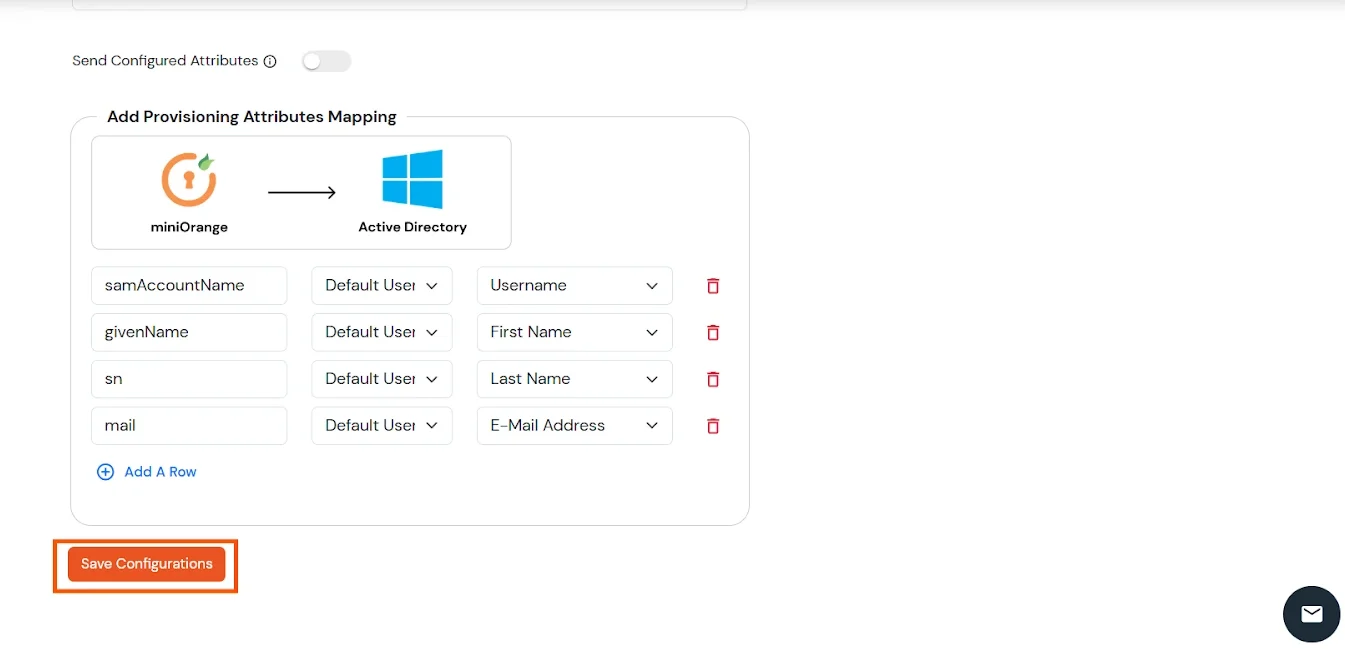
  • By default userName, firstName, lastName, email are configured. Scroll down and click on Save button. To fetch additional attributes from Active Directory, enable Send Configured Attributes. On the left side, enter the name that you wish to release to the applications. On the right side, enter the attribute name from Active Directory. E.g., if you wish to fetch company attribute from Active Directory, and send it as organization to configured applications, enter the following:

    Attribute Name sent to SP = organization
    Attribute Name from IDP = company
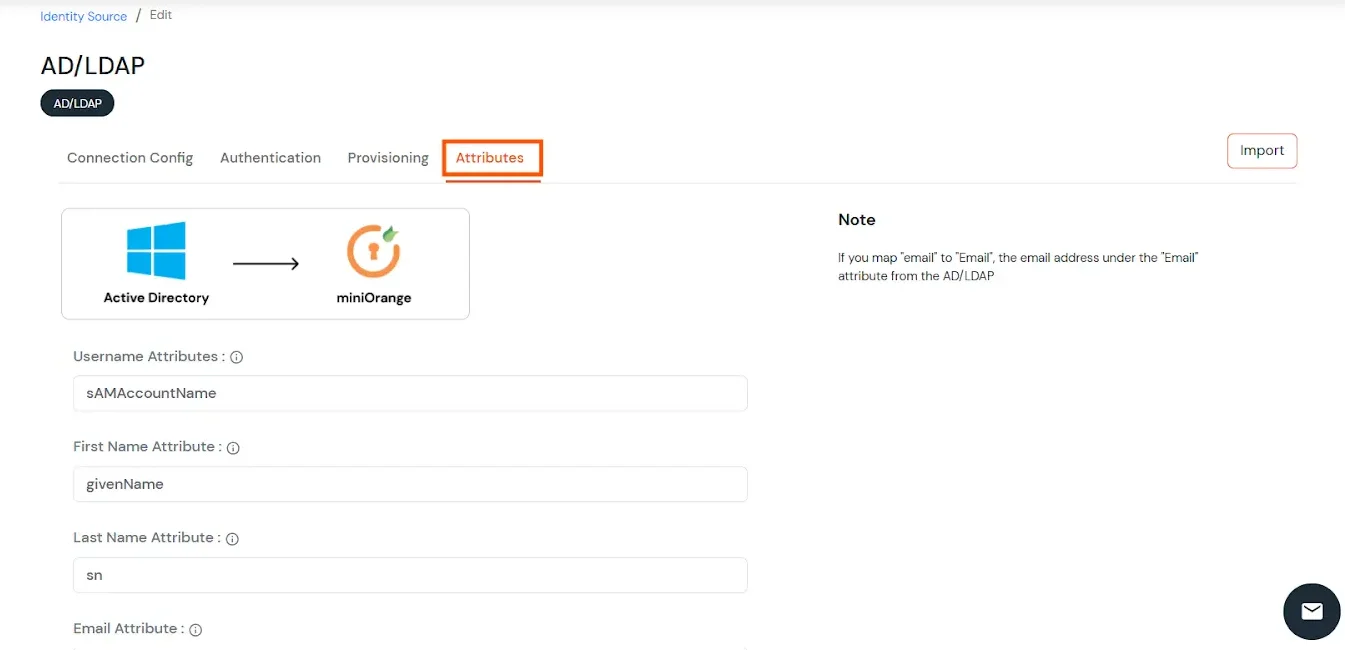
  • Career Village : Enable Send Configured Attributes

    Career Village : Attributes Mapping from AD

  • Click on the Next button, or go to the Provisioning tab.

User Import and Provisioning from AD

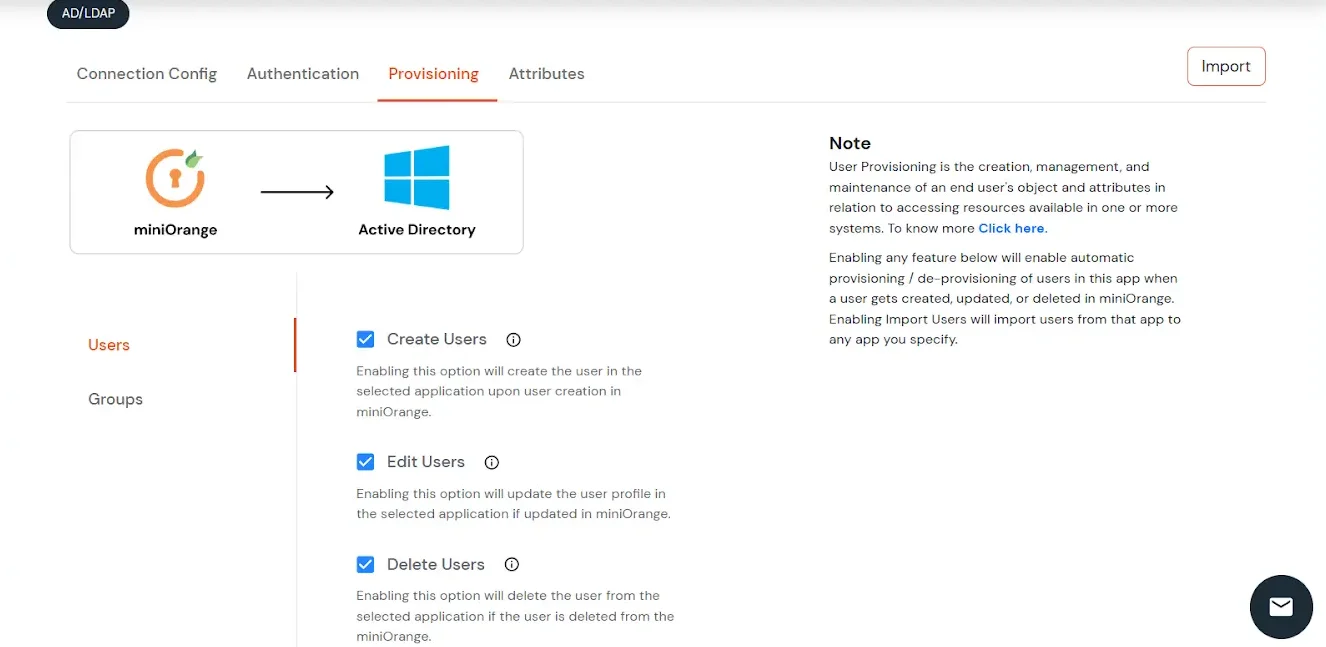
  • If you want to set up provisioning, click here for detailed information. We will skip this step for now.
  • Career Village : Skip Provisioning for now

Import Password Policy from AD

  • If you want to import your Active Directory password policy into miniOrange, click here for detailed information. We will skip this step for now.
  • Career Village : Skip Import password policy for now

Test Connections

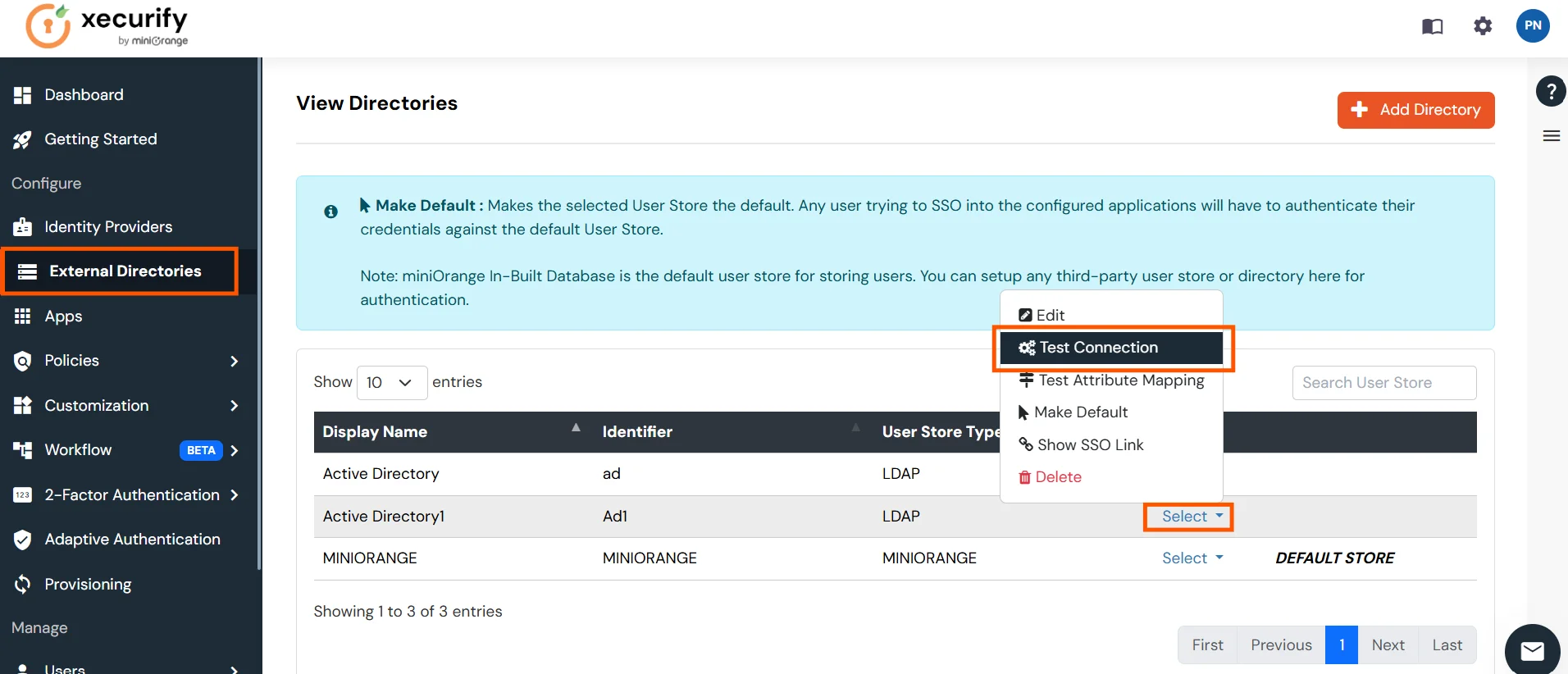
  • You will see a list of directories under Identity Providers. From the dropdown, select AD/LDAP Directories, search for your configured directory, click the three dots next to it, and select Test Connection.
  • Career Village : Test AD/Ldap connection

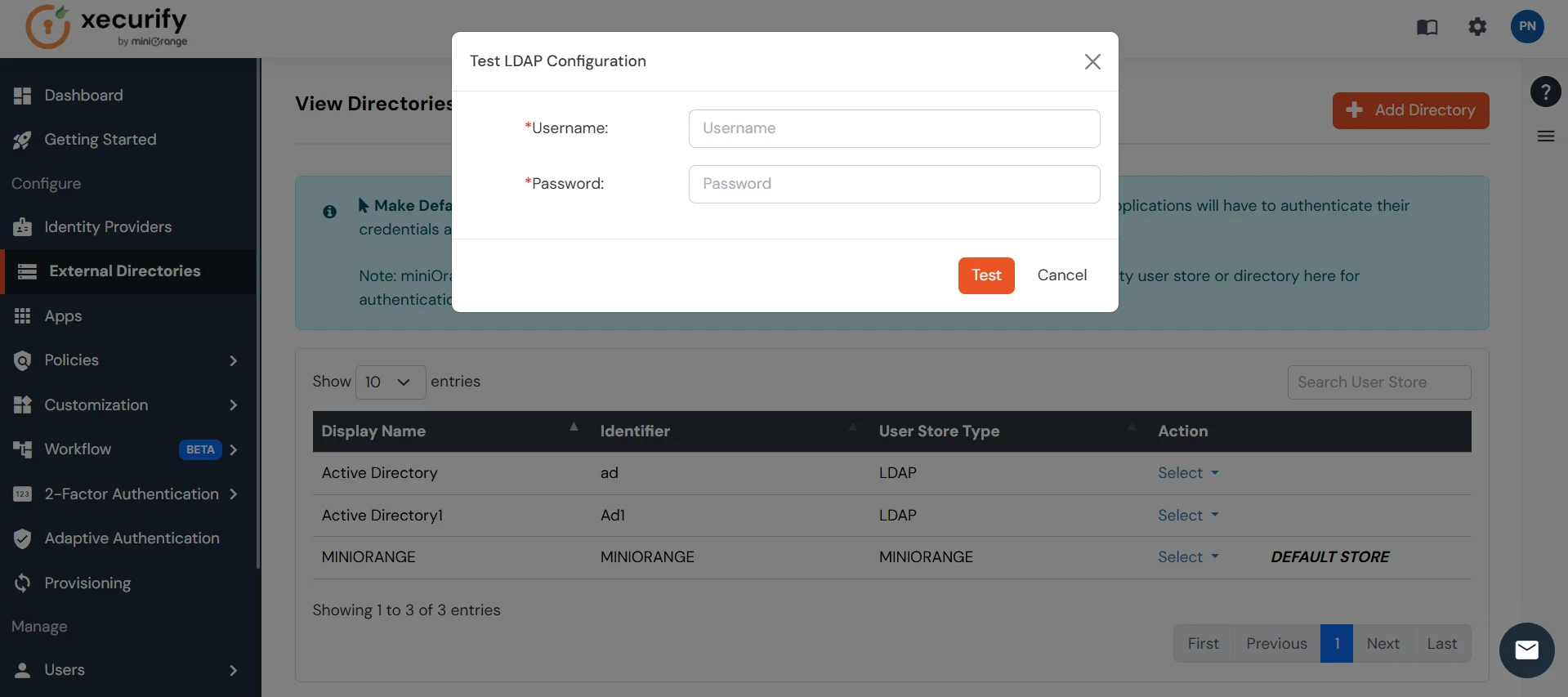
  • A pop-up appears prompting you to enter a username and password to verify your LDAP configuration.
  • Career Village : Enter username and password to test LDAP connection

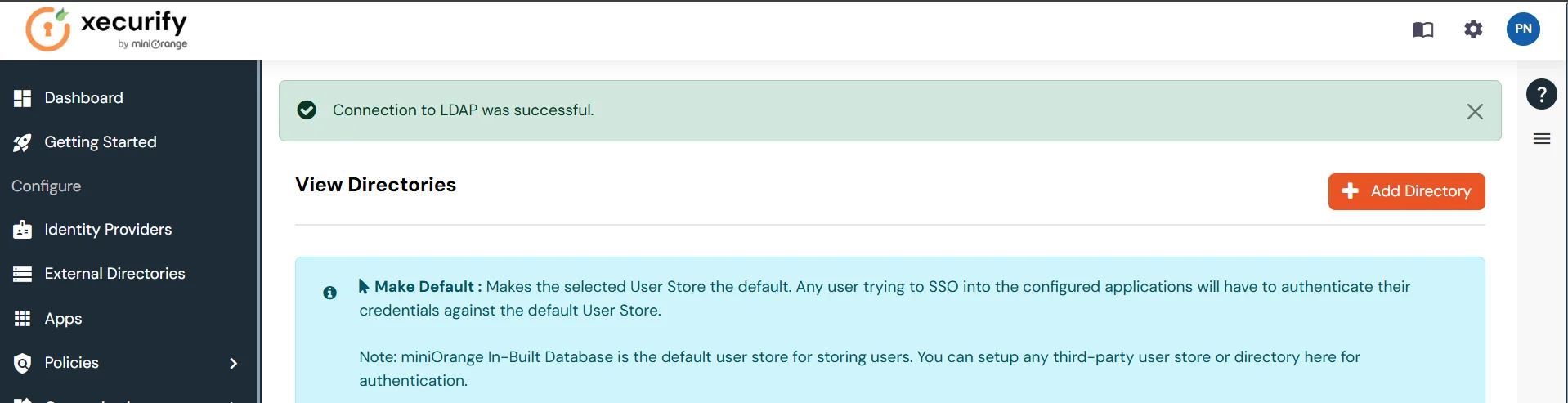
  • On Successful connection with LDAP Server, a success message is shown.
  • Career Village : Successful connection with LDAP Server

Test Attribute Mapping

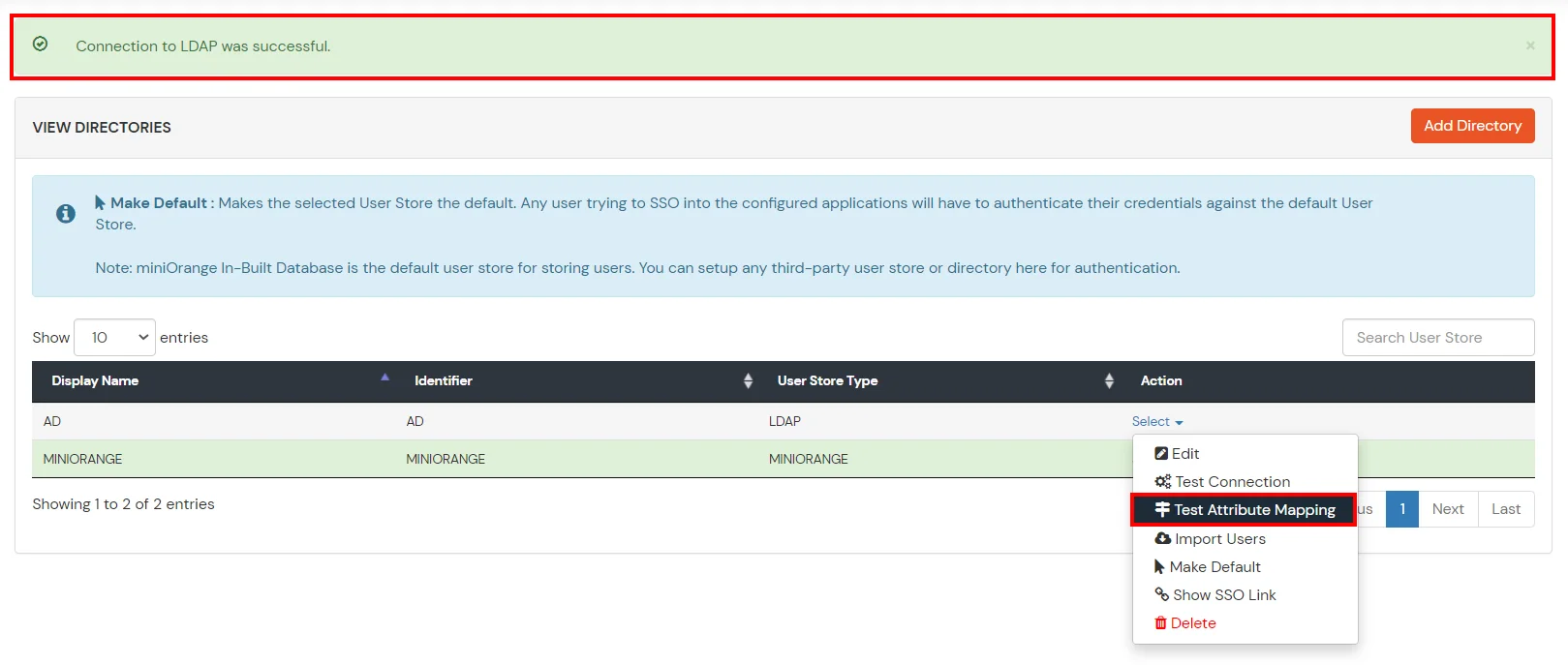
  • You will see a list of directories under Identity Providers. From the dropdown, select AD/LDAP Directories, search for your configured directory, click the three dots next to it, and select Test Attribute Mapping.
  • Career Village : In the External Directories, click Select, and then Test Attribute Mapping

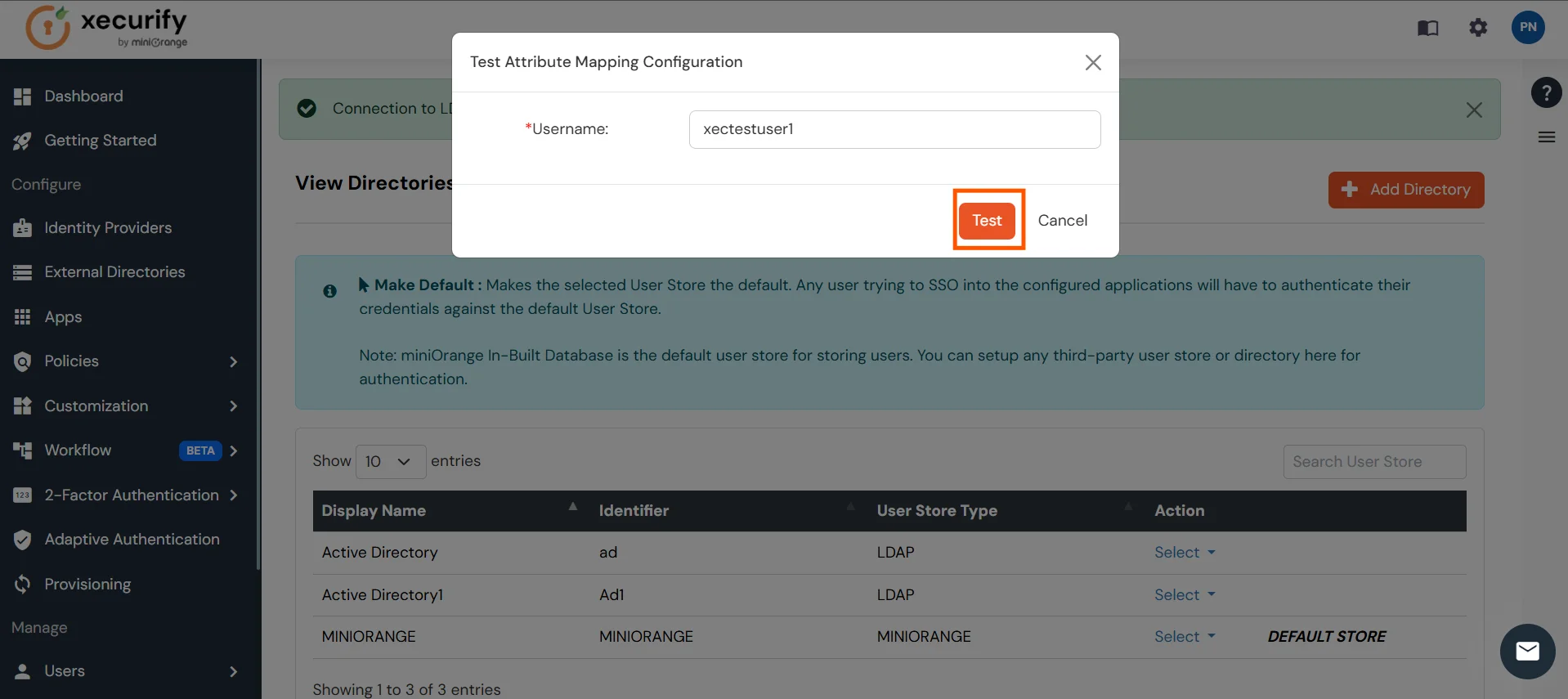
  • A pop‑up appears to enter a username and click Test.
  • Career Village : Enter username to test Attribute Mapping configuration

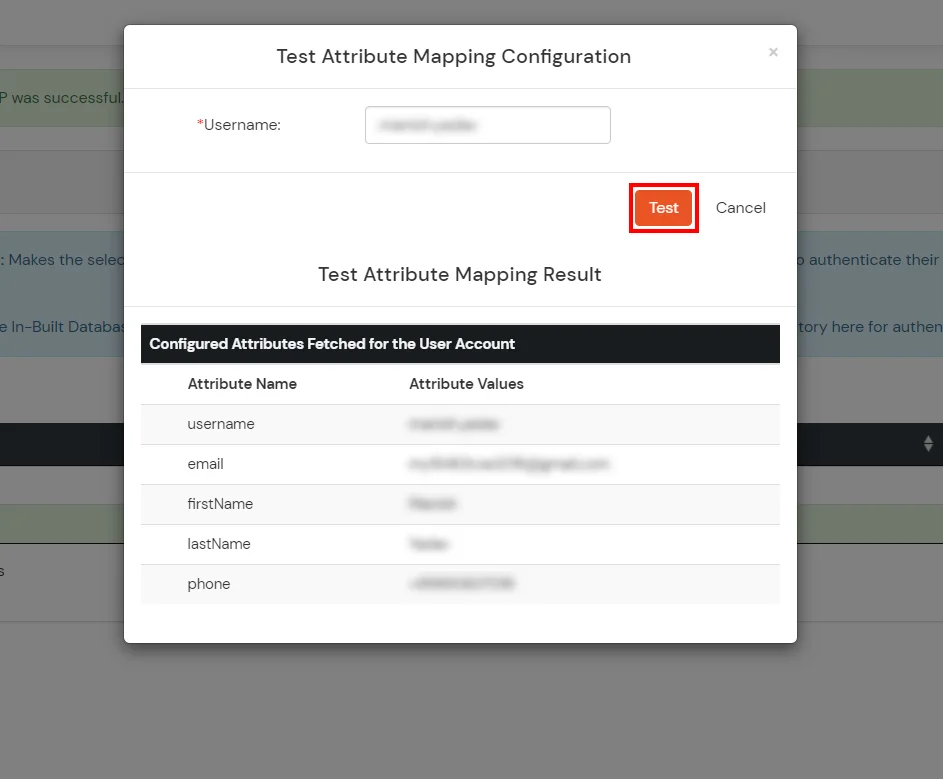
  • The Test Attribute Mapping Result will be displayed.
  • Career Village : Fetch mapped attributes for user

Set up AD as External Directory configuration is complete.


Note: Refer our guide to setup LDAP on windows server.

miniOrange integrates with various external user sources such as directories, identity providers, and etc.

Not able to find your IdP or Need help setting it up?


Contact us or email us at idpsupport@xecurify.com and we'll help you setting it up in no time.


5. Adaptive Authentication with Career Village

A. Restricting access to Career Village with IP Configuration

    You can use adaptive authentication with Career Village Single Sign-On (SSO) to improve the security and functionality of Single Sign-On. You can allow a IP Address in certain range for SSO or you can deny it based your requirements and you can also challenge the user to verify his authenticity. Adaptive authentication manages the user authentication bases on different factors such as Device ID, Location, Time of Access, IP Address and many more.

    You can configure Adaptive Authentication with IP Blocking in following way :

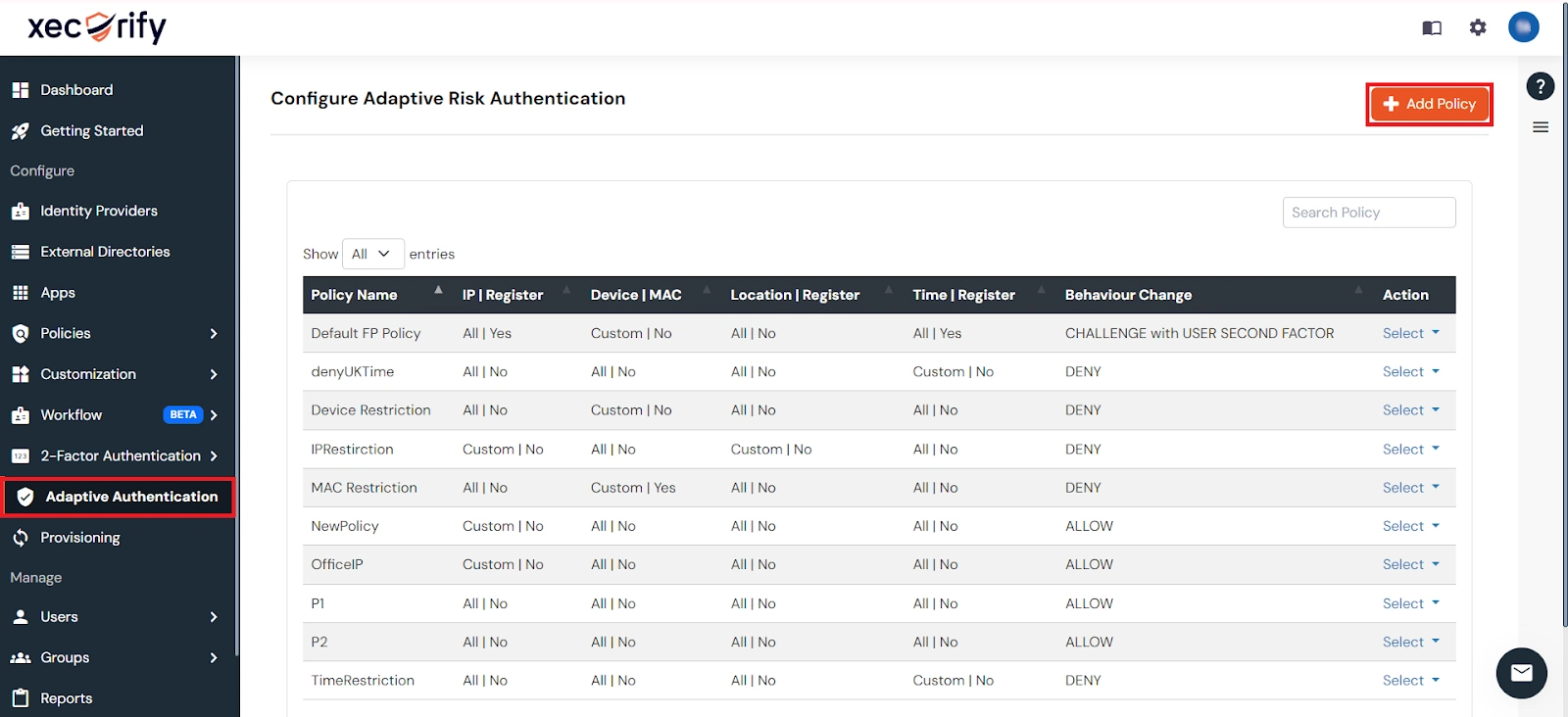
  • Login to Self Service Console >> Adaptive Authentication >> Add Policy.
  • Career Village Single Sign-On (SSO) Restrict Access adaptive authentication policy

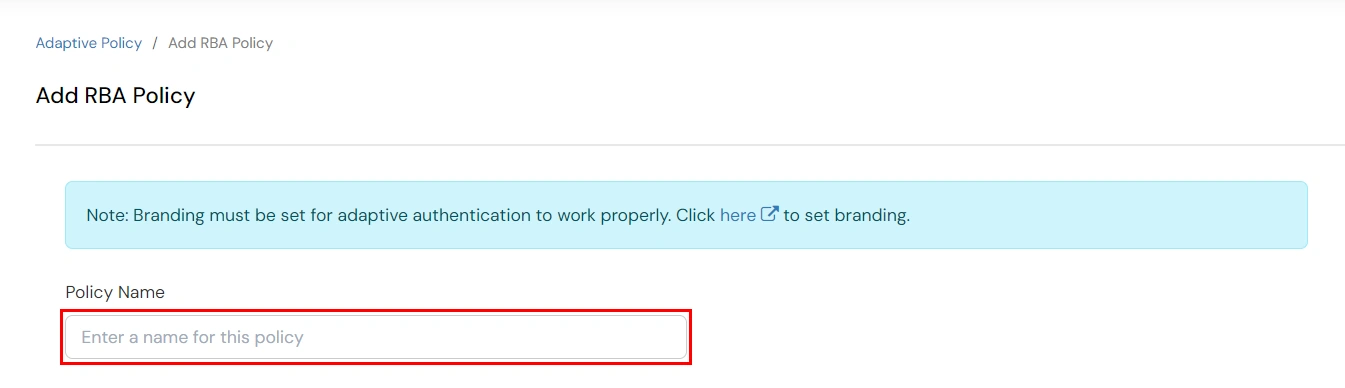
  • Add a Policy Name for your Adative Authentication Policy.
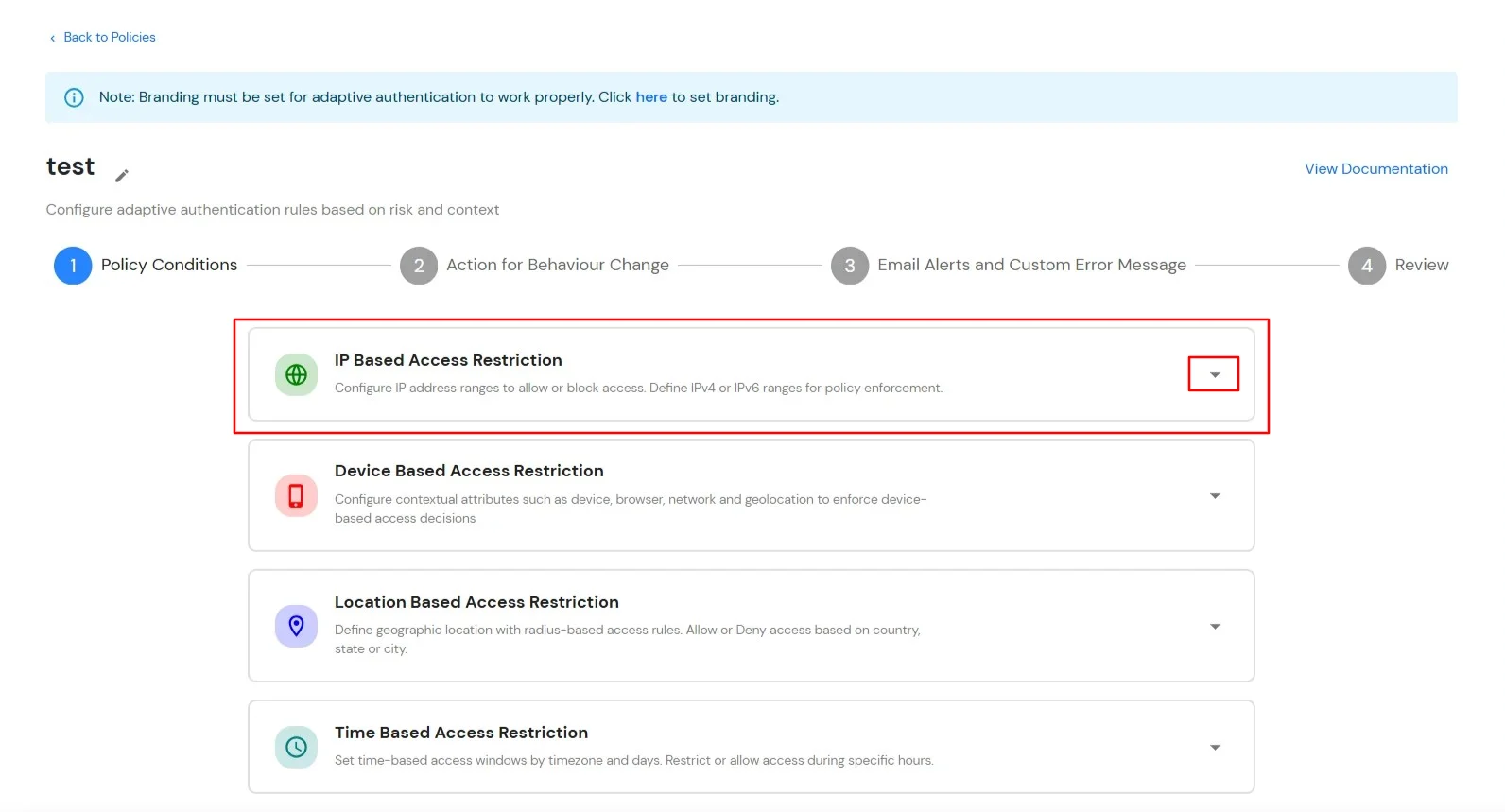
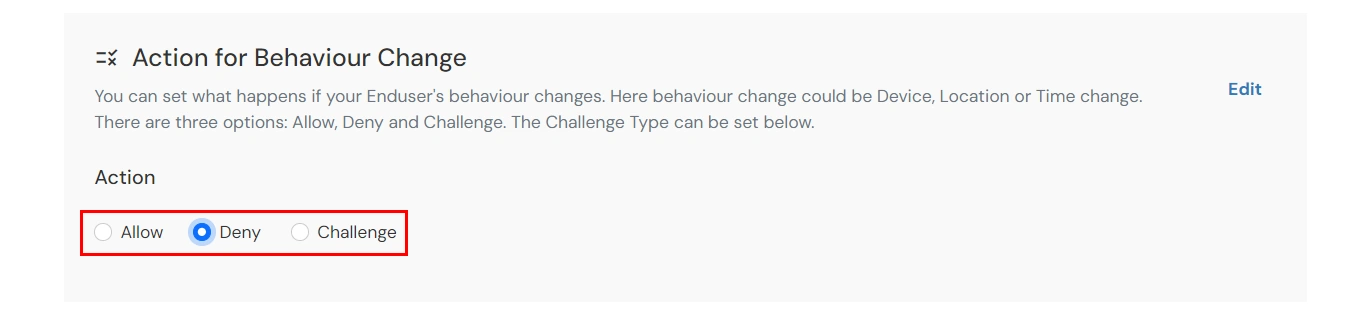
  • Select Action for Behavior Change, click the Edit link, and then choose the appropriate Action and Challenge Type for the user from that section.
  • Career Village Single Sign-On (SSO) Restrict Access adaptive authentication behavior change


    Action for behavior Change Options :


    Attribute Description
    Allow Allow users to authenticate and use services if Adaptive authentication condition is true.
    Deny Deny user authentications and access to services if Adaptive authentication condition is true.
    Challenge Challenge users with one of the three methods mentioned below for verifying user authenticity.

    Challenge Type Options :

    Attribute Description
    User second Factor The User needs to authenticate using the second factor he has opted or assigned for such as
    • OTP over SMS
    • PUSH Notification
    • OTP over Email and, many more.
    KBA (Knowledge-based authentication) The System will ask the user for 2 of 3 questions he has configured in his Self-Service Console. Only after the right answer to both questions is the user allowed to proceed further.
    OTP over Alternate Email User will receive an OTP on the alternate email they have configured through the Self Service Console. Once the user provides the correct OTP, they are allowed to proceed further.

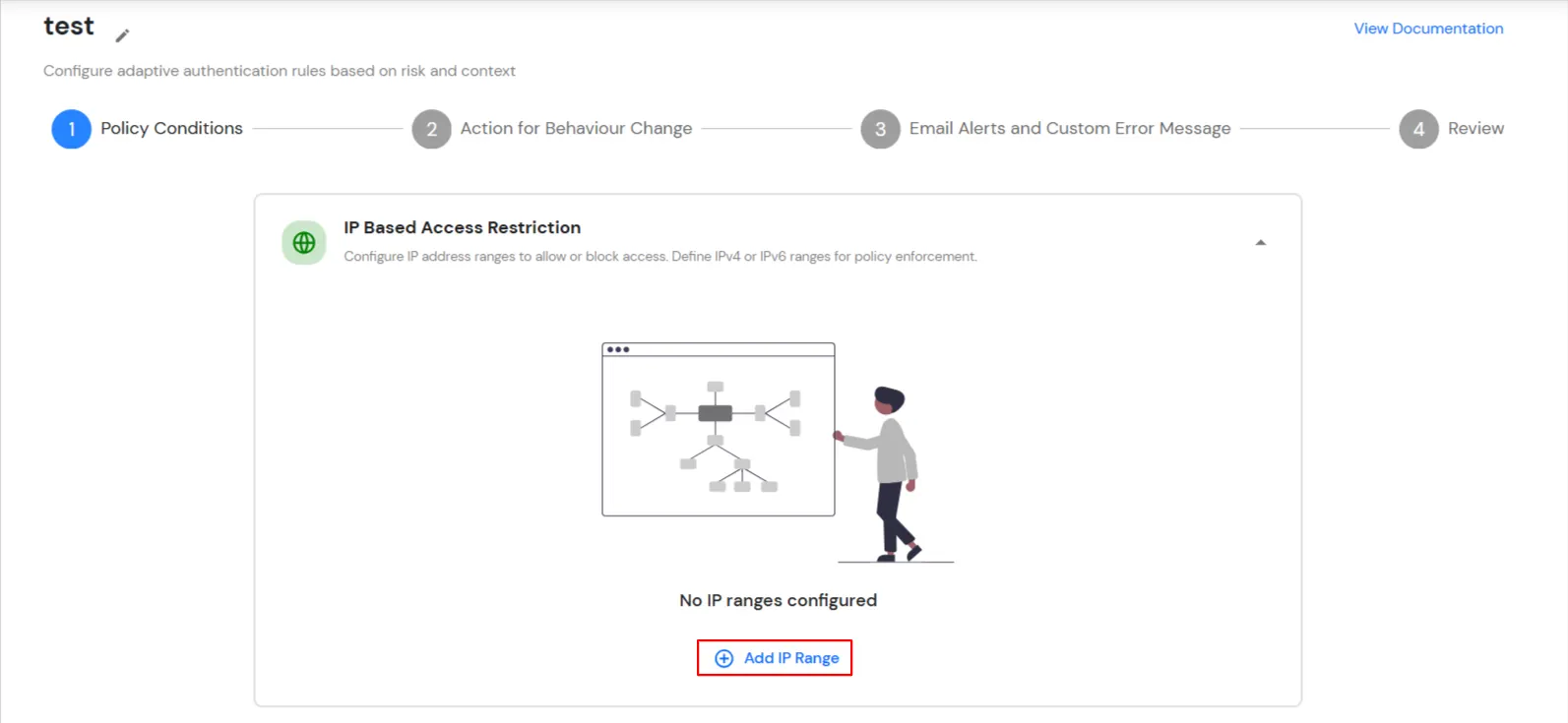
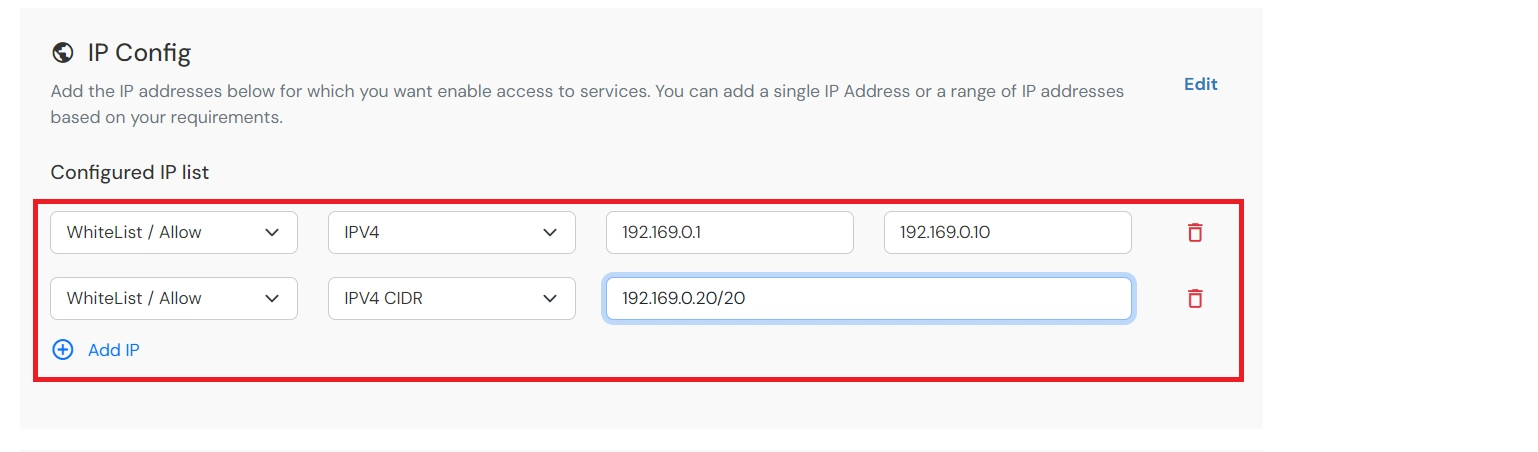
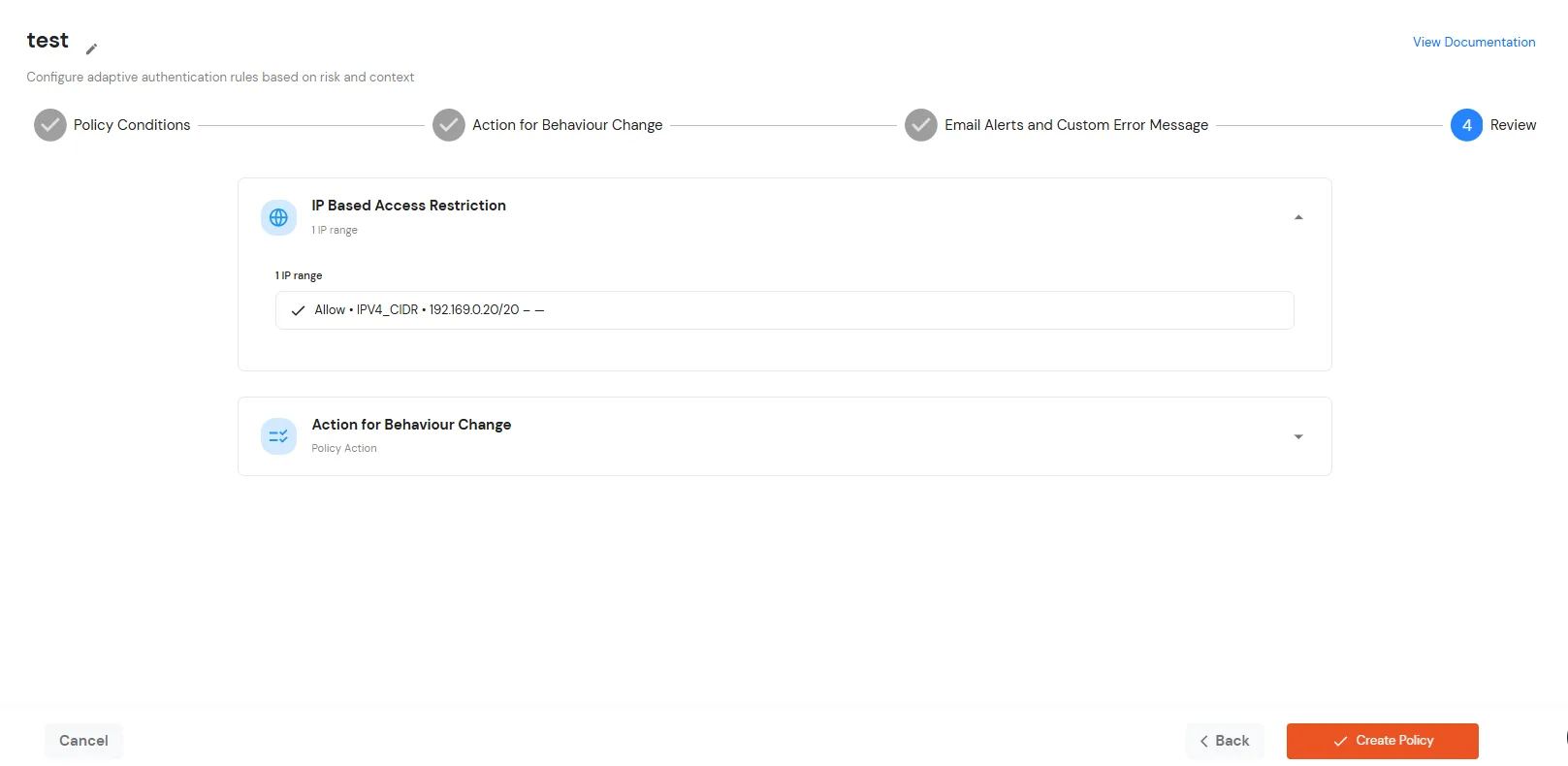
  • Now click Edit option from the IP Configuration section to configure custom IP range.
  • Select Add IP if the User's IP Address is not in the configured list.
  • Specify the IP Address that you want to whitelist. For the IP Range other than the whitelisted one, you can select the above setting to reflect.
  • Choose either allow or deny by selecting the corresponding option from the dropdown.
  • If a user tries to login with the whitelisted IP address, they will always be allowed access.
  • We support IP address range in three formats i.e., IPv4, IPv4 CIDR, and IPv6 CIDR. You can choose whichever is suitable for you from the dropdown menu.
  • You can add multiple IPs or IP ranges by clicking the + Add IP button.
  • Career Village Single Sign-On (SSO) Restrict Access adaptive authentication ip blocking

  • Once the changes are made, scroll down to the end and click on Save.

B. Adaptive Authentication with Limiting number of devices

    Using Adaptive Authentication you can also restrict the number of devices the end user can access the Services on. You can allow end users to access services on a fixed no. of devices. The end users will be able to access services provided by us on this fixed no. of devices.

    You can configure Adaptive Authentication with Device Restriction in following way

  • Login to Self Service Console >> Adaptive Authentication >> Add Policy.
  • Add a Policy Name for your Adaptive Authentication Policy.
  • Select your Action for behavior Change and Challenge Type for user from the Action for behavior Change Section.
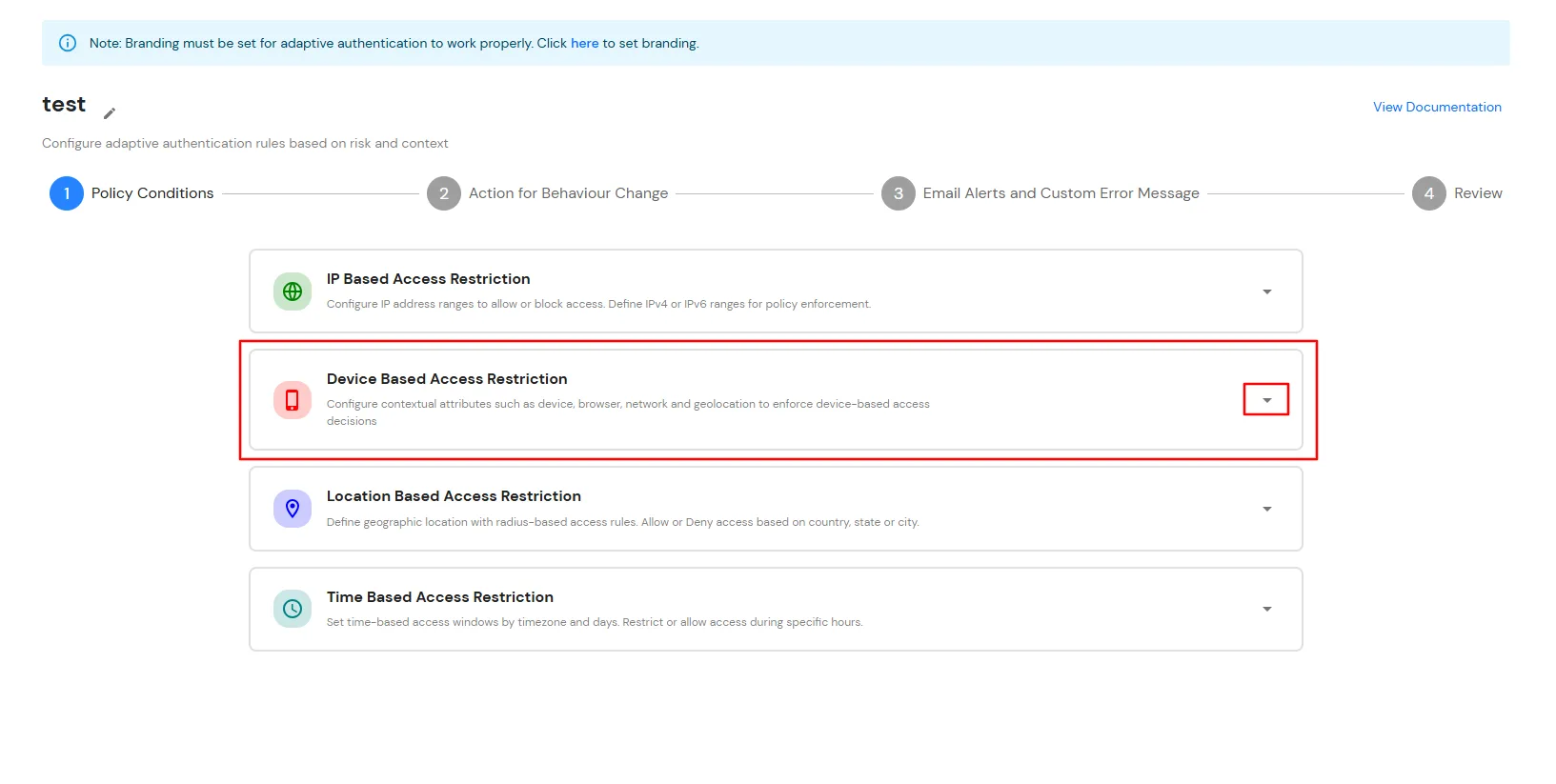
  • Career Village Single Sign-On (SSO) Restrict Access adaptive authentication behavior and challenge type

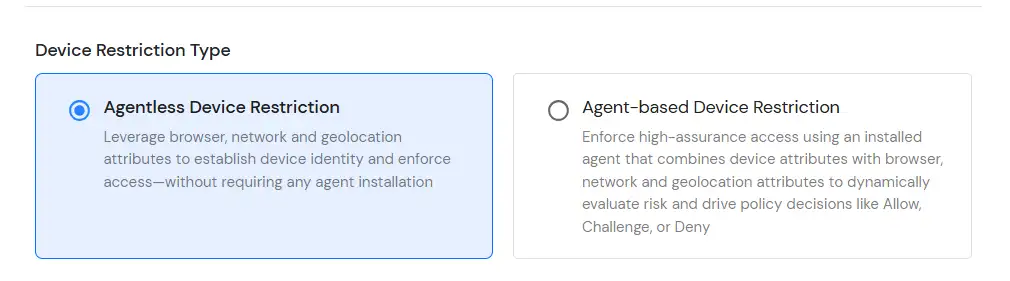
  • On the Add Policy tab, go to the Device Configuration section and click the Edit button.
  • Enter the Number of Device Registrations Allowed as per your requirement. (2-3 devices are recommended.)
  • Choose Action if number of devices exceeded (This will override your setting for Action for behavior Change.)
    • Challenge: The user needs to verify himself using any of the three methods mentioned in table in step 5.1
    • Deny : Deny users access to the system
  • Enable Mobile Device Restriction to block logins from mobile devices. This ensures all login attempts from mobile devices will be declined.
  • Enable MAC Address Based Restriction if you want to restrict access based on device MAC address.
  • Career Village Single Sign-On (SSO) Restrict Access adaptive authentication enable device restriction

  • Scroll down to the bottom of the page and click on Save.

C. Add Adaptive Authentication policy to Career Village

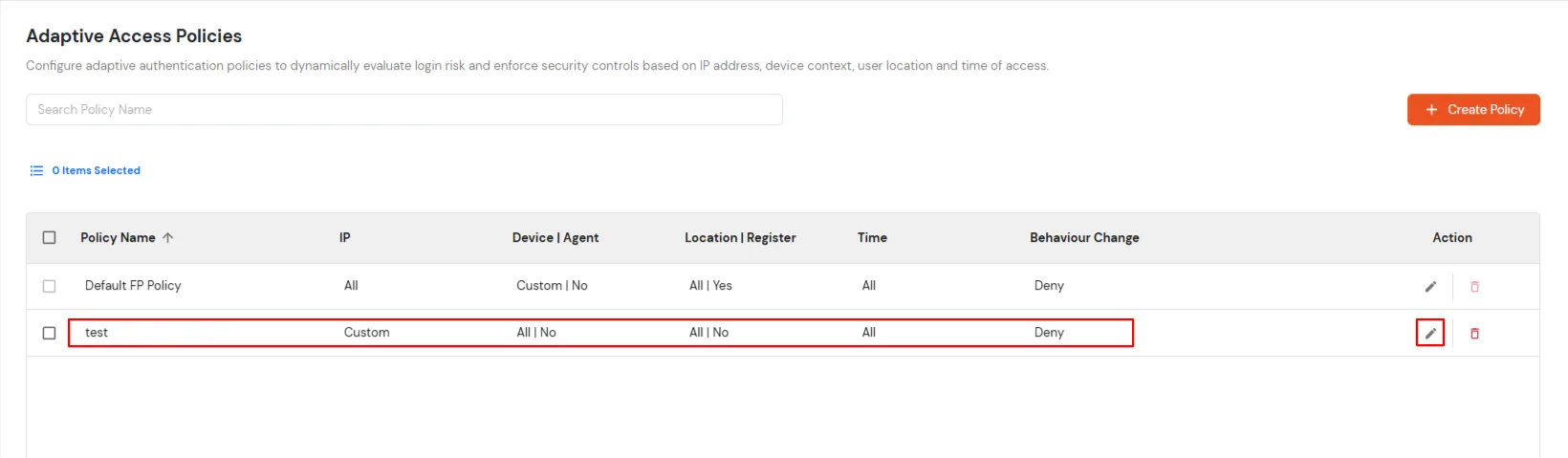
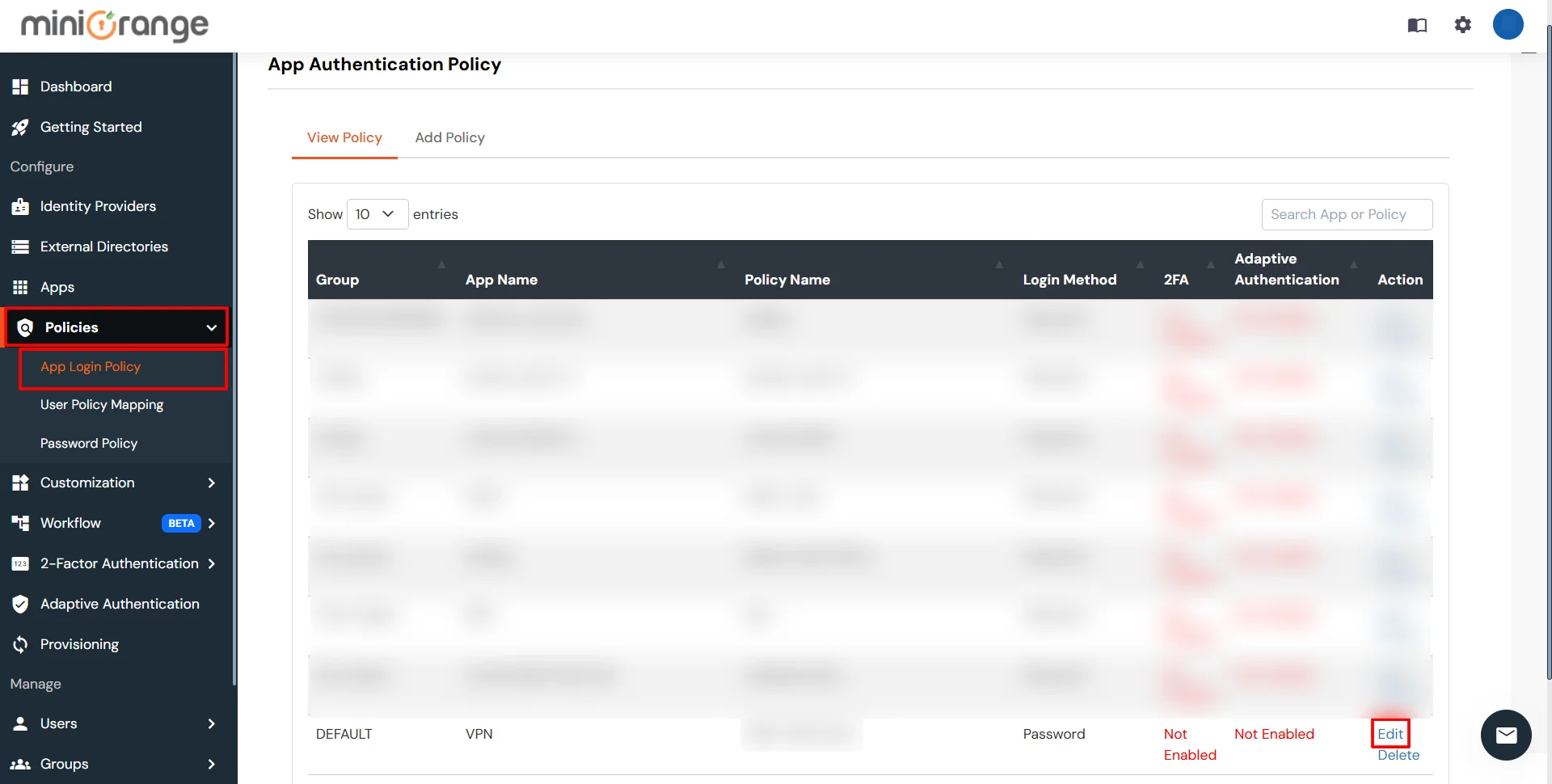
  • Login to Self Service Console >> Policies >> Add Login Policy.
  • Click on Edit icon option for predefined app policy.
  • Career Village Single Sign-On (sso) edit device restriction policy

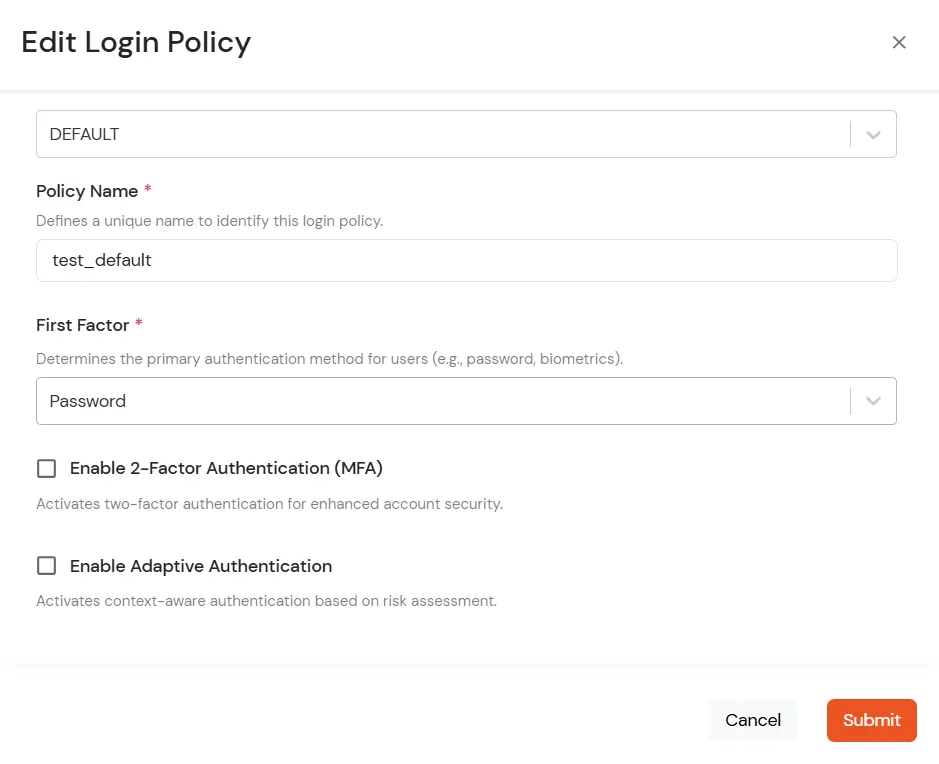
  • Set your policy in the Policy Name and select Password as First Factor.
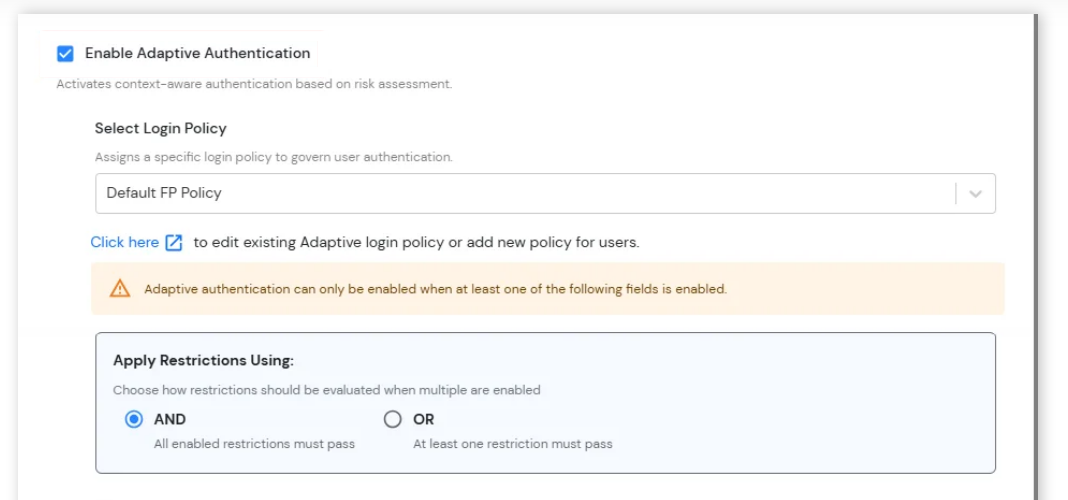
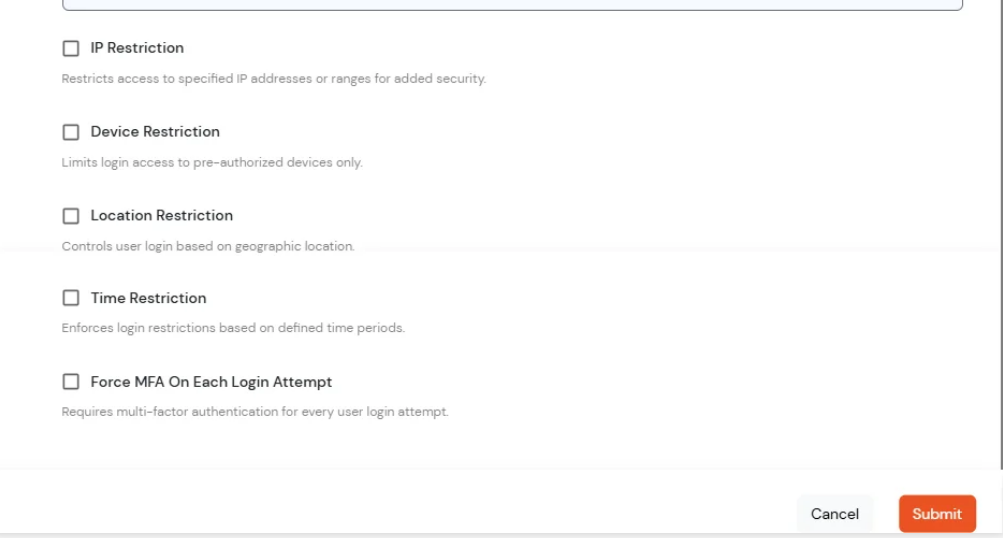
  • Enable Adaptive Authentication on Edit Login Policy page and select the required restriction method as an option.
  • From Select Login Policy dropdown select the policy we created in last step and click on Submit.
  • Career Village Single Sign-On (SSO) Restrict Access Enable Adaptive Authentication

    Career Village Single Sign-On (SSO) Restrict Access Submit device restriction policy

D. Notification and Alert Message.

    This section handles the notifications and alerts related to Adaptive Authentication. It provides the following options :

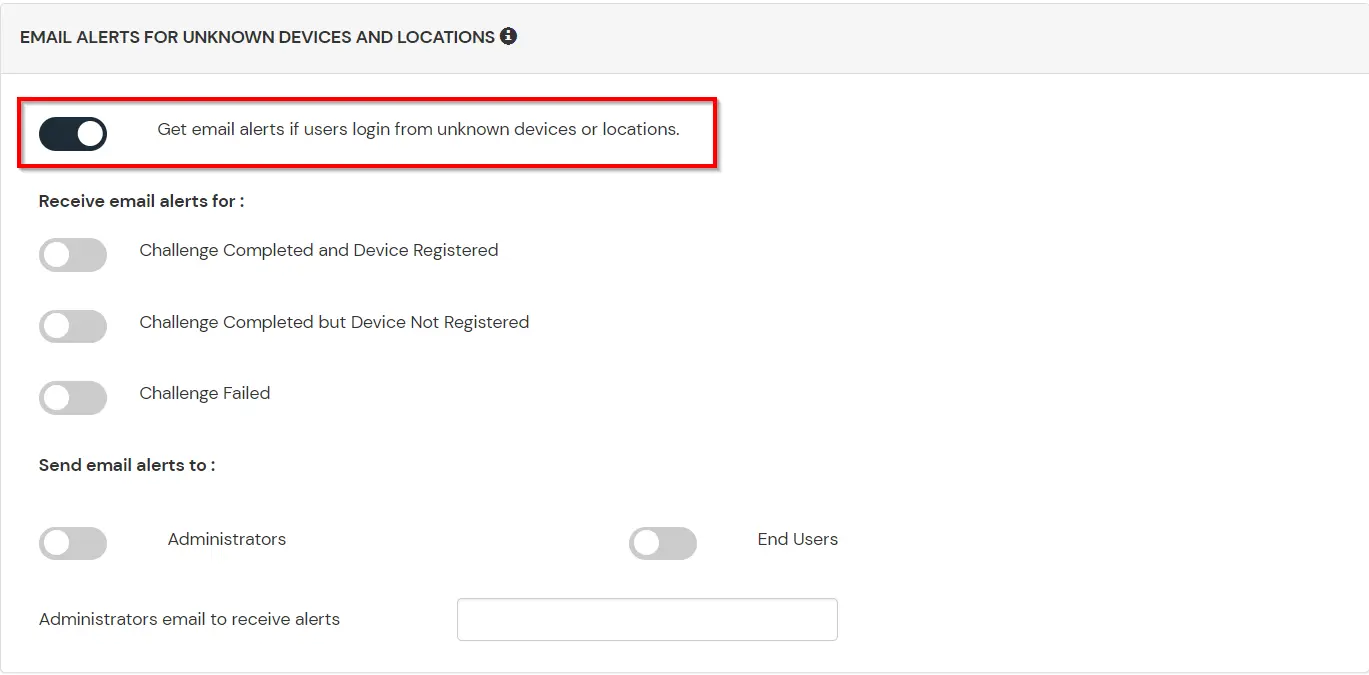
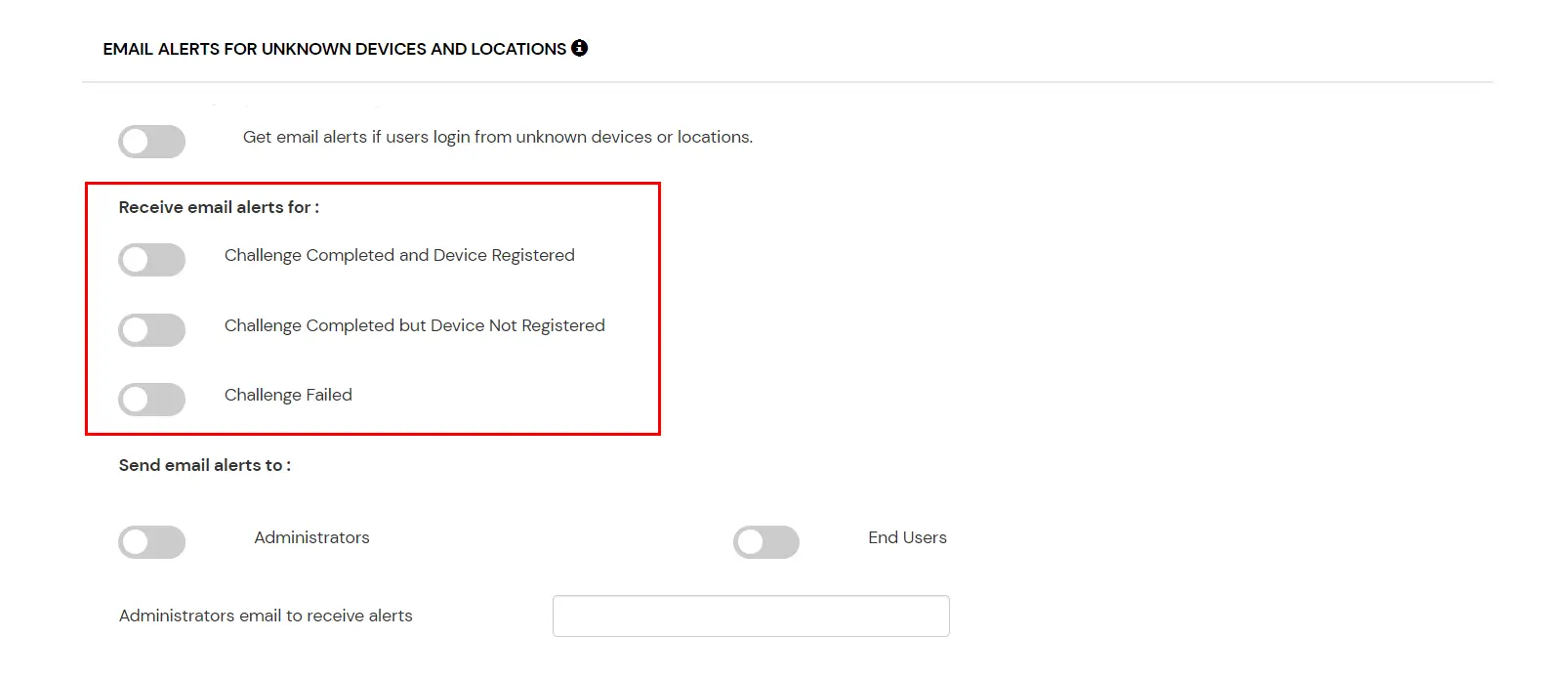
  • Get email alerts if users login from unknown devices or locations: Admins need to enable this option to enable receiving alerts for different alert options.
    Adaptive authentication Action for behavior Change Configuration

  • Option Description
    Users login from unknown IP addresses, devices or locations Enabling this option allows you to login from unknown IP addresses or devices and even locations.
    Number of Device registrations exceeded allowed count This option will allow you to register more devices than the devices you have numbered.
    Challenge Completed and Device Registered Enabling this option allows you to send an email alert when an end-user completes a challenge and registers a device.
    Challenge Completed but Device Not Registered Enabling this option allows you to send an email alert when an end-user completes a challenge but do not registers the device.
    Challenge Failed Enabling this option allows you to send an email alert when an end-user fails to complete the challenge.


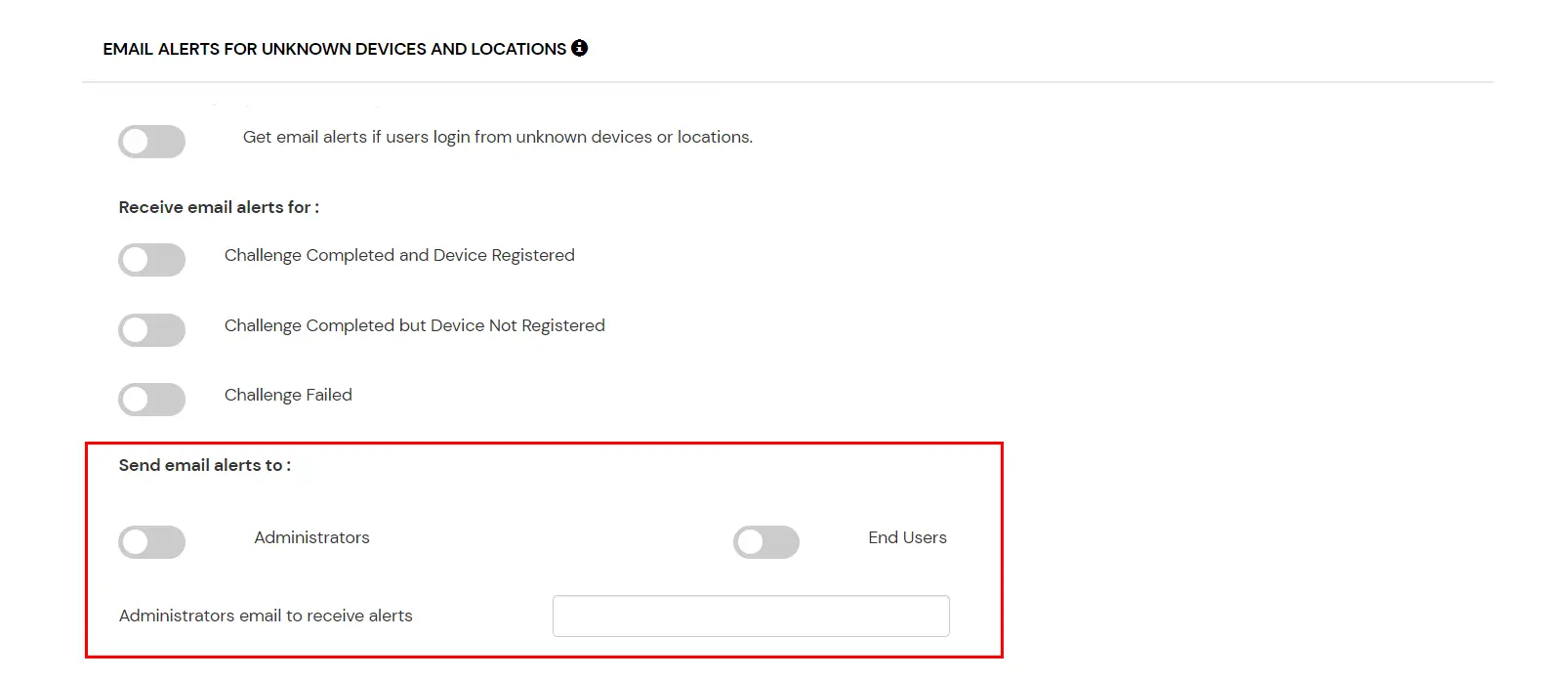
  • Next subsection is Send email alerts which allows us to enable or disable alerts for admin and end-users. To enable alerts for admins, you can enable the Administrators checkbox.
  • Adaptive Authentication: Send email alerts

  • In case you want multiple admin accounts to receive alerts, then you can enable the option for admin and then enter the admin emails separated by a ‘,’ in the input field next to Administrator’s email to receive alerts label. To enable alerts for the end users, you can enable the End User checkbox.
  • In case you want to customize the deny message that the end user receives in case his authentication is denied due to adaptive policy, you can do this by entering the message inside Deny Message text box.
  • Adaptive Authentication: Customize Deny message

How to add a trusted Device
  • When End-user log in to the self service console after the policy for device restriction is on, he is provided the option to add the current device as a trusted device.

Frequently Asked Questions


What is SAML Single Sign-On (SSO) for Career Village?

SAML Single Sign-On lets users sign in once through your identity provider (such as miniOrange or an external IdP) and access Career Village without a separate application password. miniOrange acts as the SAML identity provider and exchanges authentication assertions securely with Career Village as the service provider.

External References

Want To Schedule A Demo?

Request a Demo


Our Other Identity & Access Management Products