Hello there!
Need Help? We are right here!

Need Help? We are right here!
Search Results:
× Boost security for workforce and customers
Secure privileged and third-party access
Protect banking data with centralized monitoring and controls
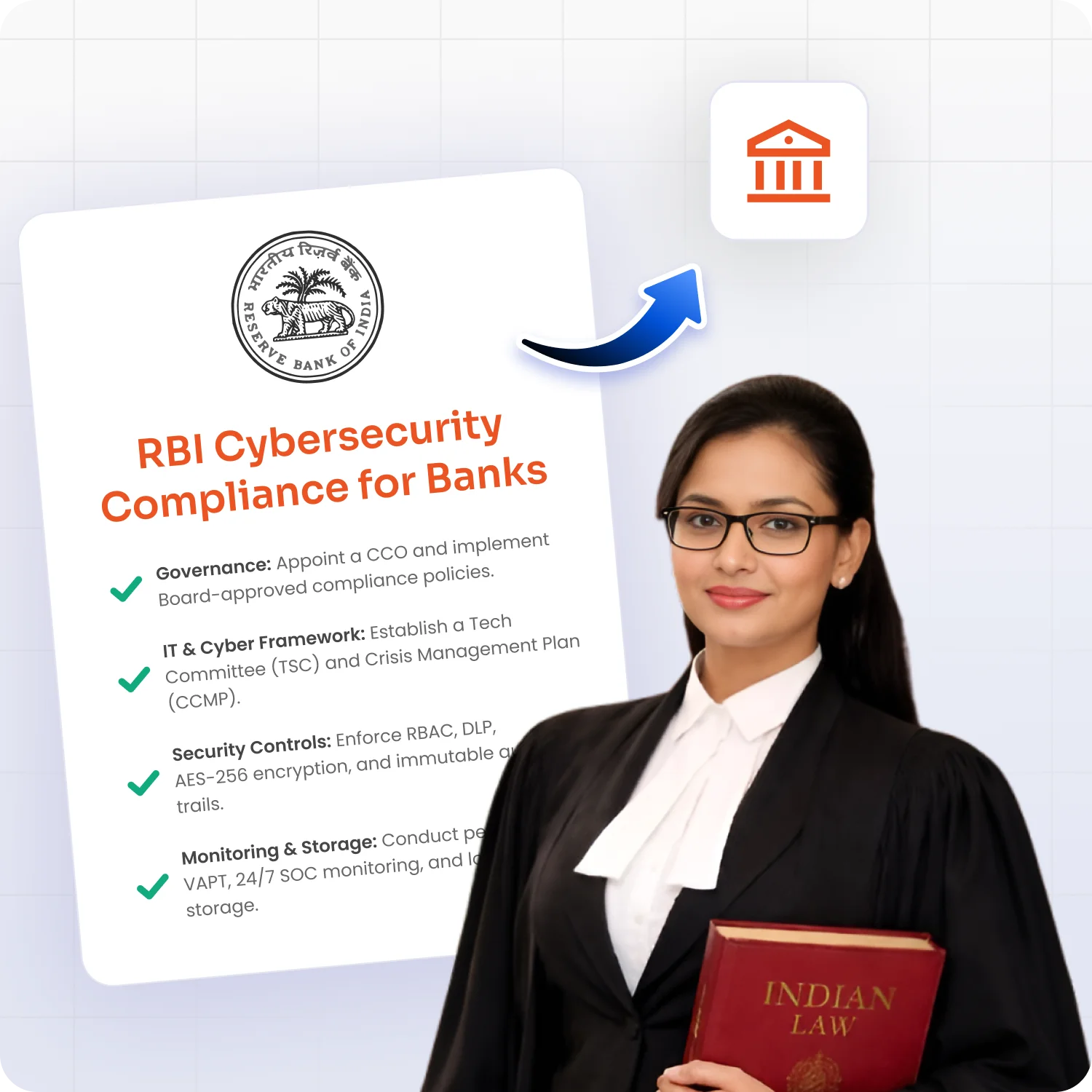







The Reserve Bank of India (RBI) established the RBI Cyber Security Framework for Banks, requiring financial institutions to implement 24 baseline security controls to strengthen protection against cyber threats targeting financial systems and customer data. These RBI guidelines focus on securing identities, protecting sensitive information, and establishing effective incident response mechanisms across banking environments.
These RBI guidelines apply to regulated financial institutions, including Scheduled Commercial Banks, Small Finance Banks, Payment Banks, Foreign Banks operating in India, and Cooperative Banks under RBI supervision. Organizations within this scope must establish robust cybersecurity controls to meet RBI cybersecurity framework requirements while safeguarding critical banking infrastructure and digital services.
| RBI Section | What the Control Requires | miniOrange Offering |
|---|---|---|
| 2 – Unauthorized Software Control | Restrict installation and execution of unauthorized software across enterprise endpoints. | MDM, DLP, UEM, and EPM enforce application control and restrict unauthorized software installations. |
| 4 – Network & Access Security | Secure network infrastructure and enforce strong authentication for administrative and remote access. | MFA secures authentication for network devices such as firewalls, routers, and switches, and more. |
| 8.1 – Secure Access Management | Restrict access to critical systems and sensitive operations to authorized users only. | IAM and PAM enforce role-based access policies and secure administrative access. |
| 8.3 – Privilege Restriction | Limit administrative privileges and enforce least-privilege principles. | PAM and EPM control privileged access and restrict unnecessary admin rights, while a secure credential vault stores and manages privileged accounts |
| 8.4 – Centralized Authentication | Implement centralized authentication for enterprise applications and infrastructure. | IAM enables centralized identity management with SSO, MFA, and integration with PAM, supporting secure authentication protocols such as SAML, OAuth, and OpenID Connect. |
| 8.5 – Privileged Access Monitoring | Continuously monitor privileged user activities and maintain session audit trails. | PAM provides privileged session monitoring, recording, and access auditing for RDP, SSH, DB, and web apps. |
| 8.6 – Identity Lifecycle Management | Detect and disable dormant or inactive accounts to reduce security risks. | IAM automates user lifecycle management and enforces account deactivation policies, with workflows to identify and manage dormant or inactive accounts. |
| 8.7 – Abnormal Login Detection | Identify suspicious login attempts and unusual authentication behavior. | Adaptive MFA and AI based Anamoly detection analyzes login context and integrates with third-party ITDR or SIEM tools. |
| 8.8–8.9 – Endpoint & Device Control | Enforce policies for software installation and secure management of enterprise devices. | MDM and EPM manage device security policies and restrict unauthorized installations. |
| 8.10 – Email & Attachment Security | Restrict malicious macros, scripts, and unsafe attachments to prevent malware delivery. | DLP monitors file transfers and enforces policies for sensitive data protection. |
| 9 – Customer Authentication | Implement strong authentication mechanisms for customer-facing banking applications. | OOTB SDKs and APIs for strong authentication for customer apps |
| 11–12 – Vendor & Media Controls | Secure third-party vendor access and control removable media usage to prevent data exfiltration. | PAM manages secure vendor access, while DLP and MDM enforce removable media policies. |
| 13–15 – Threat Protection & Data Security | Detect cyber threats and prevent phishing and sensitive data leakage. | Adaptive MFA, DLP, and CASB help detect risky access and protect sensitive data. |
| 1 – IT Asset Inventory | Maintain inventory of IT assets and control access to enterprise systems and applications. | miniOrange integrates seamlessly with third-party solutions to enable centralized IT asset visibility. |
| 16–23 – Logging, Monitoring & Response | Maintain audit logs, incident response processes, transaction monitoring, and forensic capabilities. | miniOrange platforms provide centralized logs and integrate with SIEM and ITDR tools for monitoring and investigations. |
Dive deeper into RBI cybersecurity framework controls and learn how miniOrange solutions help banks strengthen security and meet compliance requirements.
Assess existing security posture against RBI cybersecurity controls, identify gaps, evaluate risks, inventory assets, and define a clear roadmap for implementing identity, access, and data protection measures.
Implement IAM, MFA, and SSO to secure workforce and customer access. Deploy PAM for privileged accounts and DLP, MDM, and CASB to protect sensitive banking data.
Enable continuous monitoring by integrating identity logs and alerts with SIEM platforms. Generate compliance reports, maintain audit logs, and support regulatory audits.
Seamless connectivity with 6000+ integrations covering banking applications, enterprise systems, VPNs, and cloud platforms.
Deploy securely across on-premise, cloud, or hybrid environments aligned with banking infrastructure and regulatory requirements.
Built to support millions of users, high authentication volumes, and large financial institution environments.
Security capabilities designed to support banking compliance requirements, including RBI cybersecurity and data protection guidelines.
Risk-based authentication strengthens login security and reduces exposure to credential compromise and account takeover.
Strengthen your bank’s cybersecurity posture with miniOrange solutions designed to align with RBI guidelines and control access across banking environments.
x
Your download should start now. If not, please email us at idpsupport@xecurify.com or contact us.